My Bookshelf

Showing posts with label Crime. Show all posts

Friday, 22 August 2014

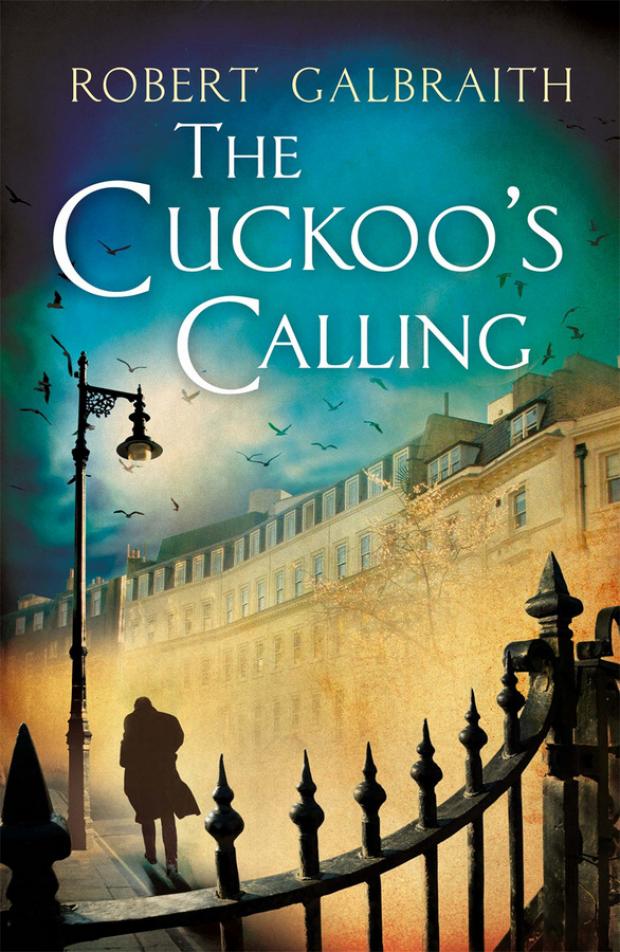
The Cuckoo's Calling by Robert Galbraith

When a troubled model falls to her death from a snow-covered Mayfair balcony, it is assumed that she has committed suicide. However, her brother has his doubts, and calls in private investigator Cormoran Strike to look into the case. Strike is a war veteran - wounded both physically and psychologically - and his life is in disarray. The case gives him a financial lifeline, but it comes at a personal cost: the more he delves into the young model's complex world, the darker things get - and the closer he gets to terrible danger ...

When Robert Galbraith’s debut novel, The Cuckoo’s Calling, was released it received excellent reviews for a first-time writer, including a stellar quote from Scottish crime queen Val McDermid. Just the result, I reckon, that JK Rowling was looking for when she first decided to write her new crime series under a pseudonym in an attempt to be judged honestly, with Potter set aside for one moment. 

Sadly the secret came out too early for me to read it without knowing it was JK who had penned it, and arguably yes, it may not have read it if her name wasn’t attached, but I enjoyed it so there. There aren’t any gimmicks here, just good classic crime with a troubled crime-fighting protagonist in the brilliantly named Cormoran Strike and his trusty red-headed (had to throw that in, obvs) sidekick, Robin.

As a Londoner, I loved the setting. The novel taps into both London’s seedy underbelly and the glitz and glamour of its celebrity elite. It walks you from Strike’s dingy Denmark Street office through the sounds and smells of Chinatown to the wide streets and beautiful homes of Mayfair.

In the celebrity-obsessed world we live in these days, the idea of a famous model falling dramatically from her balcony doesn’t seem that unlikely... I can almost see the tabloid headline now. Rowling isn’t rubbing it in our faces by any means – she isn’t saying, ‘hey, look how ridiculous we all are’ but I sensed some satire here, which I like whether it was deliberate or not. It’s there for the taking if that is how you choose to read it but either way it’s a good story.

I’m not going to say that this is the most exciting, genre-busting novel of the 21st century but it’s not supposed to be. All in all, this is going to be a fun series to get involved in. Like the best crime novels, this can be consumed quickly and leave you with an appetite for the next one.

As ever with JK Rowling, she doesn’t let waffle get in the way of a great plot and solid characters. In her central female character, she has created that perfect combination of intelligence and heart, strength and vulnerability… but I’m going to restrain myself from comparing her to any other of Rowling’s strong female characters… In short, I’d get into these now before there are 100 of them – next stop, The Silkworm!

7/10

Tuesday, 1 July 2014

The Truth About The Harry Quebert Affair - Joel Dicker

August 30, 1975. The day of the disappearance. The day Somerset, New Hampshire, lost its innocence.

That summer, struggling author Harry Quebert fell in love with fifteen-year-old Nola Kellergan. Thirty-three years later, her body is dug up from his yard, along with a manuscript copy of the novel that made him a household name. Quebert is the only suspect.


Marcus Goldman - Quebert's most gifted protégé - throws off his writer's block to clear his mentor's name. Solving the case and penning a new bestseller soon merge into one. As his book begins to take on a life of its own, the nation is gripped by the mystery of 'The Girl Who Touched the Heart of America'. But with Nola, in death as in life, nothing is ever as it seems.

I can't decide how I feel about this book. Starting it, I was disappointed. The characters were, in my opinion, unsubtle and some of the scenarios unrealistic and verging on farcical. My biggest objection, as you might expect, was to some of the decisions made and conversations had in the novel's publishing industry. That's not to say you don't get diabolical editors and money-craving publicity stunts but the whole thing felt a little OTT.

I also (and I realise this is subjective) struggled with the character of Nola herself - there seemed to be so many contradictions. Some, of course, are deliberate, but it seems to me strange, for instance, that a child so overtly young and naive in the way she talks, the way she generally operates, would be sexually engaged? It's not the fact Quebert is in love with a fifteen year old - terrifyingly, it happens - it's that this fifteen year old somehow doesn't make sense to me. 
It would probably all have been fine if I could distract myself from these niggly points with an intelligent and fast-paced plot but two hundred pages in and I'm struggling a bit.

That said, I don't want to take away the credits Joel Dicker deserves. The concept is strong and the writing was good and appropriately unintrusive; Dicker doesn't shove hyperbolic imagery down the reader's throat or indulge in too many metaphors or flowery sentences. While the plot continued to be a little uninspiring, it did pick up and by the end I was engaged and found myself turning the pages much more rapidly.

Overall I wouldn't say this book goes down as the most original crime novel I've ever read... But it does pick up pace and there are some fun twists and turns along the way so I'd say, if you're going to pick it up, do persevere, it gets better. But am I going to stock up on copies to send to all my friends at Christmas? Sorry Joel Dicker, I feel I've been overly harsh, but no.

5/10

Sunday, 14 July 2013

Introducing... Robert Galbraith


When you've sold around 500 million copies of your novels, which then spawned a blockbuster film franchise and billions of pounds worth of merchandise, how
boring it must be. Ok, so you've generated an industry worth billions of dollars - not so boring - but how on earth do you begin to move beyond it?

When Robert Galbraith came on the scene in April 2013 with his debut novel,
The Cuckoo's Calla classic crime set in London's Soho, he received great reviews - none of them steeped in decade-old criticism or referring to something he may have said five years ago. An enviable position, you might say. So you can understand how disappointed Mr. Galbraith would have been when his little secret came out that he was, in fact, JK Rowling.

Well its publishers, Little, Brown, are sure to sell just a few more copies of
that novel... Got to give it to JK though, good effort.

Examples of some reviews:

The Cuckoo's Calling reminds me why I fell in love with crime fiction in the first place

(Val McDermid)

A scintillating debut novel . . . Galbraith delivers sparkling dialogue and a convincing portrayal of the emptiness of wealth and glamour

(The Times, Saturday Review)

One of the most unique and compelling detectives I've come across in years


(Mark Billingham)

The most engaging British detective to emerge so far this year . . . An astonishingly mature debut from Galbraith, it marks the start of a fine crime career


(Daily Mail online)

And my favourite...
JK Rowling secretly wrote a book under a different name. How very Half-Blood Prince of her. The Dark Lord (@Lord_Voldemort7)

Tuesday, 4 June 2013

Gone Girl by Gillian Flynn

Just how well can you ever know the person you love? This is the question that Nick Dunne must ask himself on the morning of his fifth wedding anniversary, when his wife Amy suddenly disappears. The police immediately suspect Nick. Amy's friends reveal that she was afraid of him, that she kept secrets from him. He swears it isn't true. A police examination of his computer shows strange searches. He says they aren't his. And then there are the persistent calls on his mobile phone. So what did really did happen to Nick's beautiful wife? And what was left in that half-wrapped box left so casually on their marital bed? In this novel, marriage truly is the art of war...

I'm pretty sure 'gone girl' has become an official publishing term, if not a new international adjective. "You've just got to buy this, it's sooooo Gone Girl. It's started to appear in hopeful unsolicited submissions - 'I like to think my novel is a cross between Gone Girl and Da Vinci Code.' I too would like to think that. Unfortunately it is 99.9% unlikely to be true.


A friend said the other day that Gone Girl's success is just genius marketing of a great concept. All I could think was that you could arguably say that of any successful novel. But after a couple of days I can kind of see what she means. It's entirely in first person so you can't exactly say it's 'beautifully written', albeit that the voices are well crafted. What makes it really different is Flynn's use of an unreliable narrator. 


It's scary how we automatically trust certain people, notably protagonists in novels, and then how disconcerting it is when you're forced to question that natural assumption. It's even more unnerving when the person is your husband/wife/long term partner. Gillian Flynn plays with both of these in this 'domestic thriller' - which is a new genre I have coined... just now... but has probably been used in publishing sales teams for centuries...


Another clever thing that Gillian Flynn has done is make it virtually impossible to talk about it! Which is incredibly frustrating... Everyone hates it when someone goes 'well you'll just have to read it'. Bleh. But it's a clever little ploy which ultimately plays on our predictable human reaction... buy the book. And voila, an international bestseller. Any budding writers out there? Take note. Although now this has already been done, you're already too late. Sorry.


So yeah, can't really talk much about this without giving it away but it's good... it's a classic page-turner with plenty of twists and turns. 8.5/10

Friday, 17 May 2013

Book Club: Tinker Tailor Soldier Spy

The Circus has already suffered a bad defeat, and the result was two bullets in a man's back. But a bigger threat still exists. And the legendary George Smiley is recruited to root out a high-level mole of thirty years' standing - though to find him means spying on the spies.

Tinker Tailor Soldier Spy
is brilliant and ceaselessly compelling, pitting Smiley against his Cold War rival, Karla, in one of the greatest struggles in all fiction.


There is always a bit of healthy competition within a book club - who has the best track record, whose tastes are guaranteed to clash etc - but it's always a bit rubbish when you keep picking  books no one likes. As it happens, I haven't loved any of my choices so far but an on-going joke has begun that one member has continued to pick the worst... one novel receiving a record 2 out of 10. But when she announced that the next book would be the Cold War classic Tinker Tailor Soldier Spy by John Le Carr
é, we all felt pretty hopeful!

I immediately revealed that I'd seen the film (hardly going to miss anything that stars Tom Hardy, Benedict Cumberbatch, Colin Firth AND Gary Oldman all in the same film) at which point everyone's excited faces vanished at the thought of having to risk another choice. I explained, though, that luckily I have absolutely no idea what the hell happened. I remember standing up at the end of the film turning to my sister and both of us shrugging our shoulders - neither of us had a clue what had just happened - and it seemed neither did the rest of the cinema. It was made all the more frustrating because I could tell it was a good film; I miraculously managed to feel all the tension and appreciate the acting without understanding the plot.

And that, really, is how best to sum up the novel. One person didn't get past 120 pages once she'd realised after a trusty Wiki search that she had not picked up any of the plot so far. The rest of us all felt it was well written, easy to read in terms of literal sentence structure/syntax etc, but so deliberately obfuscating that we found ourselves completely lost in this world of espionage where there were a billion characters, all with about three code names and constant jumping back and forth in time and a maze of conversations within conversations. It took me about 200 pages before I could identify any of the characters from the film.

That said, I did feel, at least in the first and final thirds, that the inevitable structure of characters reporting back to their superiors meant that there were moments where everything was clarified that helped you catch up. Unfortunately if you skim read over that important conversation, you were pretty screwed for another 150 pages.

I loved being immersed in the politics and drama of the Cold War, though, which felt all the more authentic somehow after taking into account that the book was first published right bang in the middle of it. Doesn't everyone secretly hope that they will be picked up at university as some bright young hope for the secret service?? Would be the coolest thing ever. I suspect the fact that i use words like 'cool' means that I will never be considered...

All in all, I liked 
Le Carré's writing and I loved the ending, which I felt built up tension brilliantly, so I felt I should have enjoyed the novel a whole lot more than I did. As one person put it, there was just no satisfaction at the end of the book because I ultimately wasn't 100% sure whether I'd got everything. Wikipedia certainly proved me right on that point.

O
verall the book club gave an average rating of 5/10 and I gave it a 6/10

Thursday, 14 February 2013

Book Club: The Woman in White


'In one moment, every drop of blood in my body was brought to a stop ... There, as if it had that moment sprung out of the earth ... stood the figure of a solitary Woman, dressed from head to foot in white'

The Woman in White
 famously opens with Walter Hartright's eerie encounter on a moonlit London road. Engaged as a drawing master to the beautiful Laura Fairlie, Walter is drawn into the sinister intrigues of Sir Percival Glyde and his 'charming' friend Count Fosco, who has a taste for white mice, vanilla bonbons and poison. Pursuing questions of identity and insanity along the paths and corridors of English country houses and the madhouse, The Woman in White is the first and most influential of the Victorian genre that combined Gothic horror with psychological realism.

The Woman In White - Cover.jpg
Perhaps the prettiest of the Book Club books so far, don't you think? Admittedly this novel was first published in book form (previously serialised) in 1860 so it's had quite a number of covers... including this simply gorgeous cover for the first US edition I think you'll agree...


Anyway, this book doesn't just win the aesthetic prize, it is also the oldest novel we've read together and, originally being an epistolary novel, it is also the longest. Jaysus. It is long. 700 pages plus. And it's an old book so it's not like reading Potter before any of you start comparing it... But I finished it people and do you know what that means? It was really quite good.

It's successfully eerie to start with. It's often credited as one of the first sensation novels, a genre of literary fiction that drew on the Gothic and Romantic genres and tended to focus on a shocking incident of some kind - murder, kidnapping, adultery etc - and often domestic in setting. This fits all that criteria and there are plenty appearances of the Gothic 'Other' too: nothing like a mad woman dressed all in white, and then you've got fat foreign Fosco who just can't make your mind up about.

It's really quite an achievement that, first of all, Wilkie Collins was taken seriously being called Wilkie..., and secondly that he has written a great novel which kept me entertained for 700 pages with only a small cast of characters.

One of the first characters we meet is Marion Halcombe, Laura Fairlie's half sister, and she's wonderfully feisty. I would go so far as to say Wilkie Collins is burgeoning on early feminist writing here if Marian wasn't immediately described as having an amazing physique but a really ugly face... Once he's got out the way, he can pave the way for her to be an opinionated, intelligent woman who fights back at authority. Beautiful Laura meanwhile just squeaks in the background and is a little dull. Saying that, there are other important reasons with regards plot why these characters are the way they are. It was more of an historical observation of the times rather than something I was offended by.


Anyway, if you are looking for a classic to read and you don't fancy Austen or the Brontes, I would definitely recommend this mystery novel. It's main downfall is that it is just too long for modern readers. I did drift off a little on a couple of occasions, but to be fair never for that long. All in all it gets an
8/10 from me, 7/10 from the Book Club.

Thursday, 1 November 2012

Skyfall


I am not quite sure how I have not managed to sit down and write about the amazingness that is Skyfall when I saw it nearly a week ago. Friday 26th October was opening night for Skyfall, the latest Bond film starring Daniel Craig, Javier Bardem, Ralph Feinnes and her majesty Dame Judi Dench.

Having read my first Bond novel almost a year ago now, I feel a new kind of relationship with Bond as Fleming's creation. Who am I kidding? Bond is sexier than ever in this film and, I don't know about you, but it's partly because he's starting to look older. Oh and they've slipped in some back story for Bond this time, which although controversial, definitely makes Bond even more sexy... I mean, who doesn't love a troubled soul? A troubled soul with no shirt. JK Rowling could have learnt a few things in that department for some of her conflicted characters...

What I find interesting about Bond as a series of novels, though, is the way in which someone like Fleming can write an essentially two dimensional character and use it to his advantage. In this day and age we all want complex characters, intricate plots, lots of things keeping us entertained all the time, and a 2D character with no apparent emotions, personal aspirations or history doesn't appear to immediately provide that. What it does though, is to allow the writer (whether it the original author, someone new or even a director) to write on top of it. The basis of the character remains the same so that they are recognisable to us all - we root for Bond probably mainly for this reason, although there are of course other factors - but all the variables like the settings and, most importantly, the writer's creativity, can be constantly changed without affecting the classic iconography of this infamous agent.

Recently, Idris Elba of The Wire, Luther, Prometheus and all-important provider of the sexiest voice behind any Vodaphone ad, has been at the centre of rumours regarding Daniel Craig's successor. I mean who knows if it's true but I would certainly be up for some shirtless Idris action. If it isn't Idris Elba, though, I would suggest one of the following would make an entertaining Bond...


Tom Hardy: Now-that's-what-I-call-guns Bond
Prince Harry: Royal Red-head Bond
Thomas Sangster: Baby Bond
Dumbledore: Kick-ass Magic OAP Bond
Joey Essex: Blow-dry Bond
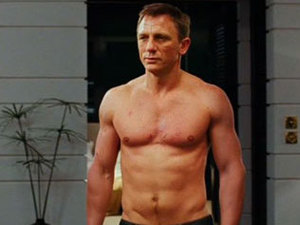
And because you can't have a bond post without a token shirtless Daniel Craig... here you go:

Daniel Craig, topless, James Bond


Tuesday, 24 July 2012

Bond Books Bring Sexy Back


Everyone always says not to judge a book by its cover but I do exactly that every time I pick up a new book. Why would I want to read something that looks boring? 'Oh but it doesn't matter what it looks like, it's the inside that counts, the book's soft centre and GSOH'. Pfft.

Vintage Classics always take the shelves in style and the new Bond editions are no exception: aren't these deliciously cool? They will be on the shelves in September and I can't decide which one I'll go for first... any thoughts?


For more on Bond, see what I thought of Ian Fleming's On Her Majesty's Secret Service.

Or for more pretty book covers to look at, see this post: Judge a book by its cover?.

Wednesday, 15 February 2012

The Bookshop on the Heath

A friendly wave from The Bookshop on the Heath!
One of my ultimate favourite places is The Bookshop on the Heath in Blackheath Village, south east London. It's like walking into one of those really old libraries that has so much character and is full to the brim with second hand books, signed first editions, posters and book illustrations. It has that convincing and oh-so-lovely old book smell... I am hoping you all know what I mean... There was one instance at school when I took a long deep breath to take in all the papery goodness of a book we'd been given to read only to find a handful of friends staring at me like I was some kind of book-smelling alien.

Anyhow... back to the bookshop. It's been around since 1949, making it one of the oldest second hand bookshops in Greater London and in its time has accumulated a mountain of fantastic books. There's a great range available, too, from modern crime classics to old children's books and rows and rows of old Penguin editions.


If you're looking for something in particular, do ask, because the owners are incredibly helpful. Saying that, it really is worth just diving in and seeing what you can find. Sure, you might not be able to fork out thousands of pounds for a signed first edition, but there is plenty there for your average book-buyer at ridiculously cheap prices and also plenty of
titles that are currently out of print.

It was also used for a couple of episodes in Spooks! Why not pop in and see if you recognise it?
The Bookshop on the Heath
74 Tranquil Vale
Blackheath
London
SE3 0BW
Tel:   0208 852 4786

Sunday, 12 February 2012

Book Club: On Her Majesty's Secret Service

From the back of the book: When Bond rescues a beautiful reckless girl from self-destruction, he finds himself with a leaed on one of the most dangerous men in the world - Enrst Stavro Blofeld, the head of SPECTRE. In the snow-bound fastness of his Alpine base, Blofeld is conducting research that could threaten the safety of the world. To thwart the evil genius, Bond must get himself and the vital information he has gathered out of the base and away from SPECTRE's agents. Which may require the help of someone who is both beautiful and a little reckless...

This is the first Bond book I've ever read and it couldn't feel more like a Bond book. That may sound odd but it really is like reading an action film. The style took me a while to get used to; I'm not used to reading ski-chases and gun fire! Saying that, once I got used to the style, I got really into it. Bond is famous for a reason - what a great character. He's a complete douchebag but you still root for him... how does that work!?


Anyway, this is Book No.3 of the Book Club, (chosen by
Lulu!) so let me share some of the views we had: We were all pretty grateful that it was so easy to read; we got through it pretty quickly and it didn't go on too long. I did briefly bring up the 'sexist' topic that seems to come hand-in-hand with most Bond analysis because the girls really are just objects who are beautiful but weak and characterless. Saying that, we didn't expect much more than that from Bond and so it didn't seem to cause any problems!

We all agreed that after a bit of a slow start, things improved. There's a good villain, a fun setting in the snowy Alps, a definite creepy feel throughout the narrative and a great final twist.

At the end of our Book Club meetings we all rate the book out of 10 and average it out. With quite a range in popularity, Bond got a good
7/10.

Thursday, 26 January 2012

Book Club: The Interpretation of Murder

So, I finished reading On Her Majesty's Secret Service by Ian Fleming today but, as it's a Book Club book, I'm not going to review it until we meet in a couple of weeks. In the meantime, I thought I'd review the first book we did back in November!

Manhattan, 1909. On the morning after Sigmund Freud arrives in New York on his first - and only - visit to the United States, a stunning debutante is found bound and strangled in her penthouse apartment above Broadway. The following night, another beautiful heiress, Nora Acton, is discovered tied to a chandelier in her parents' home, viciously wounded and unable to speak or to recall her ordeal. Soon Freud and his American disciple, Stratham Younger, are enlisted to help Miss Acton recover her memory and to piece together the killer's identity. It is a riddle that will lead them on a thrilling journey - into the darkest places of the city, and of the human mind.

I chose this book largely because my dad had read it and because it was the winner of the Galaxy Book Awards' Best Read... and I liked Galaxy chocolate... Oh and it has Freud in it! In the end, we all had interesting thoughts on this widely credited novel but, in brief:


The backdrop against Manhattan’s emerging skyline and cosmopolitanism was a hit. I'd recently come back from a brief trip to NYC and had been on a tour at the Tenement Museum, which allowed you to follow a poor immigrant family's life at this time, so it was particularly fun for me to read! Admittedly, this isn't about immigrants... but Freud was an outsider and he definitely gets treated like one... 


Littlemore, one of the junior detectives on the case, was a favourite in terms of characters and it
 had some exciting moments, too, especially when a couple of the characters become very literally under pressure…

The main concern was its length and just how much was crammed in to its 400+ pages. So much seemed to happen and little really added much to the central plot. It was clear that Rubenfeld was fascinated by Freud and his history and, while his knowledge was impressive, he ended up seeming to show this off a bit...


Aside from that, we all enjoyed the book and gave it a healthy
7/10