My Bookshelf

Showing posts with label Poetry. Show all posts

Monday, 4 August 2014

Virginia Woolf: Art, Life and Vision at the NPG


I’m always trying to find fun ‘cultural’ things to do, be it an exhibition, a gig or concert, some literary event etc. I do enjoy them and deep down somewhere I probably think that they are a necessary part of my self-improvement. They’re also great small-talk fillers. Problem is, that when summer hits, the requirements of small-talk often goes up as everyone becomes more sociable when the sun comes out, but the number of cultural conversation pieces goes down because I stop looking for cool things to do. The one drawback of actually having a British summer this year is that I’ve done almost nothing but sit outside, eat a lot and do a hell of a lot of people watching. So this weekend I decided to try to fill the void at least a little and headed off to see Boyhood (incidentally people watching for the cinema-goer) and went to the Virginia Woolf exhibition at The National Portrait Gallery (hoorah, I finally got to the subject of this post).

Love a bit of Virginia Woolf and I know that there is a Woody Allen sequel to Midnight in Paris (which will be aptly named Midnight in London) waiting for me to snatch the lead role from Owen Wilson so that I can hang out with the Bloomsbury set for 90 minutes. I mean seriously, these are the people that started up their own publishers and printed TS Eliot’s The Wasteland. The Woolfs got to hang out with Sigmund Freud, John Maynard Keynes, Lytton Strachey, Roger Fry, Vanessa Bell, EM Forster and Lady Ottoline Morrell. Can you imagine having so many and such an eclectic group of intellectual minds – writers, artists, economists, psychologists, poets.

Such life envy, with the exception of the whole going mad and killing yourself bit… not so great.

The exhibition is a must for anyone vaguely interested in this time period. It included photos of the Woolf’s home in Tavistock Square before and after the bombing that destroyed all but its end wall the mural Virginia’s sister, Vanessa Bell, designed for the couple.

Vanessa’s artwork was dotted about the exhibition and the front covers of early editions of Woolf’s work were on display, each designed by Vanessa Bell.

There were handwritten love letters (including one from Leonard Woolf to Virginia which did nothing for my futile belief that he would make a great husband… for me… I told you it was futile), personal photographs, extracts from Virginia’s family newsletter that she wrote with her brothers.

It is perhaps unsurprising that Virginia Woolf became, like so many, very interested in the Spanish Civil War but I didn’t know that she had been so heavily involved in an event at London’s Royal Albert Hall that was started to raise money for the Basque children. She was also a patron for the campaign to bring Picasso’s epic anti-war painting Guernica (1937) to Britain (the exhibition leaflet was included in the exhibition) and her nephew, Quentin Bell, apparently tried to get Picasso to come along himself. While he didn’t turn up, the exhibition included one of his drawings ‘The Weeping Woman’ which Picasso was said to have donated to the cause in lieu of his own attendance.

Anyway, I’ve written a ridiculously long post but there’s so much to see and learn. Even if you don’t really care about Viriginia Woolf, it’s a wonderfully detailed snapshot into a very interesting group of people at a pivotal moment in modern history. It’s only £7… You can even drop in at the BP Portrait Award for free at the same time.

Relevant Posts:

Wednesday, 28 May 2014

Book Slam: Emma Jane Unsworth, Ned Beauman, Elvis McGonnagall

Tonight was Book Slam night. For those of you unacquainted with the brilliance that is Book Slam, it basically involves a group of reasonably like-minded liberal book-loving intellectuals gathering for one night in the delightful and oh-so-classy Clapham Grand (on this occasion) for “London’s Best Literary Club Night”.

The evening started off well. Very well. You all know me well enough by now to know that that means there was food on offer. Flame-grilled barbecue steak or ribs, only without the flame-grill part because, you know, it was inside... so each steak was served with a portion of ‘this would normally taste better if they’d let us use our blowtorch’. Unflamed but still delicious. And what is better than food? FREE food. And what’s better than free food? Free DOUGHNUTS.

Anyway, books. Great line-up tonight and for the first time I’ve actually read one of the books. Emma Jane Unsworth read from her new novel, Animals. As kindly summed up on the front, it’s basically Withnail and I but with women. It’s an hilarious read, but also very touching and, at times, hugely frustrating. Unsworth’s protagonist is desperately trying to navigate her way through her late twenties, on the one hand trying to settle down with her very sensible and stable tee-total fiancé, while still being drawn in by the addictive madness of best friend, Tyler, who is still very much into all-night benders and one night stands. Loved. It. Will review shortly.


Generally I’m not in to poetry. Occasionally I like to romanticise about sitting down by a peaceful canal on a sunny day with a pretentiously named ale in hand and reading TS Eliot, but mostly poetry just makes me recall studying poetry at school and how rubbish I was at it. However, if you want to bring in a tartan-wearing Scot reciting his hilarious satirical verses, then I’m all ears. We got to meet Nigel Fromage and hear what the queen really wants to say in her Christmas speech. Good fun. Thanks Elvis McGonnagall.


The finale was Ned Beauman reading from his new novel, Glow. He began by explaining how he had become aware of his portrayal in the media as being very pretentious and that a journalist had recently contributed by wrongly declaring he had been wearing all black (classic sign of pretentiousness apparently) during the interview, when he hadn’t and the accompanying photo of him proved said fact. Sadly, rather than making me warm to him, it just sort of made me a little more certain that he probably is a little pretentious, judging (perhaps unfairly) by his attire and fashionable beard (which I still don’t get, by the way). I don’t mind him being pretentious, hell we’ve all paid to go listen to authors read from their literary novels while we gorge on pop-up bbq deliciousness. I’d just rather he’d embraced it all, rather than slam dunk the journo. Yeah, wasn’t keen. Sorry Ned.


All of this was brilliantly brought together in the middle by music from the brilliantly weird, Benin City. Downloading their stuff legally right now.

Thanks Bookslam. Top evening, great doughnuts.

Friday, 14 February 2014

On the Road to Mandalay - from Rudyard Kipling to Daphne Du Maurier


Without realising it, the first time I heard of a distant place called Mandalay was when I was about five years old:
The head of the herd was calling
Far, far away
They met one night in the silver light
On the road to Mandalay
It seems Nellie the Elephant, made famous by this nursery rhyme, packed her trunk and traveled all over flipping Asia and back again when I look at these lyrics now, Bombay - Hindustan - Mandalay - where next?


Aside from the irresistible nostalgia sesh, my reason for bring up Nellie is that Mandalay for some reason over the years has become, through literature, this romanticised city. The 'silver light' of Burma.


Most famously, Rudyard Kipling wrote his famous poem, 'On the Road to Mandalay' which was subsequently put to music , most notably by Frank Sinatra:

By the old Moulmein Pagoda, lookin' eastward to the sea,
There's a Burma girl a-settin', and I know she thinks o' me;
For the wind is in the palm-trees, and the temple-bells they say:
"Come you back, you British soldier; come you back to Mandalay!"
So I think, as much as I love Nellie, Rudyard Kipling is probably the main culprit when it comes to the romanticising of Mandalay. When we drove into the ex-Burmese capital, I was on the lookout to see whether or not there was anything in what Kipling had to say.

"Everyone comes to visit," our guide was telling us, "expecting to find a beautiful old Asian city. But it's not! It's a big modern city with a lot of cars!" And he was right. It is a busy modern city with lots of cars, but then it occurred to me - Kipling this whole time has been writing about the ROAD to Mandalay, not the city itself. Even Nellie only headed out in the direction of Mandalay. Who knows if she ever got there. And the road to Mandalay really is beautiful. A basin between two mountain ranges, the land is flat, lush green farm land with idyllic lakes and the iconic teak bridge, an image used in numerous depictions of Burma and on the front of Amitav Ghosh's The Glass Palace.


I think, though, that the main reason for the continued romanticising of the city is wrapped up in its mystery. For decades Myanmar has been cut off from the world. Even before that, the city itself is built around the last royal palace of the Burmese monarchy and it is vast - 413 hectres to be precise, and 2km square, with huge towering walls and a 64 metre wide moat separating it from the rest of the city. The last king never once left the palace walls until he was sent into exile, enforcing a sense of mystery at the literal centre of the city.


This sense of mystery is, perhaps, epitomised in Daphne Du Maurier's appropriation of the name, Mandalay (or Manderley, as she writes), for the ghostly manor in her novel, Rebecca.


I don't even know if Kipling went to Mandalay, perhaps he only made it to the road on its way there? But the surrounding countryside really is beautiful, and the city, which yes, has some traffic, don't they all?, was actually great. I got to walk around the different working districts - marble carving, gold leaf making, silk weaving - and climb to the top of Mandalay Hill at sunset to see it all from a distance. It's a great city, so maybe now that the country is open again, Kipling's poem will bring more curious people to its gates?


Tuesday, 7 May 2013

London Literature Festival 2013


It's been a while, my apologies - all I can say is that my life has been a little less full of books over the last week and a little more filled with, well, wine, dancing like Beyonce, sunshine, a whole lot of food and all, often, at the same time. That aside, people, I am back and what do I have for you? Only the London Literature Festival programme!

Brace yourself if you have a tendency to get a little over-excited - there is definitely potential for some Beatle mania, only with no Beatles... and to be honest probably not much mania around the usual Southbank clientele... anyway, the festival will be at London's Southbank Centre and feature two literary prize readings (
2013 Man International Booker Prize Readings and the Women’s Prize for Fiction Readings) as well as conversations with fiction royalty Barbara Kingsolver, Lionel Shriver, Dalrymple, Audrey Niffenegger... and Rupert Everett. Thought I'd just slip him in there even though he probably doesn't quite qualify as literary royalty, but he does have a book out so he's earned his place.

Claire Tomalin's publicist has gone a little crazy and signed her up for five lectures on literary figures from Thomas Hardy to her latest subject, Charles Dickens, to Jane Austen who would have been celebrating
Pride and Prejudice's 200th anniversary this year.

Other things you can expect include plays, graphic novels and a whole lotta poetry... which I'm afraid I will be largely avoiding because not even an English Literature degree has raised by brow high enough to pay for poetry. I would probably pay to see Keats, or Eliot, or Hardy - that might be worth seeing... especially as it would likely involve a very dramatic awakening from the dead which would be pretty original entertainment in itself.

I really shouldn't be so mean about poetry, I'm sure there's loads of good stuff on if the non-fiction and fiction line-up is anything to go by. Check out the entire programme here, but be quick - tickets are vanishing quickly.

Some other relevant posts:

Friday, 22 March 2013

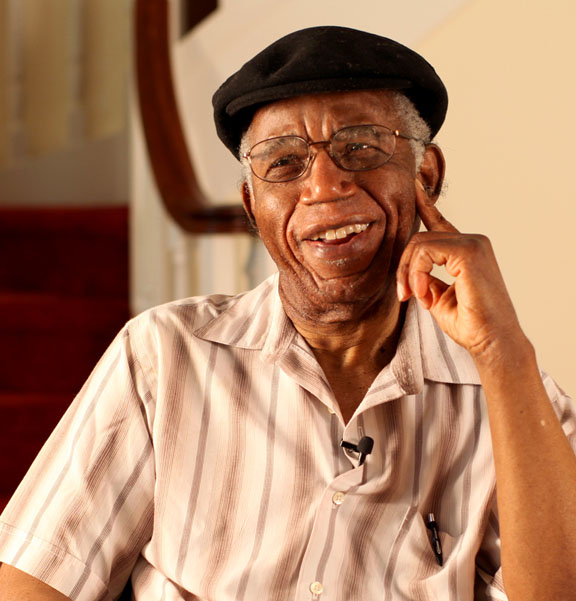
Chinua Achebe, dies aged 82


Chinua Achebe was a Nigerian novelist, poet, professor and critic. He is most famous for his 1958 book, Things Fall Apart, which follows the life and times of Okonkwo, a leader and local wrestling champion in Umuofia, a fictional village in Nigeria inhabited by the Igbo people, and his family. A phenomenal achievement, Things Fall Apart was one of the first African novels to be written in the English language and has since become the best-selling modern African novel in the world. He is widely known as the 'Father of African Literature', quite the legacy.

Achebe's career was one that received high praise and saw him travel all over the world, finally residing in Boston where he worked as a professor. Tragically Achebe was involved in a car accident that left him paralysed from the waist down for the last twenty years of his life - the fundamental reason for his relocating to the USA. His family in their statement paid tribute to "one of the great literary voices of all time. He was also a beloved husband, father, uncle and grandfather, whose wisdom and courage are an inspiration to all who knew him." Nelson Mandela has credited him with "[bringing] Africa to the World".

Chinua Achebe is one of those guys you need to look up just to furnish yourself with some brilliant quotes. Achebe just oozes profundity and is simply one of those people we all wish we were - making a real difference.

Here are a handful of quotes for you to take away:
"One of the truest tests of integrity is its blunt refusal to be compromised."
"The only thing we have learnt from experience is that we learn nothing from experience."
and on Yeats (from whose poem came the title Things Fall Apart): 
"But I liked Yeats! That wild Irishman. I really loved his love of language, his flow. His chaotic ideas seemed to me just the right thing for a poet. Passion! He was always on the right side. He may be wrongheaded, but his heart was always on the right side. He wrote beautiful poetry."
Things Fall Apart has rightly been read and taught in schools worldwide, mine included, but for some reason I remember his poem 'Vultures' much better, so am leaving you with this:

In the greyness
and drizzle of one despondent
dawn unstirred by harbingers
of sunbreak a vulture
perching high on broken
bone of a dead tree
nestled close to his
mate his smooth
bashed-in head, a pebble
on a stem rooted in
a dump of gross
feathers, inclined affectionately
to hers. Yesterday they picked
the eyes of a swollen
corpse in a water-logged
trench and ate the things in its bowel. Full
gorged they chose their roost
keeping the hollowed remnant
in easy range of cold
telescopic eyes ...
Strange
indeed how love in other
ways so particular
will pick a corner
in that charnel-house
tidy it and coil up there, perhaps
even fall asleep - her face
turned to the wall!
...Thus the Commandant at Belsen
Camp going home for
the day with fumes of
human roast clinging
rebelliously to his hairy
nostrils will stop
at the wayside sweet-shop
and pick up a chocolate
for his tender offspring
waiting at home for Daddy's return ...
Praise bounteous
providence if you will
that grants even an ogre
a tiny glow-worm
tenderness encapsulated
in icy caverns of a cruel
heart or else despair
for in every germ
of that kindred love is
lodged the perpetuity
of evil.

Tuesday, 25 December 2012

Day 24: 'Twas The Night Before Christmas


My illustrated edition of 'Twas the Night Before Christmas was one of my favourite poems as a child, so I had to share it. The poem was written by C
lement Clarke Moore in 1822 and also goes under the title A Visit from St. Nicholas. It has become a real tradition for many families, particularly in America, and depicts the Father Christmas that we know today. Interestingly Saint Nicholas had never been associated with reindeer or sleighs until Clement Clarke Moore's poem!
'Twas the night before Christmas, when all through the house,
Not a creature was stirring, not even a mouse.
The stockings were hung by the chimney with care,
In hopes that St Nicholas soon would be there.

The children were nestled all snug in their beds,
While visions of sugar-plums danced in their heads.
And mamma in her ‘kerchief, and I in my cap,
Had just settled our brains for a long winter’s nap.

When out on the lawn there arose such a clatter,
I sprang from the bed to see what was the matter.
Away to the window I flew like a flash,
Tore open the shutters and threw up the sash.

The moon on the breast of the new-fallen snow
Gave the lustre of mid-day to objects below.
When, what to my wondering eyes should appear,
But a miniature sleigh, and eight tinny reindeer.

With a little old driver, so lively and quick,
I knew in a moment it must be St Nick.
More rapid than eagles his coursers they came,
And he whistled, and shouted, and called them by name!

"Now Dasher! now, Dancer! now, Prancer and Vixen!
On, Comet! On, Cupid! on, on Donner and Blitzen!
To the top of the porch! to the top of the wall!
Now dash away! Dash away! Dash away all!"

As dry leaves that before the wild hurricane fly,
When they meet with an obstacle, mount to the sky.
So up to the house-top the coursers they flew,
With the sleigh full of Toys, and St Nicholas too.

And then, in a twinkling, I heard on the roof
The prancing and pawing of each little hoof.
As I drew in my head, and was turning around,
Down the chimney St Nicholas came with a bound.

He was dressed all in fur, from his head to his foot,
And his clothes were all tarnished with ashes and soot.
A bundle of Toys he had flung on his back,
And he looked like a peddler, just opening his pack.

His eyes-how they twinkled! his dimples how merry!
His cheeks were like roses, his nose like a cherry!
His droll little mouth was drawn up like a bow,
And the beard of his chin was as white as the snow.

The stump of a pipe he held tight in his teeth,
And the smoke it encircled his head like a wreath.
He had a broad face and a little round belly,
That shook when he laughed, like a bowlful of jelly!

He was chubby and plump, a right jolly old elf,
And I laughed when I saw him, in spite of myself!
A wink of his eye and a twist of his head,
Soon gave me to know I had nothing to dread.

He spoke not a word, but went straight to his work,
And filled all the stockings, then turned with a jerk.
And laying his finger aside of his nose,
And giving a nod, up the chimney he rose!

He sprang to his sleigh, to his team gave a whistle,
And away they all flew like the down of a thistle.
But I heard him exclaim, ‘ere he drove out of sight,
"Happy Christmas to all, and to all a good-night!"


and now it's over and out from me until the New Year! Merry Christmas everyone x

Wednesday, 12 December 2012

Day 12: The Dark Earth and the Light Sky


"Or must I be content with discontent
As larks and swallows are perhaps with wings?"
The Glory, Edward Thomas

Deep in the Hampshire countryside Edward Thomas scrapes a living; disaffected husband, exhausted father and tormented writer. Then in 1913 he meets American poet Robert Frost and everything changes. As their friendship blossoms Edward writes, emerging from his cocoon of self-doubt into one of the most influential poets of the twentieth century.

On the verge of success he makes the drastic decision to enlist, confounding his friends and family. The Dark Earth and the Light Sky delves into the life of this enigmatic and complex character in an era of change and destruction.

Last night I went along to the Almeida Theatre in Islington to see Nick Dear's The Dark Earth and the Light Sky. When I looked up the description of the play I wasn't entirely sure what to expect. On the one side I thought it might simply be a dramatic biopic, capturing chronologically the short life of Edward Thomas, and showing the ways in which Robert Frost inspired his writing. Then my experience kicked in and thought that so many playwrights can't seem to resist doing something 'clever' or 'artistic' that will in their view in someway get across some kind of deeper meaning.

Ok, so you've probably gathered that I'm not a particularly sophisticated theatre goer, although that doesn't mean I'm not enthusiastic about it. I love the ice cream... the programmes... the merchandise... (damn, knew I should have got that Viva Forever mug...). No, seriously, I love the theatre and even better when you come out and you feel that tiny bit more intelligent... (ok, maybe not with Viva Forever).

I enjoyed this play although I don't feel it was either a biopic nor an overly complex artistic portrayal of Thomas' life. It was very simple, which I appreciated; small cast, clear plot and clever staging. I'm also intrigued by Thomas as a war poet who didn't actually write a poem explicitly about war!

Nick Dear is no stranger to staging literary giants (Frankenstein, Byron, Persuasion, Iris...the list goes on) so it was always going to be good, wasn't it? Plus, I'm a sucker for war stories, I'm half Welsh and an English Lit graduate, and I always love a good biopic.

It's always important to say the acting was spot, although I wouldn't say I particularly liked any of the characters... but they are real people, so it's not like you can just make one of them really romantic or the other really funny if they weren't... Saying that, the humour was great in this. What is ultimately a very sad story was heightened by the carefully placed humour that, as I always say, the Brits do particularly well I think.

My only disappointments really were, firstly, for me, it could have ended at several points in the final half hour. Secondly, I just feel that something was slightly missing... which is harsh to say when I can't put my finger on what. I know it wasn't a history lesson but I don't feel I learnt all that much and I don't feel I invested in a character.

Overall, though, it was a really enjoyable evening and I would recommend going to see it, even if it's just a good excuse to go to a small theatre and witness a great cast take on a literary great that was almost forgotten. 


Wednesday, 21 November 2012

Costa Book Awards 2013: Shortlist

Hoorah, arguably my favourite awards of the year, the Costa Book Awards, have announced their shortlisted titles in each category. As always, Costa's 'First Novel Award' introduces us to some fresh new writers and I've got to say, so far, they've got it right. You all know my love for The Outcast by Sadie Jones, which won the award in 2008, and The Tenderness of Wolves by Stef Penney which won both the First Novel Award and Costa's Book of the Year in 2006. 

Historically, the Costa Book Awards used to be the Whitbread awards prior to the renaming in 2006. Over the years the awards have recognised a staggering number of top debut writers that have gone on to great things: Zadie Smith, Kate Atkinson, Mark Haddon, Jeanette Winterson and William Boyd to name but a few.

Surprise surprise, this year far-from-debut-novelist Hilary Mantel is up there hoping to continue her winning streak with Wolf Hall sequel, Bring Up the Bodies. For the first time the shortlist features two graphic novels as well as another year of fantastic children's books. Here's the shortlist below, or as I like to call it, 'my Christmas list'.

_________________________________________________

Costa First Novel Award
The Notable Brain of Maximilian Ponder, J W Ironmonger (Weidenfeld & Nicolson)
Snake Ropes, Jess Richards (Sceptre)
The Innocents, Francesca Segal (Chatto & Windus)
The Bellwether Revivals, Benjamin Wood (Simon & Schuster)
Costa Novel Award
Bring up the Bodies, Hilary Mantel (Fourth Estate)
Life! Death! Prizes!, Stephen May (Bloomsbury)
The Heart Broke In, James Meek (Canongate)
Days of the Bagnold Summer, Joff Winterhart (Jonathan Cape)

Costa Biography Award
Patrick Leigh-Fermor: An Adventure, Artemis Cooper (John Murray)
The Crocodile by the Door: The Story of A House, A Farm and A Family, Selina Guinness (Penguin Ireland)
Serving Victoria: Life in the Royal Household, Kate Hubbard (Chatto & Windus)
Dotter of Her Father’s Eyes, Mary Talbot and Bryan Talbot (Jonathan Cape)
Costa Poetry Award
Bee Journal, Sean Borodale (Jonathan Cape)
The World’s Two Smallest Humans, Julia Copus (Faber and Faber)
People Who Like Meatballs, Selima Hill (Bloodaxe Books)
The Overhaul, Kathleen Jamie (Picador)

Costa Children’s Book Award
Maggot Moon, Sally Gardner (Hot Key Books)
The Seeing, Diana Hendry (The Bodley Head)
What’s Up with Jody Barton?, Hayley Long (Macmillan Children’s Books)
A Boy and A Bear in A Boat, Dave Shelton (David Fickling Books)