My Bookshelf

Showing posts with label Book Review. Show all posts

Friday, 22 August 2014

The Cuckoo's Calling by Robert Galbraith

When a troubled model falls to her death from a snow-covered Mayfair balcony, it is assumed that she has committed suicide. However, her brother has his doubts, and calls in private investigator Cormoran Strike to look into the case. Strike is a war veteran - wounded both physically and psychologically - and his life is in disarray. The case gives him a financial lifeline, but it comes at a personal cost: the more he delves into the young model's complex world, the darker things get - and the closer he gets to terrible danger ...

When Robert Galbraith’s debut novel, The Cuckoo’s Calling, was released it received excellent reviews for a first-time writer, including a stellar quote from Scottish crime queen Val McDermid. Just the result, I reckon, that JK Rowling was looking for when she first decided to write her new crime series under a pseudonym in an attempt to be judged honestly, with Potter set aside for one moment. 

Sadly the secret came out too early for me to read it without knowing it was JK who had penned it, and arguably yes, it may not have read it if her name wasn’t attached, but I enjoyed it so there. There aren’t any gimmicks here, just good classic crime with a troubled crime-fighting protagonist in the brilliantly named Cormoran Strike and his trusty red-headed (had to throw that in, obvs) sidekick, Robin.

As a Londoner, I loved the setting. The novel taps into both London’s seedy underbelly and the glitz and glamour of its celebrity elite. It walks you from Strike’s dingy Denmark Street office through the sounds and smells of Chinatown to the wide streets and beautiful homes of Mayfair.

In the celebrity-obsessed world we live in these days, the idea of a famous model falling dramatically from her balcony doesn’t seem that unlikely... I can almost see the tabloid headline now. Rowling isn’t rubbing it in our faces by any means – she isn’t saying, ‘hey, look how ridiculous we all are’ but I sensed some satire here, which I like whether it was deliberate or not. It’s there for the taking if that is how you choose to read it but either way it’s a good story.

I’m not going to say that this is the most exciting, genre-busting novel of the 21st century but it’s not supposed to be. All in all, this is going to be a fun series to get involved in. Like the best crime novels, this can be consumed quickly and leave you with an appetite for the next one.

As ever with JK Rowling, she doesn’t let waffle get in the way of a great plot and solid characters. In her central female character, she has created that perfect combination of intelligence and heart, strength and vulnerability… but I’m going to restrain myself from comparing her to any other of Rowling’s strong female characters… In short, I’d get into these now before there are 100 of them – next stop, The Silkworm!

7/10

Thursday, 24 July 2014

A Single Man by Christopher Isherwood

In this brilliantly perceptive novel, a middle-aged professor living in California is alienated from his students by differences in age and nationality, and from the rest of society by his homosexuality. Isherwood explores the depths of the human soul and its ability to triumph over loneliness, alienation and loss.

'He strikes a note of great intimacy with the reader as if with a close personal friend, and a sense of total honesty is sought. This style - witty, observant, nostalgic, exact - was Isherwood's great contribution to modern literature' Financial Times

'Very sad and yet at times wildly funny' Daily Telegraph

I picked up A Single Man again a few weeks ago. I love this novel but to describe why is so difficult. Not because I can’t put my finger on it, but because my reasons are so boringly clichéd.

It’s just beautifully written and brilliantly immersive; you really feel you ‘get’ George. You can place him, you can place his neighbours and his academic colleagues. You know who he is, what he’d do next – you can paint a very good picture in just the 170 pages that make up this book.

It of course helps when painting said picture (I didn’t actually paint… just to be clear…) that you’ve seen the film. Which I have. Three times. Also, extremely good. I mean Colin Firth, Julianne Moore, Matthew Goode and Nicholas Hoult are never going to disappoint but director Tom Ford brings his relentlessly cool style to the table that gives it that extra summitsummit. I suppose you could maaybbeee say that Ford’s direction fills the void of Isherwood’s writing in the film.

While making the story visually striking, I also think Ford gets across George’s moments of detachment that Isherwood creates so beautifully in his novel. Ishwerwood’s decision to describe everything from George’s perspective helps illustrate how George, for the most part, is removed from his community. He is secretive and aloof – a deliberate decision, I think, to protect himself, which he enjoys but all the while he unconsciously yearns to be included, be social, be loved. Probably a bit of that in us all…

In short, though, he’s a softie who is wonderfully screwed up. As a child from the Harry Potter generation, I was brought up with Snape, Lupin, Dumbledore, Harry himself, and so feel I am now always destined to fall for screwed up male characters (hopefully just in books…).

Being so short, there is absolutely no excuse not to read this. Even if you hate it. Which I hope you don't… and if you do, watch the film. I give you permission.

8.5/10

Sunday, 13 July 2014

The Fault In Our Stars - John Green


Despite the tumor-shrinking medical miracle that has bought her a few years, Hazel has never been anything but terminal, her final chapter inscribed upon diagnosis. But when a gorgeous plot twist named Augustus Waters suddenly appears at Cancer Kid Support Group, Hazel's story is about to be completely rewritten.


Insightful, bold, irreverent, and raw, The Fault in Our Stars is award-winning author John Green's most ambitious and heartbreaking work yet, brilliantly exploring the funny, thrilling, and tragic business of being alive and in love.


I first bought this book for my cousin, having seen it decorating every bookshop for several months. Looking at the blurb, though, I didn't really have any urge to read it myself - young love, cancer? It all sounded a little pre-teen, a little American.

At this point I slipped into the kind of person I have despised for so long - a literary snob. Blghrrrr. So after seeing it's huge success and hearing nothing but high praise for this novel, I decided I really should have a go and damn it, it really is good.

Sure it is a little teenagery but it's done with such heart (and not the gooey fluffy kind, grittier and more painful than that). The protagonist, Hazel, has all the wonderful grumpiness and pretentiousness of that breed of teenager but she is not a caricature and I feel that must have been extremely important for Green when writing her. She's funny, she's intelligent, she has things she likes and things she doesn't, she's desperate to be understood but also desperate to be misunderstood, and she gets into grumps like any other person, teenager or otherwise, but actually has a *reasonably* decent excuse. The love interest, Augustus, is perhaps a little too perfect. But that's ok. Why? Because if Hazel is me, then in my little moment of escapism, there's an Augustus for me too. It's as simple, as cheesy and as sugar-sprinkled as that.

There is something about going through something awful like a serious illness, death, war, whatever it may be, that is very dreamlike; you don't ever believe it will happen to you, even when it has. Therefore, while my cynical side rolled its eyes at the seemingly perfect love story, the other part of me felt that it all kind of fits - cancer, love - they're pretty much both dreams, albeit opposite ends of the spectrum. Ok so now I sound like the pretentious teenager with very poor vocab but I hope you see what I'm getting at.

One of the best things about this book, and I think what makes it feel all the more real and not what I would call 'cancer-schmultz' is that Green and his characters are not afraid of humour. Nothing like a bit of black humour when everything is going wrong. Sure, it isn't for everyone, but it sure as hell is the drug for me.

By the end, though, I have to say I felt angry. Not at having wasted my time or anything - this was a beautiful book, it was funny and touching, enlightening and well-written - but because I felt manipulated. How dare Mr. Green make me feel emotional. Streaming with black mascara tears at various intervals, it felt like I had been drugged by Nicholas Sparks and that I was getting emotional against my own will. But actually, if I'm honest, sometimes that is exactly what I want - to be able to get in touch with those emotions in a safe environment. And there's no better way than reading this book. And it's not trashy, either. It's good quality, literary YA fiction that should be read by everyone. Ultimately, kids books do things that adult books can't. I can't put my finger on it but this book is surely a perfect example.

9/10

Tuesday, 8 July 2014

Skylight - David Hare


On a bitterly cold London evening, schoolteacher Kyra Hollis receives an unexpected visit from her former lover, Tom Sergeant, a successful and charismatic restaurateur whose wife has recently died. As the evening progresses, the two attempt to rekindle their once passionate relationship only to find themselves locked in a dangerous battle of opposing ideologies and mutual desires.

I am always amazed that theatres are full. Not because theatre is rubbish... but because it has become murderously expensive. I mean, seriously, who has £100 quid to spend on three hours' entertainment?? Thanks, though, to a very generous donor of theatre tokens to the Claire's Cultural Education fund (and some discounted front row tickets), I got to treat myself to Skylight, a play by David Hare at Wyndham's theatre.

I'm a big fan of David Hare - be it his numerous West End triumphs or his Academy Award nominated screenplays for
The Hours and The Reader. Hare alone, therefore, was enough to get me to sacrifice my trusty theatre tokens but when I saw Carey Mulligan and Bill Nighy were going to be in it... well, perhaps disappointingly, I just can't resist a bit of Hollywood.

As it turns out, Nighy is actually reprising the role of Tom that he played back in 1996, in the very same theatre on Charing Cross Road. While I'm perfectly aware that people do get into relationships with a huge age gap, I do find Hollywood's almost insistence of pairing up ageing male actors with beautiful young women gets a bit tiring and is all about the aesthetic and cultural politics and very little about the credible, heart-rending love the writer, I assume, first wrote about. Needless to say, this was
not a problem for Nighy who captivated the audience from the moment he stepped on stage. He delivered the character's charisma and intelligence beautifully and with such energy, you couldn't keep your eyes off him (and he off his audience... it seems Mr. Nighy likes a bit of audience eye contact... while I desperately tried not to shrivel up into a giggly goo ball) and there was no doubt as to why Mulligan's character, Kyra, had fallen for him.

As for Carey Mulligan, her skin really is that good. Turns out she can also multi-task - she admirably acts and cooks in this production. More importantly, she's just the most exquisite actress. Arguably the most touching scene of the whole play is shared between Mulligan and her
An Education co-star Matthew Beard, who play's Tom's son. Beard has clearly been studying his on-screen father's acting style, amazing presence, twitchily charming and bursting with humour.

The play itself is right up my street. Ostensibly Hare showcases the often unhelpful polarisation of society but this is not a political rant, at least I didn't see it that way. Thanks to Hare's hilarious and accurate cultural observations, the play is laugh-out-loud funny (couldn't quite bring myself to type LOL...) while simultaneously building deeper, complex characters. Personally I always love a play or novel that explores a bit of old internal conflict and the lies we all tell ourselves, and Skylight certainly doesn't disappoint as you wait for it all to bubble up through the humour to the surface.

Probably one of the best plays I've ever seen. For me, it felt so real and that's rare for me when it comes to theatre - arguably helped by the neck-breakingly close seats but, if you can snatch a last minute ticket, go. Simples.

Other relevant posts:

Tuesday, 1 July 2014

The Truth About The Harry Quebert Affair - Joel Dicker

August 30, 1975. The day of the disappearance. The day Somerset, New Hampshire, lost its innocence.

That summer, struggling author Harry Quebert fell in love with fifteen-year-old Nola Kellergan. Thirty-three years later, her body is dug up from his yard, along with a manuscript copy of the novel that made him a household name. Quebert is the only suspect.


Marcus Goldman - Quebert's most gifted protégé - throws off his writer's block to clear his mentor's name. Solving the case and penning a new bestseller soon merge into one. As his book begins to take on a life of its own, the nation is gripped by the mystery of 'The Girl Who Touched the Heart of America'. But with Nola, in death as in life, nothing is ever as it seems.

I can't decide how I feel about this book. Starting it, I was disappointed. The characters were, in my opinion, unsubtle and some of the scenarios unrealistic and verging on farcical. My biggest objection, as you might expect, was to some of the decisions made and conversations had in the novel's publishing industry. That's not to say you don't get diabolical editors and money-craving publicity stunts but the whole thing felt a little OTT.

I also (and I realise this is subjective) struggled with the character of Nola herself - there seemed to be so many contradictions. Some, of course, are deliberate, but it seems to me strange, for instance, that a child so overtly young and naive in the way she talks, the way she generally operates, would be sexually engaged? It's not the fact Quebert is in love with a fifteen year old - terrifyingly, it happens - it's that this fifteen year old somehow doesn't make sense to me. 
It would probably all have been fine if I could distract myself from these niggly points with an intelligent and fast-paced plot but two hundred pages in and I'm struggling a bit.

That said, I don't want to take away the credits Joel Dicker deserves. The concept is strong and the writing was good and appropriately unintrusive; Dicker doesn't shove hyperbolic imagery down the reader's throat or indulge in too many metaphors or flowery sentences. While the plot continued to be a little uninspiring, it did pick up and by the end I was engaged and found myself turning the pages much more rapidly.

Overall I wouldn't say this book goes down as the most original crime novel I've ever read... But it does pick up pace and there are some fun twists and turns along the way so I'd say, if you're going to pick it up, do persevere, it gets better. But am I going to stock up on copies to send to all my friends at Christmas? Sorry Joel Dicker, I feel I've been overly harsh, but no.

5/10

Friday, 6 June 2014

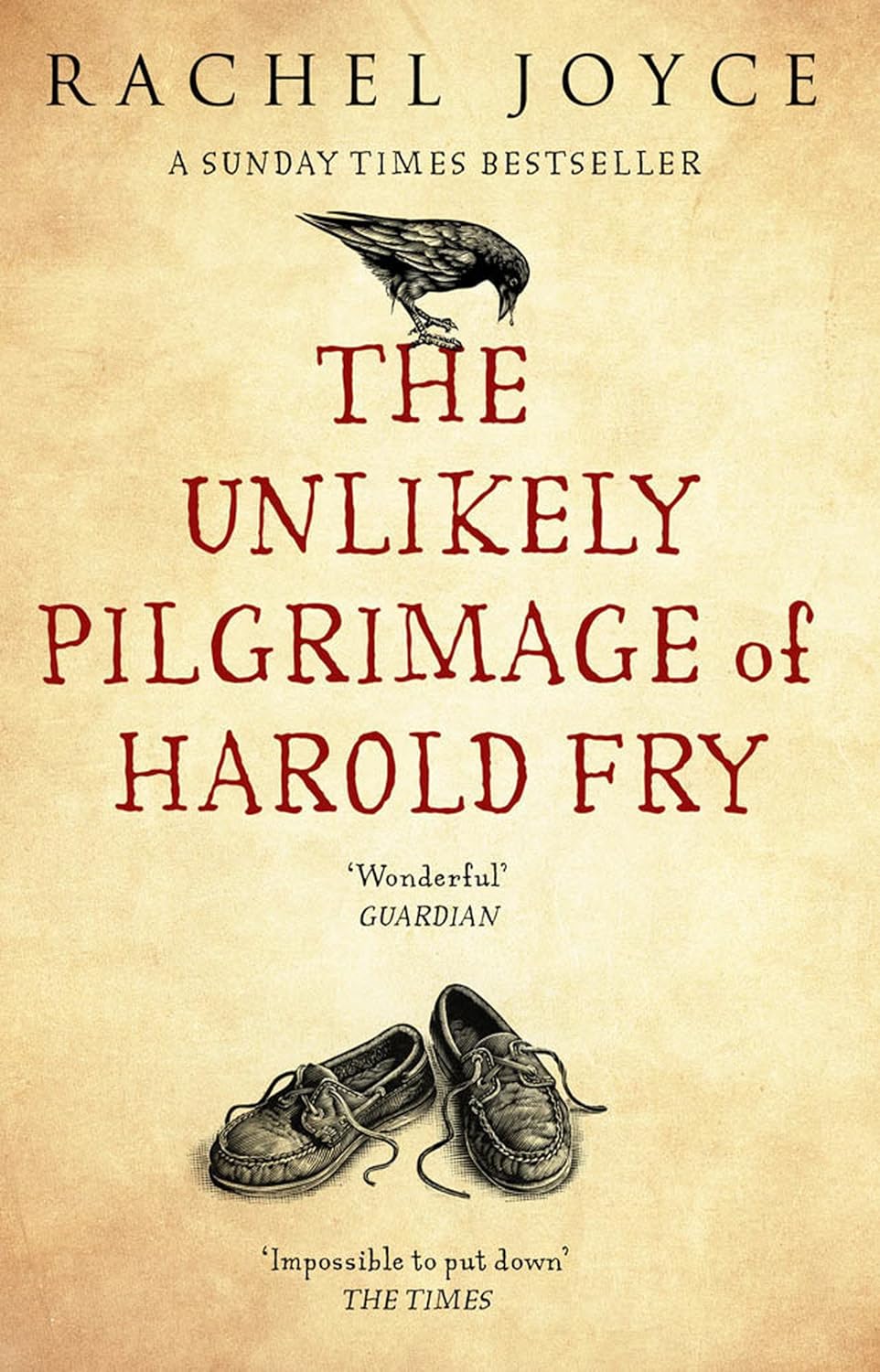
The Unlikely Pilgrimage of Harold Fry - Rachel Joyce

When Harold Fry nips out one morning to post a letter, leaving his wife hoovering upstairs, he has no idea that he is about to walk from one end of the country to the other. He has no hiking boots or map, let alone a compass, waterproof or mobile phone. All he knows is that he must keep walking. To save someone else's life.

'The odyssey of a simple man, original, subtle and touching'. - Claire Tomalin


'From the moment I met Harold Fry, I didn't want to leave him. Impossible to put down.' - Erica Wagner, The Times

As a reader, great quotes from respected sources are much appreciated. As a reviewer, they make things difficult. Ultimately, I'm struggling here to describe this book in a better way than Claire Tomalin. She even stole my name. Or arguably she had it first, but whatever.

The Unlikely Pilgrimage of Harold Fry by Rachel Joyce is one of those books that has sat on my proverbial shelf for a long time but, as so often happens with me, everyone keeps saying 'you must read this' and so I don't read it for fear of it not living up my consequently heightened expectations. Foolish, it turns out in this case, as it was honestly brilliant.

It's really rare that I find a book deeply touching but there's something about old people isn't there? About lives lived (or not, as the case may be)? I don't mean that in a patronising way, I'm always oddly envious of people who have experienced life, whatever route it took, and have something to talk about rather than having to hype up for themselves what they might do.

The Frys, though, aren't talking. Rachel Joyce gets across the rural and domestic silence so well. Somehow she combines the lonely sadness of it all with the enlightening, refreshing feeling when you read about people whose lives are not over-complicated. With that said, though, (and I realise I keep making one point then backtracking and saying the book did something else entirely...), this book reminded me of how everyone's lives are more complicated than they seem. A classic 'what goes on behind closed doors' tale, and not just in the case of the Frys, but also all the people who Harold meets along the way. The little secrets and lies we tell ourselves that we think will make everything that bit easier.

Underpinning the whole narrative, of course, though, is the main premise. The is something wonderfully bizarre about the whole concept of a man who goes out to post a letter one day and just keeps on walking, and that light, quirky, humorous side is something that carries on throughout the novel and brings it all together - a classic British read where subtle humour and sadness come hand in hand.

If you have any heart at all, you will love this book, and you'll probably feel a little weepy...

9/10

Saturday, 31 May 2014

Animals - Emma Jane Unsworth

Laura and Tyler are best friends who live together, angrily philosophising and leading each other astray in the pubs and flats of Manchester. But things are set to change. Laura is engaged to teetotal Jim, the wedding is just months away, and Tyler becomes hell-bent on sabotaging her friend's plans for a different life.

Animals is a hilarious, moving and refreshingly honest tale of how a friendship can become the ultimate love story.


Don't ask me why, but this isn't the kind of book I would normally read. But as with so many novels that I've loved over the years, I originally approached them tentatively with a sprinkling of cynicism.

The book description sums it up as "
A filthy, funny story of friendship, love and the morning after the night before". That strapline puts it so brilliantly that really there is no point in my giving you this review but I'm going to anyway, obvs.

So yeah, I really loved this book! I'm sure a lot of women who pick this up will think 'oh my god, this is me' as Emma Jane Unsworth recounts the drunken escapades of Laura and Tyler. But for me it wasn't like that. Sure I've had eventful nights out, but I'm quite frankly a wuss and like to be in bed at a reasonable hour on as many nights of the week as I can manage. Saying that, I got completely absorbed in this. It's hilarious for starters, had be genuinely laughing out loud which is rare for me when I'm reading. Hate to think what my reading face is... perhaps a little dull an experiment for series 2 of Gogglebox...


Anyway, I digress again. The book's funny, really funny. There's the occasional moment where the comedy is a tiny bit self-conscious but who cares.


The story is also very real. Who hasn't had a time in their lives when you feel like you're being pulled in two different directions and you're desperately trying to stay loyal to both but ultimately jeopardise both? Laura is exactly in that play, stranded between wanting the security of growing up and getting married to a sensible man and still wanting to have irresponsible drunken nights on the town with her addictively crazy sister from another mister, Tyler. Both simultaneously so very appealing, and so very grim.


Consequently, you kind of want to give Laura a slap and a hug at the same time but whatever you choose, Unsworth's created a character that you just kind of 'get' and can't help but feel sorry for when things start crumbling around her.


8/10

Saturday, 19 April 2014

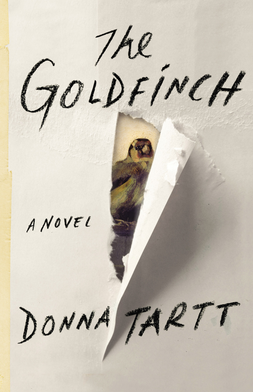
The Goldfinch - Donna Tartt

Aged thirteen, Theo Decker, son of a devoted mother and a reckless, largely absent father, survives an accident that otherwise tears his life apart. Alone and rudderless in New York, he is taken in by the family of a wealthy friend. He is tormented by an unbearable longing for his mother, and down the years clings to the thing that most reminds him of her: a small, strangely captivating painting that ultimately draws him into the criminal underworld. As he grows up, Theo learns to glide between the drawing rooms of the rich and the dusty antiques store where he works. He is alienated and in love - and his talisman, the painting, places him at the centre of a narrowing, ever more dangerous circle.


The Goldfinch is a haunted odyssey through present-day America and a drama of enthralling power. Combining unforgettably vivid characters and thrilling suspense, it is a beautiful, addictive triumph - a sweeping story of loss and obsession, of survival and self-invention, of the deepest mysteries of love, identity and fate.

If there's ever a good time to read a 900+ page novel, it's when you're on a beach on Fiji with literally nothing else to do. I don't mean to brag, sorry. The sea is all pretty and blue. Oops. Sorry. And there are palm tr.. ok. That was both mean and an awful awful joke. I will continue with the book review now.


The Secret History by Donna Tartt is one of my favourite books, as it is for many people. So it's always going to be tough when she brings out a new novel - you can't help but compare. Well it's certainly longer. An 'odyssey' is about right. And really that's my main problem with it. It sounds like a pathetic focal point for such a brilliant writer but it was just too endulgent; it didn't need to be that long.


Right, with that aside, I can go on to more positive stuff. Donna Tartt is an amazing writer. One moment you're introduced to a brand new character and somehow you're a few pages further ahead and you know this person as if they were real, standing in front of you. How does she do that without you noticing?


I was also pleasantly surprised to find myself falling for the world of antiques, something I've always unfairly turned my nose up at. Think I must have subconsciously grown resentful from countless evenings waiting for some woman to find out how much her lavender vase is worth when all I wanted was for whatever was on at 9 o'clock to start...Sorry, I deviate. Basically Hobie is my new favourite person who you get to meet reasonably early on in the book, and through him you get another side of antiques that isn't all old posh people. The kind of guy you want to buy a crumbling old desk from him just to make him feel good.


It's not all old furniture, though; it's a drama, almost a thriller in places. The opening haunted me for days. It's wonderfully powerful and it's so immediate - this is modern day New York, but it could be London or Paris or Hong Kong. It's like you're getting a 'behind the scenes' look at this huge news story, and it kind of put me in a weird state of mind - not dissimilar to what Theo Decker is feeling I guess: shocked and yet sort of weirdly calm, fuzzy and gentle. (I realise I'm pulling out some difficult literary jargon here, I hope you can keep up).


While I stand by my view that this book was too long, Tartt does cover a lot of ground: quite literally, taking us from New York to Arizona to Europe, but also thematically. One moment you're aww-ing at childhood romance, the next minute you're racing through Dutch streets with the art world's criminal underbelly. Tartt keeps you on your toes; the moment everything's lost pace and you're losing interest is when everything gets turned on its head again.


Is it better than
The Secret History? No. Is it worth reading? Definitely. If you have time. And a strong wrist to carry the book. Otherwise, dare I say it, this might be one for Kindle... the ultimate technological advancement for the weak-wristed.

7/10

Tuesday, 15 April 2014

The Godwits Fly - Robin Hyde


Robin Hyde's wistful and engaging novel, first published in 1938, has now become a New Zealand classic. Strongly autobiographical, it vividly conveys the intensely felt worlds of the adolescent - love, poetry and England - and the enthralling but sometimes painful experience of growing up female; and its picture of family life in early-twentieth-century Wellington, in all its physical details, emotional tensions, muddle and variety, lingers in the mind.

When I was at university, one of my favourite modules was one I did on Australian and New Zealand fiction. Having at that point never visited either country, those books were really my first introduction.


The Godwits Fly by Robin Hyde has become credited as an example of classic New Zealand fiction, which is odd given Robin Hyde isn't strictly speaking a Kiwi... but considering she was born in Cape Town in 1906, but living in Wellington before the year was out, I think we can overlook that. With me being the authority on these kind of things, naturally.

A godwit, by the way, is a migratory bird, not for use as an derogatory term for someone pretty hopeless, apparently that's a halfwit - who knew? Anyway, as you might have worked out by now, the title of the book is a metaphor for the nomadic nature of the antipodeans; the origins of the pakeha (the Maori term meaning white people, foreigners) are far away in Europe. So in The Godwits Fly, which is largely autobiographical, Robin Hyde tries to get across the sense of 'lostness', which was only exacerbated by being a teenager...
Later she thought, most of us here are human godwits; our north is mostly England. Our youth, our best, our intelligent, brave and beautiful, must make the long migration, under a compulsion they hardly understand; or else be dissatisfied all their lives long. They are the godwits. The light bones of the mother knew it before the chick was hatched from the eggshell.


Against the backdrop of the Boer War and World War One, Hyde fills the book with small details from the books being read, to the food being eaten, to the fears being felt. I wonder if this book has become a 'classic' because of the way it captures and teaches the history and culture of New Zealand at a time when the whole world was looking to Europe, sending the message 'we fought in those wars too'. By saying that last bit I don't mean that that is the book's central message, but it's important to be reminded of it nevertheless.

Having read this novel, it was not surprising to me when I found out that Hyde was, first and foremost, a poet because the book is so lyrical and beautifully drawn. It's far from being a flat historical account, this is a touching story.

Looking back, I think I was unfairly bored reading parts of the book. Maybe it's a literal geographical thing - how could I get fully involved with a set of characters living somewhere I've never been on the other side of the world? I wonder if I went back and read it, (which I know I won't but I like to entertain these ideas sometimes...) having now been to New Zealand, if I could access the book on a deeper level.

6/10

Thursday, 20 March 2014

The Vanishing Act of Esme Lennox - Maggie O'Farrell

Edinburgh in the 1930s. The Lennox family is having trouble with its youngest daughter. Esme is outspoken, unconventional, and repeatedly embarrasses them in polite society. Something will have to be done.

Years later, a young woman named Iris Lockhart receives a letter informing her that she has a great-aunt in a psychiatric unit who is about to be released.

Iris has never heard of Esme Lennox and the one person who should know more, her grandmother Kitty, seems unable to answer Iris's questions. What could Esme have done to warrant a lifetime in an institution? And how is it possible for a person to be so completely erased from a family's history?

I find one of benefits of writers that make a name for themselves is that, because you've read a number of titles by them and know you like their style and the kind of subjects they deal with, you can pick up a book by them, not read the blurb, and have a reasonably good chance of enjoying it. The Vanishing Act of Esme Lennox by Maggie O'Farrell was one of those books for me.

There's something great about reading a novel when you have no idea what it's about, it's sort of how it should be.

As you know by now, I'm a big fan of Richard Yates. Aside from being in love with his writing, I really like the way he approaches domestic subjects. That's such a stale way of putting it but I have the same thing with Maggie O'Farrell. She's just brilliant at getting into people's homes and writing a whole family. In this novel one of the most important characters has only a handful of pages worth of airtime but O'Farrell makes sure the reader is armed with a perfect understanding of this woman's character, her public face, her lurking motives.

This is not a ghost story, but it almost kind of is. O'Farrell's writing is wonderfully haunting. You can't help but soak up the sinister atmosphere surrounding Esme Lennox and her mysterious life. There's also humour and just the right amount of odd to make this a truly unique read.

For a relatively short read, you really get involved here; ostensibly this is a snapshot of Iris's life, but there's plenty more on offer here.

I really liked this book. It gets
7.5/10 from me.

Monday, 3 March 2014

A Town Like Alice - Nevil Shute

Jean Paget is just twenty years old and working in Malaya when the Japanese invasion begins. When she is captured she joins a group of other European women and children whom the Japanese force to march for miles through the jungle - an experience that leads to the deaths of many. Due to her courageous spirit and ability to speak Malay, Jean takes on the role of leader of the sorry gaggle of prisoners and many end up owing their lives to her indomitable spirit. While on the march, the group run into some Australian prisoners, one of whom, Joe Harman, helps them steal some food, and is horrifically punished by the Japanese as a result. After the war, Jean tracks Joe down in Australia and together they begin to dream of surmounting the past and transforming his one-horse outback town into a thriving community like Alice Springs...

Starting in London, then on to the invasion of Malaysia by the Japanese in World War 2 before moving to Alice Springs and then the east coast of Australia - t
here didn't seem like a more appropriate follow-on from The Glass Palace than A Town Like Alice by Nevil Shute.


My edition of the novel actually included a touching introduction from Eric Lomax, the writer of The Railway Man that I read at the end of last year. Having read Lomax's memoir, then The Glass Palace and now this, I feel I'm just starting to really grasp what it was like in South East Asia during and after the war. This is particularly interesting to me as my grandparents lived in Malaysia for decades and my mum was born out there.


If you're a woman and need to feel empowered, you have to read this book. This basically paints a world where one woman shows everyone else how it's done. She's a little annoying in places, and that probably makes me anti-feminist in some definition or other, but ultimately Jean Paget is pretty awesome. I can't imagine what it must have felt like reading this novel if you were Eric Lomax, reading the descriptions of the all too familiar insane heat, the death and disease, the starvation.


Shute's novel definitely paints a convincing scene but its ambition is of course not that of The Railway Man, or even The Glass Palace. To read, the book felt dated but in a good way, like I was reading one of my grandad's books or something - a nice alternative to the more modern reads I normally find myself with. There is a strong romantic thread in this book, which I appreciated - you definitely root for all the characters - but, for me, this is where the dated element of the book didn't quite work. It was all a little too trad for my liking, which is saying something as Jean Pagets life is far from traditional - for now, let alone then! But yeah, I guess it must have been the influence of The Glass Palace, but I
 surprised myself by wanting a little less romance, and a little more of the history, culture and time. For some reason it just started to feel a bit two-dimensional. I hate saying that as this is a good book, it is. And a great choice for my trip considering the route I took. I just think it's a case of a modern reader being used to a certain amount, or more a certain kind of drama that this book just didn't provide I'm afraid.

Overall, though, this gets a 5/10 - by 5, I mean 5, not 1. I have a tendency to lump any rating from 1 to 5 together as 'not very good', but I enjoyed it on an average level, so it gets a half score. It's a great insight into a particular time, not just in Asia and Australia either, but of the world and the way it got so much smaller after the Second World War, and then better technology and transport, 
brought so many people together.

Thursday, 27 February 2014

The Glass Palace by Amitav Ghosh

Set in Burma during the British invasion of 1885, this masterly novel by Amitav Ghosh tells the story of Rajkumar, a poor boy lifted on the tides of political and social chaos, who goes on to create an empire in the Burmese teak forest. When soldiers force the royal family out of the Glass Palace and into exile, Rajkumar befriends Dolly, a young woman in the court of the Burmese Queen, whose love will shape his life. He cannot forget her, and years later, as a rich man, he goes in search of her. The struggles that have made Burma, India, and Malaya the places they are today are illuminated in this wonderful novel.

The Glass Palace by Amitav Ghosh is probably the best book I could have read at this point in my trip. The novel spans over a century of socio-political history and travels all over South East Asia, from Calcutta to Mandalay, from Rangoon to Malaya.

It's an ambitious project for Ghosh, taking him 5 years writing and researching  all the tiniest details but it's paid off massively. What a feat of writing. Everything comes alive in this novel - who knew I could learn so much, and be genuinely made interested in, teak and rubber plantations?? I often find that Asian writers have a particular, more floral style that I'm not always used to and struggle with but Ghosh doesn't do that. He writes clearly and fluidly, while weaving in the vital historical and cultural detail with subtlety, rather than showing off his wealth of knowledge. 

This book has a story to tell certainly, but in comparison to Burmese Days, I don't think Ghosh's primary intention is to make a political/cultural statement. He does address difficult issues explicitly, but does so admirably fairly and without, I think, losing the facts. Subjects include the treatment of the Indian communities in Malaya and Burma, their relationship with the British army and Gandhi's crusade, the violence inflicted on Asia by the British and the Japanese during World War 2, class climbing, and more domestic issues such as marriage, grief and infidelity across the nineteenth and twentieth centuries.

For anyone travelling in South East Asia, this is a must read, but you should read it anyway.


8.5/10

Monday, 10 February 2014

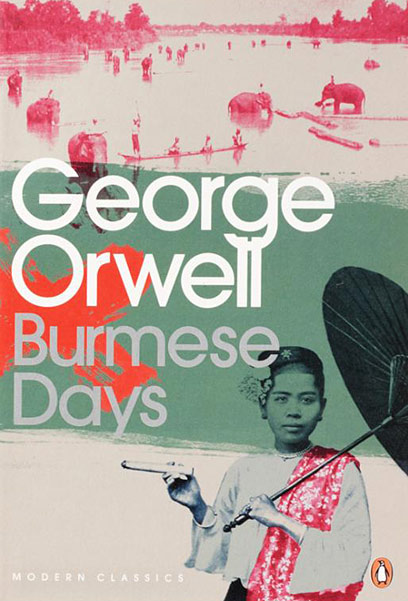
Burmese Days by George Orwell


Based on his experiences as a policeman in Burma, George Orwell's first novel presents a devastating picture of British colonial rule. It describes corruption and imperial bigotry in a society where, 'after all, natives were natives - interesting, no doubt, but finally ... an inferior people'. When Flory, a white timber merchant, befriends Indian Dr Veraswami, he defies this orthodoxy. The doctor is in danger: U Po Kyin, a corrupt magistrate, is plotting his downfall. The only thing that can save him is membership of the all-white Club, and Flory can help. Flory's life is changed further by the arrival of beautiful Elizabeth Lackersteen from Paris, who offers an escape from loneliness and the 'lie' of colonial life.

As some of you will know, I have taken three months out to do some travelling. One of the many luxuries is reading whatever I want! I'm trying, though, to at least read some books that are geographically appropriate. After a brief stop in Kuala Lumpur, I am now in Myanmar, or Burma - hence my first read, Burmese Days by George Orwell.

Burmese Days is, as expected, brilliantly written. It is also incredibly interesting as it provides a genuine insight into what it might have been like in Burma under British rule as Orwell himself had been a police officer out there in the 1920s. For anyone who hadn't read Emma Larkin's intro, or indeed her book on the subject, you might assume the novel would be more sympathetic to the colonisers rather than the native people. I noticed from the copyright page that the novel was first published in the States, not the Uk, which surprised me so I did a brief google (made briefer by the precarious wifi..). The book had apparently caused an uproar in Britain for painting such a negative image of colonialism and so was not published until a year later.

It is extremely clear that Orwell bad become disillusioned by British colonialism in Myanmar but, saying that, the Burmese people do not come across brilliantly either. In fact, there is a distinct lack of likeable people in the whole novel. Flory, Orwells protagonist, is the closest you'll get to rooting for someone but even he is a little too wimpy and pathetic to be truly 'liked'. The women are grim, both the British and the Burmese, and the men are mostly painted as sex and money obsessed, bigoted and supercilious alcoholics.

Orwell focuses a lot on the contradictions, the love hate relationship between Flory and Burma and how he hates it but can't imagine wanting to live anywhere else. Orwells descriptions also ooze heat, the decadent, sweat inducing humidity in the forests and rural villages outside Rangoon. 

Despite it's distinctly negative and depresssing tone, it's been great reading something set where I am - you can really sense what it might have been like, whether it an exaggerated version or not. It reminded me a little of Hemingway's explorations of people and places in his short stories in particular. 

7.5/10

Tuesday, 28 January 2014

Giving Up the Ghost by Hilary Mantel


‘Giving up the Ghost’ is award-winning novelist Hilary Mantel's uniquely unusual five-part autobiography. 
Opening in 1995 with 'A Second Home', Mantel describes the death of her stepfather which leaves her deeply troubled by the unresolved events of her childhood. In 'Now Geoffrey Don't Torment Her' Mantel takes the reader into the muffled consciousness of her early childhood, culminating in the birth of a younger brother and the strange candlelight ceremony of her mother's 'churching'. In 'Smile', an account of teenage perplexity, Mantel describes a household where the keeping of secrets has become a way of life. Finally, at the memoir's conclusion, Mantel explains how through a series of medical misunderstandings and neglect she came to be childless and how the ghosts of the unborn like chances missed or pages unturned, have come to haunt her life as a writer.


Hilary Mantel's memoir is, for me, the best depiction of childhood and what it is like to be truly naive in all the right ways. There's a brilliant moment after Mantel's first day at school where she feels she's had a go at 'school', on balance felt she preferred being at home, so assumed she didn't have to go back. For some reason I found this hilarious and adorable - I mean why should a child know school was compulsory??

The memoir does look at Mantel's childhood and the unusual set up she had at home but, told through her eyes as a child, there is no boasting of strangeness, no boasting of any kind. It's just told naively and straightly, which I found very appealing. I mean no family is 'normal', mine certainly has some.. eccentricities.. but you only find out that those eccentricities are eccentricities later. I mean no child really thinks 'this set up is odd', they find out later.


Mantel later goes into her medical history, which is simply extraordinary. What she's been through you can only begin to understand when you read this book. I read a few very cruel comments about Mantel following the 'Kate Middleton' fiasco and it's almost funny how ignorant some of those criticisms were - think they should all be sent a copy of this book...


7/10

Sunday, 19 January 2014

The Railway Man by Eric Lomax

During the Second World War Eric Lomax was forced to work on the notorious Burma-Siam Railway and was tortured by the Japanese for making a crude radio.

Left emotionally scarred and unable to form normal relationships, Lomax suffered for years until, with the help of his wife, Patti Lomax, and of the Medical Foundation for the Care of Victims of Torture, he came terms with what happened. Fifty years after the terrible events, he was able to meet one of his tormentors.


The Railway Man is a story of innocence betrayed, and of survival and courage in the face of horror.

When I first bought this book I had no idea how 'big' a book it was. Not in length, but in terms of its effect. Not only had the book had been published well over a decade before I picked it up, it had been phenomenally successful and won the 1996 NCR Book Award and the J R Ackerley Prize for Autobiography. What I had gone and bought was Vintage's celebratory re-jacketing of the now-classic memoir.

Well, what a read. You could say I was naive as to the emotional power a story like this has. Growing up in the modern world I have always been aware of images everywhere of war zones, terrorist attacks, violent dictatorships and from that you certainly build at least a little immunity from the shock factor. Not a good thing. This book, however, not only proved that I have not been entirely stripped of any emotion or empathy... But also illustrated the danger of not knowing. Soldiers were subject to the cruellest treatment all over the world  as POWs but after their release, there was a feeling that they were the lucky ones - all kitted out in luxury away from the front line. To be traumatised is one thing, for the trauma to be left unacknowledged and thus untreated is another.


I was bemoaning to my sister the way that our parents and grandparents have shaped the world so much they have left little for us to put our name to, aside from yet more technology to deplete our resources and the rise of size zero. But she said an interesting thing and that was that surely we will be part of a psychological age of some kind, where we all understand ourselves and each other more through psychological advances, therapy et al. This book certainly goes along with that argument and the therapeutic opportunities and recognition of trauma that Lomax receives eventually is arguably what gives this book it's unique power.

Anyway, sorry that this has turned all whimsical, the book itself is a must read. It's educational, it lacks bitterness, the images are clear as day without even a single photograph and I was left feeling extremely fortunate.

Lomax sadly died in 2012 but did live to know his book would be made into a film. Indeed he met his Hollywood selves, Colin Firth and Jeremy Irvine. The film is out now.


Saturday, 23 November 2013

Book Club: Diary of a Nobody

Mr Pooter is an office clerk and upright family man in a dull 1880s suburb. His diary is a wonderful portrait of the class system and the inherent snobbishness of the suburban middle classes. It sends up contemporary crazes for Aestheticism, spiritualism and bicycling, as well as the fashion for publishing diaries by anybody and everybody.

The Diary of a Nobody by George & Weedon Grossmith is just that... a diary of a nobody. Mr Pooter, as per the blurb and title is an ordinary middle-class, white male - there's nothing particularly special about him and nothing out of the ordinary really happens.


As a result, I can't really decide what my final thought is on this book. I can't say there was an amazing twist or a unusual character or even exquisite writing because its whole purpose was to be anything but extraordinary. For this reason, the characters aren't particularly likeable; they are all realistically flawed and some are on the cusp of caricatures that Grossmith puppets, largely to poke fun at the middle classes.


What I really liked about the novel was the humour, exposing the ridiculous in the banalities of everyday life and the eccentricity and honesty of our own internal dialogues. I couldn't help but laugh every time Pooter relayed an occasion when he delivered a truly exceptional joke, especially when it's clear from his diary that no one around him found it that funny... story of my life.


The satirical aspects did keep me reading but did it do quite enough to make this an exceptional reading experience? Not really, but being original serialised in 1892, it's not surprising I didn't relate entirely. Saying that, there are, surprisingly, still some relevant social observations in this novel for the modern reader.


As an exploration of the 'ordinary man', this novel reminded me quite a bit of Dickens' Sketches by Boz, helped I'm sure by the similar line drawings that illustrate Pooter's diary throughout. Also,The Diary of a Nobody, like a number of Dickens' works, was first published as a serial in Punch magazine. I couldn't say that this was quite as intricate as anything of Dickens' but, despite being a little dry (as is inevitable when focussing a whole book on the 'diary of a nobody'...) it should probably be read.


I give it a 5/10

Monday, 11 November 2013

The Bone People by Keri Hulme

Blurb: In a tower on the New Zealand sea lives Kerewin Holmes, part Maori, part European, an artist estranged from her art, a woman in exile from her family. One night her solitude is disrupted by a visitor—a speechless, mercurial boy named Simon, who tries to steal from her and then repays her with his most precious possession. As Kerewin succumbs to Simon's feral charm, she also falls under the spell of his Maori foster father Joe, who rescued the boy from a shipwreck and now treats him with an unsettling mixture of tenderness and brutality. Out of this unorthodox trinity Keri Hulme has created what is at once a mystery, a love story, and an ambitious exploration of the zone where Maori and European New Zealand meet, clash, and sometimes merge. Winner of both a Booker Prize and Pegasus Prize for Literature, The Bone People is a work of unfettered wordplay and mesmerizing emotional complexity.

My bezzie moved to New Zealand this year and for my birthday present she aptly bought me this, The Bone People by Keri Hulme. Hulme was the last New Zealander to win the Man Booker Prize before Eleanor Catton won the esteemed prize this year with her novel, The Luminaries.


I really loved this book. Not necessarily for its literal story or its specific characters, although both were extremely good, but for the tone it set and how I felt reading it, particularly the first half. New Zealand has an extraordinary landscape and has remained, for many, a mystery as Australia normally seems to win the tourists for some reason. This landscape and sense of the unknown comes across in abundance in this novel. With the risk of sounding like the biggest ponce, I'd go as far as saying you could almost feel the waves crashing on the sand - the novel's cover arguably helping me construct this image...


There are three main characters in this novel, all completely different and all adding something to the novel. Kerewin's eccentricity could perhaps have the potential to make her seem caricatured and unbelievable (which fits in with the book itself, which does, in places, touch upon the magically realist...) But despite and because of these slightly odd moments, Hulme has crafted Kerewin (and her world) wonderfully; her grace, her insecurities, her unique mind and her inner-conflicts all come across to create a very full, 'real' person that you can't help feel affection for.


If I had anything negative to say, it would be that I could have done without the author's introduction. As brilliant a writer as she is, she's definitely indulgent. The novel is long, with not much plot - and I liked that - but she's clearly a woman who is difficult to edit. Her preamble felt a little aggressive and a little self-consciously eccentric, which easily winds me up. Saying that, I don't know the woman but I do know her book, and I really loved it.

Tuesday, 15 October 2013

Sweet Tooth by Ian McEwan


The year is 1972. The Cold War is far from over. Britain is being torn apart by industrial unrest and terrorism. Serena Frome, in her final year at Cambridge, is being groomed for MI5.

Serena is sent on a secret mission - Operation Sweet Tooth - which brings her into the world of Tom Haley, a promising young writer. First she loves his stories, then she begins to love the man. Can she maintain the fiction of her undercover life? And who is inventing whom? To answer these questions, Serena must abandon the first rule of espionage - trust no one.

Sweet Tooth is the latest novel from Booker-winner Ian McEwan. All the things we love about McEwan are in this book - strong character voice, a couple of clever twists and turns to keep things moving, an intellectual narrative and beautiful writing. I have to say, though, that something was missing for me. Unhelpfully I don't quite know what.

It's one of those books where there was nothing to stop me finishing it and when I came to the end I could say, 'yes, I enjoyed that' but did I love it? Not really. Perhaps if there had been a bit of a longer build up and less long on the Tom Haley thread? But then if that had happened, would that have prevented me from caring about what happened to Serena?

What I did really enjoy about this book was the intellectual side. McEwan's characters are very intelligent and so the conversations they share reflect that. If I were honest with myself, I'd probably struggle to keep up with them in some cases and I'm 99% sure I wouldn't be a good recruit for the secret services but I did like taking a back seat and watching Serena climb the academic ladder, learn all she could from Tony and I took a little pleasure in seeing her confound Tom Haley with intricate mathematical problems. And even though I'm sure McEwan took similar pleasure when it came to constructing his ending, I have to allow him that - I didn't quite see it coming (and that's not something I ever like to admit... hence the addition of the word 'quite' in that sentence...).

I couldn't help but compare this novel to
Restless by William Boyd - a very different war but nevertheless an exploration of the British secret service against a fascinating backdrop of international secrets with a ballsy woman at the helm and both, of course, written by some of the country's most talented and successful writers. The other similarity, though, was the disappointment factor although, if I had to pick, I would say Sweet Tooth pipped Restless to the post as, to me, Serena appealed that little bit more than Ruth.

This book gets a 7/10 from me
.

Saturday, 28 September 2013

A Doll's House


A Doll's House is a three-act play by Norwegian playwright Henrik Ibsen and looks into the life of a seemingly typical housewife who becomes disillusioned and dissatisfied with her marriage. The play in its current incarnation has received extraordinary reviews from the British press with Hatty Morahan's turn as Ibsen's protagonist, Nora Helmer, has been hailed as a 'once-in-a-lifetime performance'.

I've seen Morahan on stage and television a number of times and she is a fantastic serious actress but for me she often brings a comedic element to each production, and I can never tell if it's intentional... there's just something about her that makes people smile. In this case, and perhaps it was a conscious decision of the director, the subtle comedy worked perfectly. I don't know about anyone else but after years of studying Arthur Miller, Euguene O'Neil and Tennessee Williams, I've got used to a whole lot of bleak and very little laughter when it comes to drama, which is a shame because comedy, when used well, works brilliantly to both provide relief and/or heighten tension.

Although I've read and seen Ibsen before, I've never known much about
A Doll's House and I have to say I loved it. Brilliantly performed, yes, but politically fascinating. I don't want to give away what happens even a little bit but, as everyone has been saying, it's amazing that this play, given its feminist sensibilities, was written in 1879. Simply having a female protagonist must have been controversial and A Doll's House isn't the last time Ibsen does this. Unsurprisingly the play's controversial subject and ending attracted a lot of criticism and outrage with Ibsen being forced to première the play in Germany with an alternative ending due to pressure from his agent and leading actress.

Interestingly, though, Ibsen was adamant that this was not a consciously feminist play, saying in his s
peech at the Festival of the Norwegian Women's Rights League in 1898 that he"must disclaim the honour of having consciously worked for the women's rights movement," as he wrote the play as "the description of humanity [...] without any conscious thought of making propaganda."

On to more important matters, the award for Best Overlooked Performance goes to... the baby. Perfected the cute podgy look, didn't look at all perturbed or utter so muc
h as a whimper - triumph.

Thursday, 26 September 2013

Tigers in Red Weather by Liza Klaussmann

Liza Klaussmann's Tigers in Red Weather tells the story of Nick and her cousin Helena who have grown up together, sharing long hot summers at Tiger House. With husbands and children of their own, they keep returning. But against a background of parties, cocktails, moonlight and jazz, how long can perfection last? There is always the summer that changes everything.

Tigers in Red Weather is a delicious novel, a book that simmers with tension, threat and an intoxicating cocktail of money, sex, heat, boredom and beauty. Gracefully drawn and utterly intriguing, it's the perfect summer blockbuster.


This was the book I was most excited to get reading this summer. It's a good example of some fantastic marketing - fantastic cover, title, a blurb that makes you feel the heat of summer... even when it's snowing in April... and all those wonderfully addictive cliches dropped in - jazz, cocktail parties, materialism, 'the summer that changed everything' etc - that I fall for every time.


Unfortunately, I found the whole book a bit disappointing. I'm not going to say it was bad because it really wasn't. Ostensibly it has some great themes - coming-of-age, crime, forbidden love (and lust) and a little voyeurism thrown in for good measure - but the execution, for me at least, lacked sophistication.


On the character side of things, I found the problem was that I couldn't find anyone to side with. Everyone was flawed, which is fine as otherwise it'd be unrealistic, but none of them were 'nice' people (the 'nice' police will have to excuse that one) and I too often found myself irritated by them.


One thing that Liza Klaussmann did succeed with, though, and the area where I felt the book was faithful to the blurb, was that I really did feel hot reading it. Not in a Fifty Shades kind of way, more that Klaussmann really got across that intense summer heat and the atmosphere that creates. In that way, the world very much came alive for me; I could imagine the huge house, the scorching tennis courts, the sweat dripping, the never-cold water.


Overall, though, it was a disappointing read for me. Probably not fair to have read it straight after
Alone in Berlin though... not sure much could compete with that.

It gets a
5/10 from me, I'm afraid.