My Bookshelf

Showing posts with label Modernists. Show all posts

Monday, 4 August 2014

Virginia Woolf: Art, Life and Vision at the NPG


I’m always trying to find fun ‘cultural’ things to do, be it an exhibition, a gig or concert, some literary event etc. I do enjoy them and deep down somewhere I probably think that they are a necessary part of my self-improvement. They’re also great small-talk fillers. Problem is, that when summer hits, the requirements of small-talk often goes up as everyone becomes more sociable when the sun comes out, but the number of cultural conversation pieces goes down because I stop looking for cool things to do. The one drawback of actually having a British summer this year is that I’ve done almost nothing but sit outside, eat a lot and do a hell of a lot of people watching. So this weekend I decided to try to fill the void at least a little and headed off to see Boyhood (incidentally people watching for the cinema-goer) and went to the Virginia Woolf exhibition at The National Portrait Gallery (hoorah, I finally got to the subject of this post).

Love a bit of Virginia Woolf and I know that there is a Woody Allen sequel to Midnight in Paris (which will be aptly named Midnight in London) waiting for me to snatch the lead role from Owen Wilson so that I can hang out with the Bloomsbury set for 90 minutes. I mean seriously, these are the people that started up their own publishers and printed TS Eliot’s The Wasteland. The Woolfs got to hang out with Sigmund Freud, John Maynard Keynes, Lytton Strachey, Roger Fry, Vanessa Bell, EM Forster and Lady Ottoline Morrell. Can you imagine having so many and such an eclectic group of intellectual minds – writers, artists, economists, psychologists, poets.

Such life envy, with the exception of the whole going mad and killing yourself bit… not so great.

The exhibition is a must for anyone vaguely interested in this time period. It included photos of the Woolf’s home in Tavistock Square before and after the bombing that destroyed all but its end wall the mural Virginia’s sister, Vanessa Bell, designed for the couple.

Vanessa’s artwork was dotted about the exhibition and the front covers of early editions of Woolf’s work were on display, each designed by Vanessa Bell.

There were handwritten love letters (including one from Leonard Woolf to Virginia which did nothing for my futile belief that he would make a great husband… for me… I told you it was futile), personal photographs, extracts from Virginia’s family newsletter that she wrote with her brothers.

It is perhaps unsurprising that Virginia Woolf became, like so many, very interested in the Spanish Civil War but I didn’t know that she had been so heavily involved in an event at London’s Royal Albert Hall that was started to raise money for the Basque children. She was also a patron for the campaign to bring Picasso’s epic anti-war painting Guernica (1937) to Britain (the exhibition leaflet was included in the exhibition) and her nephew, Quentin Bell, apparently tried to get Picasso to come along himself. While he didn’t turn up, the exhibition included one of his drawings ‘The Weeping Woman’ which Picasso was said to have donated to the cause in lieu of his own attendance.

Anyway, I’ve written a ridiculously long post but there’s so much to see and learn. Even if you don’t really care about Viriginia Woolf, it’s a wonderfully detailed snapshot into a very interesting group of people at a pivotal moment in modern history. It’s only £7… You can even drop in at the BP Portrait Award for free at the same time.

Relevant Posts:

Thursday, 24 July 2014

A Single Man by Christopher Isherwood

In this brilliantly perceptive novel, a middle-aged professor living in California is alienated from his students by differences in age and nationality, and from the rest of society by his homosexuality. Isherwood explores the depths of the human soul and its ability to triumph over loneliness, alienation and loss.

'He strikes a note of great intimacy with the reader as if with a close personal friend, and a sense of total honesty is sought. This style - witty, observant, nostalgic, exact - was Isherwood's great contribution to modern literature' Financial Times

'Very sad and yet at times wildly funny' Daily Telegraph

I picked up A Single Man again a few weeks ago. I love this novel but to describe why is so difficult. Not because I can’t put my finger on it, but because my reasons are so boringly clichéd.

It’s just beautifully written and brilliantly immersive; you really feel you ‘get’ George. You can place him, you can place his neighbours and his academic colleagues. You know who he is, what he’d do next – you can paint a very good picture in just the 170 pages that make up this book.

It of course helps when painting said picture (I didn’t actually paint… just to be clear…) that you’ve seen the film. Which I have. Three times. Also, extremely good. I mean Colin Firth, Julianne Moore, Matthew Goode and Nicholas Hoult are never going to disappoint but director Tom Ford brings his relentlessly cool style to the table that gives it that extra summitsummit. I suppose you could maaybbeee say that Ford’s direction fills the void of Isherwood’s writing in the film.

While making the story visually striking, I also think Ford gets across George’s moments of detachment that Isherwood creates so beautifully in his novel. Ishwerwood’s decision to describe everything from George’s perspective helps illustrate how George, for the most part, is removed from his community. He is secretive and aloof – a deliberate decision, I think, to protect himself, which he enjoys but all the while he unconsciously yearns to be included, be social, be loved. Probably a bit of that in us all…

In short, though, he’s a softie who is wonderfully screwed up. As a child from the Harry Potter generation, I was brought up with Snape, Lupin, Dumbledore, Harry himself, and so feel I am now always destined to fall for screwed up male characters (hopefully just in books…).

Being so short, there is absolutely no excuse not to read this. Even if you hate it. Which I hope you don't… and if you do, watch the film. I give you permission.

8.5/10

Thursday, 20 February 2014

The Campaign to Save Orwell's "Burmese Days" House


As I've already explained, Orwell wasn't exactly a champion of colonial Burma, but the novel is absolutely everywhere. I mean, there aren't that many books set in Burma / Myanmar, let alone include the country's name in the title. Every time you walk into a market or the grounds of a temple, there's always a woman with a basket selling you jewellery, thanaka for your face, and copies of Burmese Days.

The thing is that, regardless of the message, Burmese Days is an incredibly important book, and brilliantly written of course. And when a place becomes immortalised in writing, we become even further reluctant to destroy memory of it - whether that's taking the book out of print or, in the case of Burmese Days, knocking down the house that provided the inspiration for the novel.


Set amongst trees in the small Sagaing town of Katha, 150 miles north of Mandalay, the rust-red wooden house looks like it's almost falling down itself to be honest, but having read the book, you can as good as see the sweat-soaked colonial soldiers reclining out front. 


Now that the country is open, tourists finally feel its okay to visit once again, and the Myanmar people know that after years of the country being out of the news, the images Westerners in particular have of their country is through the likes of George Orwell and so destroying these modern tourist sites is not going to help their influx of travelers, and the consequent rejuvenation of the Myanmar economy. Of course it's not all about money, there's culture and history at stake here too. Popular culture, literary and colonial history, be it positive or negative.


I recently read an article in the
Independent newspaper that quoted artist and campaigner Nyo Ko Naing, who told the AFP (Agence France-Presse), "I am trying to do what I can to restore all the buildings in the book and to attract attention to the country and the town." As a fan of literature in all its forms, I can only support that.


Monday, 8 July 2013

2nd July 1961 - Ernest Hemingway commits suicide


On 2nd July 1961, Ernest Hemingway, Nobel Prize-winning author and journalist, committed suicide. He was sixty one years old.


Towards the end of the 1950s, it seemed as though Hemingway had started, in some ways, to lose control of his writing. Having been commissioned by Life Magazine to write a series of articles of approximately 10,000 words, Hemingway headed off to Spain to research. On his return, Hemingway started work on a manuscript that would become 130,000 words long. Feeling out of control, frustrated, confused and drastically outside his brief, Hemingway called friend and editor A E Hotchner to help him cut it down. Although the piece was ultimately published, Hotchner was concerned for Hemingway's well-being, describing him as "unusually hesitant, disorganized, and confused".


This was just the start of a tragic downhill spiral for the talented writer, who would soon start to suffer from deterioration in his eyesight, growing paranoia and a fear for his safety.


Sadly Ernest was not the only Hemingway to commit suicide. It is believed Hemingway suffered similar symptoms to his own father, Clarence, who also committed suicide, as did  his sister Ursula, brother Leicester and granddaughter, Margaux.

Tuesday, 28 May 2013

Stylist's Top 100 Books of the 1920s


With all the Gatsby mania following the release of the film, 1920s classics are now starting to reappear in the bestseller charts. Stylist magazine have jumped on this band wagon and kindly provided a very helpful list of inter-war novels for us to choose from. Click on the image above to see. Are all your favourites there? How many have you read? Anything missing?

Some relevant posts:

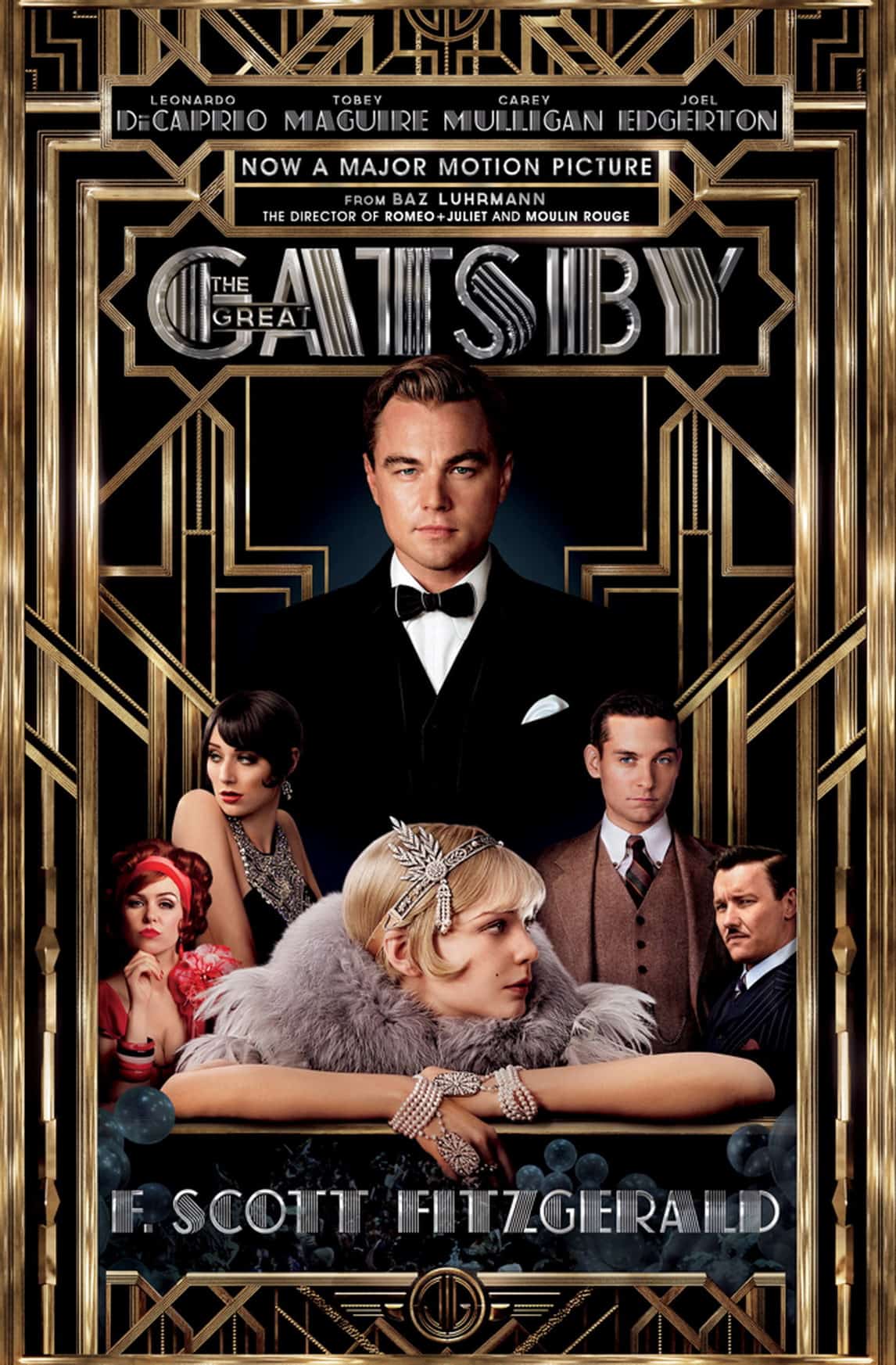
Baz Luhrmann's The Great Gatsby

The Great Gatsby by F Scott Fitzgerald

Tuesday, 21 May 2013

Baz Luhrmann's The Great Gatsby


The wait is finally over - Baz Luhrmann's Gatsby has finally graced our screens to be met with, shall we say, mixed reviews... The main criticisms seem to be 1) it is overly glitzy, with too much focus on the roaring twenties parties. 2) Not enough of the novel's darkness and 3) not enough 'emotion' and sadness.

I can't say I'm surprised. Take a much-loved book written nearly 100 years ago and then make a film in 3D with Leonardo Di Caprio... you're
never going to please the critics. That said, I'm a big Gatsby fan, and I loved this film. The glitz and the glamour was there, sure, they had to be. All I wanted to do was go out on a wild New York night out, drink myself silly and negotiate my way home without falling into the lake... arguably that wasn't really the reaction they wanted but it really does look so fun.

As for the novel's darkness, from just the trailer I could see Luhrmann had injected a whole lot more darkness than any of the film's predecessors. It was the darkness that I was excited for and I didn't feel disappointed.

The emotion was there, too. All helped by fantastic performances from both Leo. The casting in general, I have to say, was spot on. Tobey Maguire was definitely my Nick Carraway, Tom Buchanan was so brilliantly evil, Isla Fisher was just, well, unrecognisable and wonderful as Myrtle and Carey Mulligan was so perfect for Daisy, it's hard to see how she could have been so difficult to cast! The only person I felt did not match the image in my head, was Leonardo Di Caprio himself. Luckily Leo, for me, can't do any wrong and this was no exception. And for once his baby face was a complete asset! You could completely believe Gatsby's wide-eyed hopefulness and childlike fascinations/obsessions.

Everything was then polished off and brought to life by the genius jazz/hip hop fusion soundtrack, which has arguably received far more attention than the film itself and saw Jay Z receive an Executive Producer credit. Florence and the Machine, Lana Del Ray, The XX, will.i.am, Jack White, Beyonce and Jay Z himself plus more... and loads of original songs. Impressive doesn't quite cover it.


What really had to win me round, though, was the 3D malark. Bleh, I really can't be dealing with it - gives you headaches all for the sake of not very much. This, however, I have to say, worked. It didn't distract me and it really added to Baz Luhrmann's theatrical vision for this iconic story.


Highlight? Gatsby's cream jumper. If anyone can find this exact item of clothing, get in touch... there is no reward greater than my appreciation...


If you don't like Baz Luhrmann, don't see it. If you read The Great Gatsby yesterday, again probably don't see it (no use going to see a film being able to pick out every single discrepancy), if you hated Moulin Rouge, don't see it. If none of these apply, GO SEE IT. It's a real feast.

Relevant posts:

Monday, 11 March 2013

Sissinghurst Castle

Whenever I try to surprise someone for a birthday or some other celebration, I nearly always seem to blow it. The power of knowledge is just too much. I mean, seriously, who can resist hinting that you know something they don't?? Ok so I've exposed a flawed side to my mind... but it's an endearing flaw really, no? Anyway, this weekend I actually did it! For Mothers Day, after months of complaints from my mum that my sister never comes home from university, we managed to organise for her to come home for a weekend of quality family fun without my mum suspecting a thing until she arrived! I'm still feeling pretty proud about it...

Anyway, one of the ways we spent our highly anticipated weekend was by going to Sissinghurst Castle in Kent. Sissinghurst is the ruin of an Elizabethan manor house and in its time has been the site of a prison for French seamen during the Seven Years War, a poor house and a working farm. It was also, however, home to author, poet and avid gardener, Vita Sackville-West and her husband Harold Nicholson during the 1930s after she failed to inherit her family home of Knole as she was a woman. It was Vita and Harold who created the famous garden at Sissinghurst, which is spectacular in its scope and colour.
The original Hogarth Press

Vita Sackville-West had success as a writer and poet, her best known novels being The Edwardians (1930) and All Passion Spent (1931), but she is probably better known for a number of affairs she had with women, most famously Virginia Woolf. You therefore wouldn't be surprised to know that Sackville-West was published a number of times by the Woolfs' Hogarth Press. In fact the original Hogarth Press currently resides at Sissinghurst itself.

If you suffer from house envy, be prepared. Ask any friend of mine what three things I would want for my home if money were no object and they would all say, probably with a yawn: a lake, a library and a spice rack. Now I don't know whether there's a spice rack hanging around (I bet there is!) but they have a herb garden, a large lake... acres of beautiful countryside surrounding their stunning gardens and, naturally, a personal library, which is open visitors. House envy doesn't even cover it. Rows and rows of books extend right from one end of the room to the other, covering an entire wall. *sighs* amazing
.

Sissinghurst Castle
Biddenden Road
near Cranbrook
TN17 2AB

Monday, 11 February 2013

The Charleston Bulletin

Julian and Quentin Bell with their half-sister Angelica
Virginia Woolf's sister, painter and interior designer Vanessa Bell, had two children from her marriage to Clive Bell - Quentin and Julian. The family was, you might say, slightly unconventional. Vanessa and Clive had an open-relationship, with Vanessa having affairs with the likes of critic Roger Fry and artists Duncan Grant (with whom she had a third child, Angelica). Their family home, Charleston, was painted all over - including the furniture, by the artists that lived there and became a countryside retreat for much of the Bloomsbury Group, including EM Forster, John Maynard Keynes and Virginia Woolf herself.

Growing up in such a household, it probably isn't surprising that Julian and Quentin developed a creative streak.


Perhaps inspired by their mother and aunt's own childhood publication, the
Hyde Park Gate News, Julian and Quentin put together a family newspaper, The Charleston Bulletin, during the summer of 1923 when they were 15 and 13 respectively. Rather sensibly Quentin concluded that 'it seemed stupid to have a real author so close at hand and not have her contribute' and so they employed the literary talents of their aunt Virginia.

The British Library are to publish these 
Charleston Bulletin supplements for the first time this June and they show a very different side to the perhaps unfairly pigeon-holed Virginia Woolf. The supplements document the adventures of the Woolf-Bell family coloured by Woolf's humour and wit and are accompanied by Quentin's illustrations.

Filled with family in-jokes, from light-hearted digs at the boys' father and Woolf's brother-in-law, Clive Bell, to the culinary disasters of the household cook, the supplements promise to offer their readers an insight into the life and times of the family from a refreshingly more informal, fun and personal perspective that we are perhaps not used to when learning about Woolf, who famously committed suicide in 1941. Sadly Julian too died prematurely at just 29 in the Spanish Civil War.


The supplements, as I said, will be published later this year and the unusual house and gardens of Charleston are available to visit (they are currently closed I believe, but will reopen next month).

The Hyde Park Gate News
Other posts on Virginia Woolf:

Tuesday, 5 February 2013

The Rest is Noise at The Southbank Centre


The Southbank is one of my top areas of London. It's kind of cheating because it's pretty long so includes lots of stuff... The Globe, Tate Modern, Gabriel's Wharf, The National Theatre, The Southbank Centre... the list goes on. Last weekend I had tickets for The Rest is Noise, a programme of talks, lectures and concerts that brings to life Alex Ross's survey of 20th Century music that is his book of the same name.

Before I get started, I  have a confession. I have not read this book. One of my mum's friends grabs us in a queue for the last talk of the day raving about this magnificent book by some guy on MUsic and CULture. Until then, neither my mum nor I knew this programme was about a book. Luckily for me, it's totally about a book, and so I can blog about it. Saying that, I'd have blogged about it anyway. a) because somehow I was always going to blog about something this weekend and I sense my 3 hour stint in front of the TV on Sunday morning probably doesn't qualify... and b) because my first talk was on none other than her wonderfullness, Virginia Woolf.

Professor Rachel Bowlby was looking at the work of Virginia Woolf while considering one of her most famous quotes: ''On or about December 1910 human character changed.'' I'm not about to type out what she said but I'm going to put my two cents in. It's quite a big statement to make about a year that most of us would struggle to talk about for much more than thirty seconds... It has been argued that Virginia Woolf suffered from something like 'hurry sickness', developing anxiety and depression as a result of the constant speeding up and flux of culture and time in the early 20th Century. This thought, together with Woolf's quote, do comfort me slightly as sometimes I feel we too often think that we are the first to experience the life we are living. The fact is, cultural change (be it good or bad) has happened before. Recessions have happened before. And we're still here!

Next up, David Tong on Einstein's Theory of Relativity and I actually understood it... ok, so I'm not about to write a paper on it, but my unscientific mind actually has some kind of grasp on this theory. That is really all I have to say on this matter. It blew. my. mind. Turns out there's no gravitational pull - WHO KNEW?


Finally, I got to meet the legend that is Tony Benn. To use the introducer's words, Tony Benn 'is history' - he's seen it all. Sure he was an MP, sure he was a cabinet minister, but what is incredible about this man is that he is one of those rare people who actually sticks to his values. It's so easy to say to ourselves that we believe in certain things but, when challenged, how many of us slip slightly to protect ourselves over our values? He didn't. Thus, he is a dude. He is also a great speaker.


If you didn't go yourself, wonderfully you can hear what they all had to say 
here on the Southbank Centre's website!

Wednesday, 23 January 2013

The Great American Novel: First Round


You may remember that back in the summer I came across a competition started by Guardian journalist and blogger, Matthew Spencer, to find out which is the greatest 'Great American Novel'. The first round has taken place now, setting duals up between several top notch candidates. Some great arguments were made and information taken from numerous sources in this highly anticipated first round draw. The results are as follows:

Absalom, Absalom! by William Faulkner (W)
vs

JR by William Gaddis – The Battle of the "Difficults"


That Old Ace in the Hole by Annie Proulx (W)
vs
Naked Lunch by William S Burroughs

The Custom of the Country by Edith Wharton (W)vs
Something Happened by Joseph Heller

A Farewell to Arms by Ernest Hemingway (W)
vs
Giovanni's Room by James Baldwin

Rabbit, Run by John Updike (W)
vs
The Lathe of Heaven by Ursula K Le Guin

Billy Bathgate by EL Doctorow (W)
vs
We Were the Mulvaneys by Joyce Carol Oates

Libra by Don DeLillo (W)
vs
42nd Parallel by John Dos Passos 

The Grapes of Wrath by John Steinbeck (W)
vs
The Book of Illusions by Paul Auster

Now I don't know about you, but I would say that although there are some top authors on both sides of the drawer, this seems like some authors didn't have a chance. By that I mean that I know every single one of the winners and only three of the losing novelists... So perhaps I am not as well-read in this department as I hoped... oh well!

Anyway, in summary, there don't seem to be any particularly controversial decisions I think you'll agree, but there were some definite contests - namely Steinbeck vs. Auster and Wharton vs. Heller. Although the winners aren't hard to guess, each author has a big and long-standing following. Luckily, though, I am yet to hear of any violent fights breaking out in libraries... but, saying that, I'd pay good money to see book geeks flapping bookmarks and library cards at each other...

In the second half of the drawer we are expecting to see the likes of Fitzgerald, Nabokov, Chandler, Toni Morrison and post-modernist Pynchon who my brain will never ever understand. Ever.

You can follow Matthew's blog via the Guardian website here.