My Bookshelf

Showing posts with label Non-Fiction. Show all posts

Saturday, 10 May 2014

Tracks


Last night I went to see Tracks, the film adaptation of the memoir of the same name by Robyn Davidson. Davidson, for those that don't know, became famous after completing a 1,700 mile trek across Australia from Alice Springs to the west coast. The trek, much to her resentment it's understood, was documented by American photographer Rick Smolan who met up with her three times along the way on the understanding that the magazine would sponsor Davidson's trek. Smolan's photographs were published alongside an article written by Davidson herself and both went on to publish books - Davidson to write a full-length account in Tracks and Smolan to put together his photographic collection in From Alice to Ocean

What a film. It's beautifully shot, but you only have to see the trailer to see that. It was even more fun for me having been out to the Red Centre so recently, and flown over this extraordinary landscape myself but the film makes it all so immediate, so real, that you don't have to have flown to the other side of the world to appreciate it.


I have to admit I have never read the original memoir but I was immediately drawn in to this girl's world, and her eccentric character. Sure, the film can't resist providing some kind of emotional explanation as to why a 27 year old woman would try to cross the Australian desert with just the help and companionship of four camels and a dog... but Mia Wasikowska is brilliant, and somehow you can't help but fall for this essentially difficult, and slightly barmy, woman.


I was relieved, too, that not too much was made of this story being important because she was a woman. For once I felt inspired by a woman because of what she did, not because she's female or because the world is telling me I ought to look up to her because I'm a woman too.


It's a brilliant story and so, by default, you would assume it would make a brilliant film... but, to me, it's an achievement to keep an audience engaged with so little visual variation. The Australian outback is just desert. Once she passes The Rock, that's pretty much it save a handful of Aboriginal huts. But I was hooked, and it was certainly a good advertisement for whoever made those sandals... but less so for good sunscreen practice, pretty sure she doesn't have time for any of that mumbo jumbo...

I'm really keen to read the book now and see how faithful the film was but if you just want to go see a beautifully made film, escape for a while, and feel inspired to capture some frothing wild camels - go see this film.


9/10


Other relevant posts:


Tuesday, 28 January 2014

Giving Up the Ghost by Hilary Mantel


‘Giving up the Ghost’ is award-winning novelist Hilary Mantel's uniquely unusual five-part autobiography. 
Opening in 1995 with 'A Second Home', Mantel describes the death of her stepfather which leaves her deeply troubled by the unresolved events of her childhood. In 'Now Geoffrey Don't Torment Her' Mantel takes the reader into the muffled consciousness of her early childhood, culminating in the birth of a younger brother and the strange candlelight ceremony of her mother's 'churching'. In 'Smile', an account of teenage perplexity, Mantel describes a household where the keeping of secrets has become a way of life. Finally, at the memoir's conclusion, Mantel explains how through a series of medical misunderstandings and neglect she came to be childless and how the ghosts of the unborn like chances missed or pages unturned, have come to haunt her life as a writer.


Hilary Mantel's memoir is, for me, the best depiction of childhood and what it is like to be truly naive in all the right ways. There's a brilliant moment after Mantel's first day at school where she feels she's had a go at 'school', on balance felt she preferred being at home, so assumed she didn't have to go back. For some reason I found this hilarious and adorable - I mean why should a child know school was compulsory??

The memoir does look at Mantel's childhood and the unusual set up she had at home but, told through her eyes as a child, there is no boasting of strangeness, no boasting of any kind. It's just told naively and straightly, which I found very appealing. I mean no family is 'normal', mine certainly has some.. eccentricities.. but you only find out that those eccentricities are eccentricities later. I mean no child really thinks 'this set up is odd', they find out later.


Mantel later goes into her medical history, which is simply extraordinary. What she's been through you can only begin to understand when you read this book. I read a few very cruel comments about Mantel following the 'Kate Middleton' fiasco and it's almost funny how ignorant some of those criticisms were - think they should all be sent a copy of this book...


7/10

Sunday, 19 January 2014

The Railway Man by Eric Lomax

During the Second World War Eric Lomax was forced to work on the notorious Burma-Siam Railway and was tortured by the Japanese for making a crude radio.

Left emotionally scarred and unable to form normal relationships, Lomax suffered for years until, with the help of his wife, Patti Lomax, and of the Medical Foundation for the Care of Victims of Torture, he came terms with what happened. Fifty years after the terrible events, he was able to meet one of his tormentors.


The Railway Man is a story of innocence betrayed, and of survival and courage in the face of horror.

When I first bought this book I had no idea how 'big' a book it was. Not in length, but in terms of its effect. Not only had the book had been published well over a decade before I picked it up, it had been phenomenally successful and won the 1996 NCR Book Award and the J R Ackerley Prize for Autobiography. What I had gone and bought was Vintage's celebratory re-jacketing of the now-classic memoir.

Well, what a read. You could say I was naive as to the emotional power a story like this has. Growing up in the modern world I have always been aware of images everywhere of war zones, terrorist attacks, violent dictatorships and from that you certainly build at least a little immunity from the shock factor. Not a good thing. This book, however, not only proved that I have not been entirely stripped of any emotion or empathy... But also illustrated the danger of not knowing. Soldiers were subject to the cruellest treatment all over the world  as POWs but after their release, there was a feeling that they were the lucky ones - all kitted out in luxury away from the front line. To be traumatised is one thing, for the trauma to be left unacknowledged and thus untreated is another.


I was bemoaning to my sister the way that our parents and grandparents have shaped the world so much they have left little for us to put our name to, aside from yet more technology to deplete our resources and the rise of size zero. But she said an interesting thing and that was that surely we will be part of a psychological age of some kind, where we all understand ourselves and each other more through psychological advances, therapy et al. This book certainly goes along with that argument and the therapeutic opportunities and recognition of trauma that Lomax receives eventually is arguably what gives this book it's unique power.

Anyway, sorry that this has turned all whimsical, the book itself is a must read. It's educational, it lacks bitterness, the images are clear as day without even a single photograph and I was left feeling extremely fortunate.

Lomax sadly died in 2012 but did live to know his book would be made into a film. Indeed he met his Hollywood selves, Colin Firth and Jeremy Irvine. The film is out now.


Thursday, 10 October 2013

Super Thursday 2013


One of my big secrets in life is that I'm a celebrity nut. Ok, so that sounds like a giant cashew or something but hopefully you get my meaning. I love all the Hollywood gossip even though I know the Metro's Guilty Pleasures section, ONTD and Perez Hilton are all gradually destroying each of my braincells one by one. When it comes to celebrity autobiographies like Jennifer Saunders' yesterday, though, sometimes I wonder if there are just too many.

Today is what publishing folk like to call Super Thursday. It's the day (usually a Thursday funnily enough) when all the big books of the autumn are released. The ones that will be sat under the tree in, publishers hope, millions of houses on Christmas Day and all ultimately dreaming that they will be the ones to beat Jamie fricking Oliver to the number 1 spot.

Just some of the books hitting the shelves today include autos by Jennifer Saunders, Sharon Osbourne, David Jason, John Bishop, Mo Farah, Rachel Khoo and Harry Redknap. Leading the fiction is, of course, Helen Fielding's Bridget Jones sequel,
Mad About the Boy.

Back to the biographies, though, I have to say I feel relieved that this year shows people who have actually lived more than 18 years. That aside, though, I wonder whether these people have anything interesting to say. Admittedly I'm only in my twenties but the thought of putting together a book about my life bores
me, let alone the poor idiots who read it. For instance, Sharon Osbourne - this is her third auto. I'm sure her life is far more interesting than mine but is it really three times more interesting?

Anyway, it seems celebrity autobiographies and cookbooks will continue to be published in their masses - we'll just have to see which ones actually fly.

Wednesday, 9 October 2013

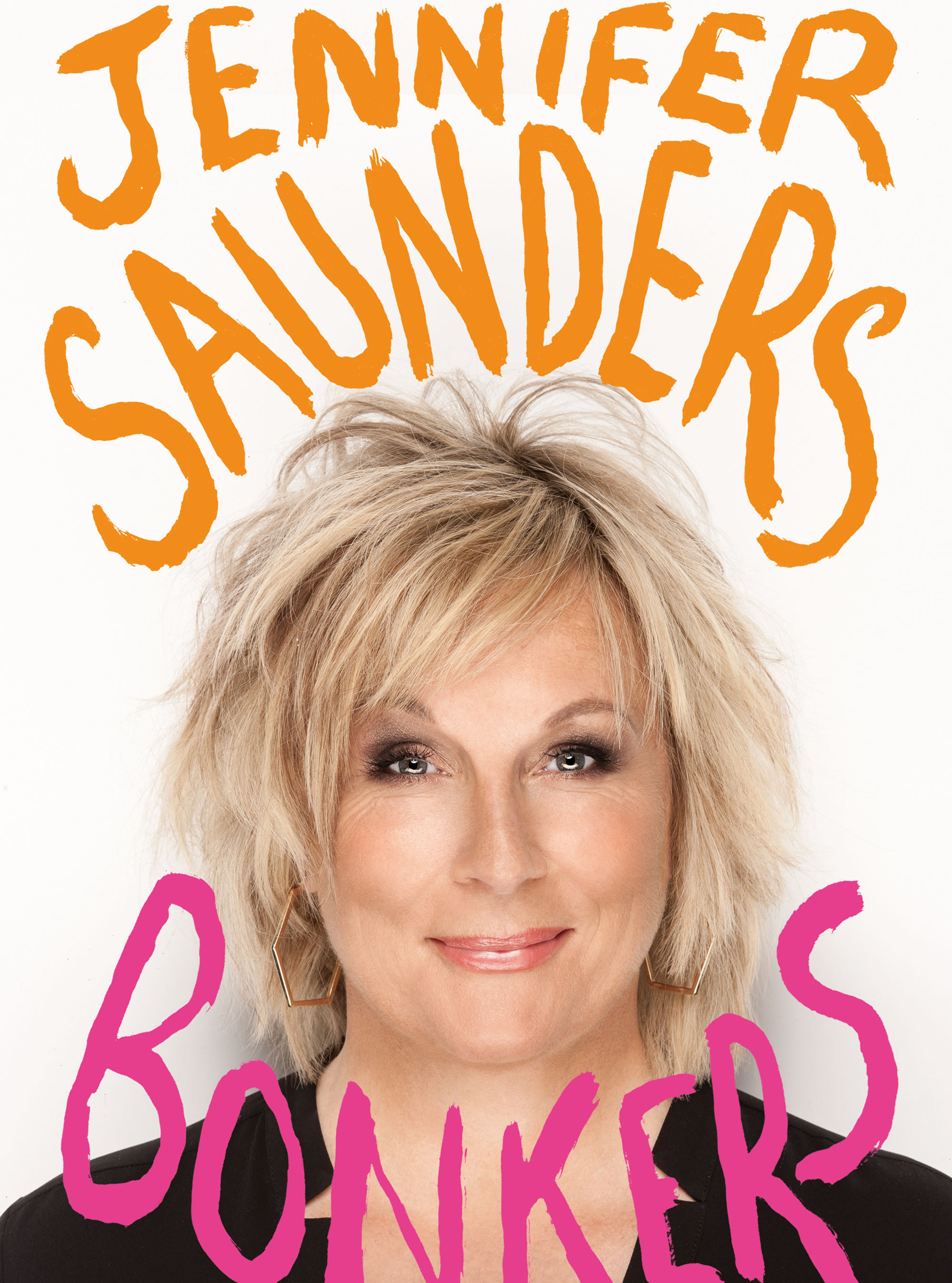
Bonkers: Jennifer Saunders at the Royal Festival Hall


Jennifer Saunders can now add 'wrote a probably bestselling autobiography', 'interviewed by Clare Balding' and 'filled out the Royal Festival Hall' to her disgustingly long list of achievements. Doesn't she think someone else might like a chance?

Jennifer Saunders is the latest of a series of comedians to turn their mind to writing a book. Not fiction like friend and co-writer, Dawn French, but a long-awaited autobiography. Bonkers: My Life in Laughs will be released tomorrow on Super Thursday but last night Saunders gave the Royal Festival Hall a taster. The book will give us an insight into everything from writing her award-winning comedy series to battling breast cancer.

Jennifer Saunders recounted a series of anecdotes that had the whole hall shaking with laughter and Clare Balding charmingly kept everything moving along brilliantly, batting away a few awkward moments with ease.

I wasn't 100% sure of the best way to blog about this event - I obviously don't want to give you a blow by blow account of every story Saunders told... largely because I can't even begin to tell them as well as her... but I have to say, that really was the structure of the evening. I wouldn't say Saunders was a natural conversationalist but you're nothing but a cold, dull fish if you didn't enjoy the evening. I have concluded that the best way to sum up the evening was to tell you what I took away from it and that way you may also get an idea of the book...

1. Jennifer Saunders is a massive country music fan, loves Dolly Parton and has actually met her. Not sure if I've been more jealous.

2. 
All showbiz success stories start with living room performances to a reluctant audience. I just knew I should have kept up those impromptu Abba concerts I gave...

3. Everyone has a terrifying teacher at school but Saunders' headmistress (who was actually taken to court by parents for excessive caning of their mischievous teen) might help us heal at least a little of our own emotional bruising from simply terrifying teachers.

I guess my final point has to be whether I will buy the book. My answer is - not in hardback (only JK can make me do that) but the paperback must be worth buying just for Saunders' generous supply of hilarious photos, including some fantastic early French and Saunders shots...

Tuesday, 7 May 2013

London Literature Festival 2013


It's been a while, my apologies - all I can say is that my life has been a little less full of books over the last week and a little more filled with, well, wine, dancing like Beyonce, sunshine, a whole lot of food and all, often, at the same time. That aside, people, I am back and what do I have for you? Only the London Literature Festival programme!

Brace yourself if you have a tendency to get a little over-excited - there is definitely potential for some Beatle mania, only with no Beatles... and to be honest probably not much mania around the usual Southbank clientele... anyway, the festival will be at London's Southbank Centre and feature two literary prize readings (
2013 Man International Booker Prize Readings and the Women’s Prize for Fiction Readings) as well as conversations with fiction royalty Barbara Kingsolver, Lionel Shriver, Dalrymple, Audrey Niffenegger... and Rupert Everett. Thought I'd just slip him in there even though he probably doesn't quite qualify as literary royalty, but he does have a book out so he's earned his place.

Claire Tomalin's publicist has gone a little crazy and signed her up for five lectures on literary figures from Thomas Hardy to her latest subject, Charles Dickens, to Jane Austen who would have been celebrating
Pride and Prejudice's 200th anniversary this year.

Other things you can expect include plays, graphic novels and a whole lotta poetry... which I'm afraid I will be largely avoiding because not even an English Literature degree has raised by brow high enough to pay for poetry. I would probably pay to see Keats, or Eliot, or Hardy - that might be worth seeing... especially as it would likely involve a very dramatic awakening from the dead which would be pretty original entertainment in itself.

I really shouldn't be so mean about poetry, I'm sure there's loads of good stuff on if the non-fiction and fiction line-up is anything to go by. Check out the entire programme here, but be quick - tickets are vanishing quickly.

Some other relevant posts:

Tuesday, 9 April 2013

Margaret Thatcher: never too early for a book?


Everyone has those moments, don't they? When you wonder whether you've made a positive impact, whether you're doing anything worthwhile. Judging by Beyonce's last album, she's certainly had it... and if we've both had those moments, that basically means I am Beyonce, right? Now that would be an achievement: being Beyonce. Especially for a red head...

Don't worry, I'm moving on... my point is that, as much of an impact as I would love to have on the world in my lifetime, I'm not sure any impact feels quite right when the moment you die a plethora of books are published about you. There's just something distinctly creepy about knowing that television programmes, newspaper articles and whole autobiographies are there, being tweaked here and there, but ready and waiting for someone to die.

When it was announced that ex British Primeminister, Margaret Thatcher, died on Monday morning of a stroke, hardly a day went by before the publications started to surface. The 'big' Thatcher book, Not For Turning, written by ex editor of the Daily Telegraph newspaper, no doubt will be an instant bestseller when it is published following the funeral.

Thatcher is not the only one to cause a flurry of pre-meditated publishing, though. Worryingly a number of books on Amy Winehouse, who was just 27 at her death, were published almost instantly.

I'm not sure how I feel about it but I can't say I'm surprised by it. Well Thatcher certainly had impact: she was loved and hated by millions but everyone had an opinion on her. Plus Meryl Streep played her... surely that has to be up there in the top achievements that can be earned by anyone. Ever.

Wednesday, 21 November 2012

Costa Book Awards 2013: Shortlist

Hoorah, arguably my favourite awards of the year, the Costa Book Awards, have announced their shortlisted titles in each category. As always, Costa's 'First Novel Award' introduces us to some fresh new writers and I've got to say, so far, they've got it right. You all know my love for The Outcast by Sadie Jones, which won the award in 2008, and The Tenderness of Wolves by Stef Penney which won both the First Novel Award and Costa's Book of the Year in 2006. 

Historically, the Costa Book Awards used to be the Whitbread awards prior to the renaming in 2006. Over the years the awards have recognised a staggering number of top debut writers that have gone on to great things: Zadie Smith, Kate Atkinson, Mark Haddon, Jeanette Winterson and William Boyd to name but a few.

Surprise surprise, this year far-from-debut-novelist Hilary Mantel is up there hoping to continue her winning streak with Wolf Hall sequel, Bring Up the Bodies. For the first time the shortlist features two graphic novels as well as another year of fantastic children's books. Here's the shortlist below, or as I like to call it, 'my Christmas list'.

_________________________________________________

Costa First Novel Award
The Notable Brain of Maximilian PonderJ W Ironmonger (Weidenfeld & Nicolson)
Snake RopesJess Richards (Sceptre)
The InnocentsFrancesca Segal (Chatto & Windus)
The Bellwether RevivalsBenjamin Wood (Simon & Schuster)
Costa Novel Award
Bring up the BodiesHilary Mantel (Fourth Estate)
Life! Death! Prizes!Stephen May (Bloomsbury)
The Heart Broke InJames Meek (Canongate)
Days of the Bagnold SummerJoff Winterhart (Jonathan Cape)

Costa Biography Award
Patrick Leigh-Fermor: An Adventure, Artemis Cooper (John Murray)
The Crocodile by the Door: The Story of A House, A Farm and A FamilySelina Guinness (Penguin Ireland)
Serving Victoria: Life in the Royal HouseholdKate Hubbard (Chatto & Windus)
Dotter of Her Father’s EyesMary Talbot and Bryan Talbot (Jonathan Cape)
Costa Poetry Award
Bee JournalSean Borodale (Jonathan Cape)
The World’s Two Smallest HumansJulia Copus (Faber and Faber)
People Who Like MeatballsSelima Hill (Bloodaxe Books)
The OverhaulKathleen Jamie (Picador)

Costa Children’s Book Award
Maggot MoonSally Gardner (Hot Key Books)
The SeeingDiana Hendry (The Bodley Head)
What’s Up with Jody Barton?, Hayley Long (Macmillan Children’s Books)
A Boy and A Bear in A BoatDave Shelton (David Fickling Books)

Friday, 27 July 2012

Sigmund Freud Museum

Sigmund Freud was a neurologist who is most famously known as the founding father of the revolutionary psychological and psychotherapeutic theory of psychoanalysis. He has written many books on the subject, many of which have become famous throughout the world and influenced many people, including writers of fiction and literary critics. At university there were occasions when we were told to entirely avoid Freud as he was just too popular a topic, both with students and critics, leaving little new to say.

Freud moved into his apartment at Berggasse 19 in the Alsergrund 
district of Vienna in 1891. At this time the apartment was newly built and would become his home, practice and the place in which he wrote many of his seminal works, including his Interpretation of Dreams. Of course, many will be aware of the appropriation of and amendment to this title by writer Jed Rubenfeld in his prize-winning historical thriller, Interpretation of Murder, which featured Freud and his theories of psychoanalysis in the context of a murder in Manhattan in 1909. You can read my review of this book here.


Freud lived in this apartment until 1938 when his Jewish background meant he was forced to flee the city for London in the lead-up to the Second World War. The house is now home to The Sigmund Freud Foundation and has been transformed into a museum, consisting of the rooms of his original practice and some of Freud's own private rooms.


A number of Freud's original furnishings and belongings have been donated and reinstated to recreate his famous practice, with the all-important couch very much a feature. There is an impressive 
exhibition with an incredible number of articles, books and photographs documenting Freud's life and work, including the 47 years he spent in this specific house.


The aim of the foundation is to expand the museum and its library so that it may become "an active research institute and thereby taking initiative toward providing an adequate home for the furtherance of knowledge once exiled from Austria".


It's really worth a look and the time you spend is entirely flexible. There is a lot to see but by no means do you have to read every single piece of paper on display. You could spend anywhere between half an hour and 2 hours here and really is a must-see if you are going to Vienna.


Sigmund Freud Museum
Berggasse 19
Vienna 1090
 
Open daily
July 1 – September 30, 9 a.m. – 6 p.m.
October 1 - June 30, 9 a.m. – 5 p.m.  
T +43-1-319 15 96
F +43-1-3170279
office@freud-museum.at

Friday, 20 July 2012

Ben Miller at The Royal Institution


When I was a kid, about 8 or 9 I'd say, my mum took me to the Christmas lectures at The Royal Institution. For anyone who doesn't know about the Christmas lectures at the RI, they are basically fun packed science events for kids that are televised every Christmas. The theme changes every year but there are always experiments, audience participation etc. I hadn't been back to the RI until last night when I had the pleasure of sitting in that same lecture hall to see the hilarious and hugely talented, Ben Miller, talk about science and his new book, It's Not Rocket Science.

Interviewed by Roger Highfield, author, journalist and Science Museum executive, Ben talked through his love of science from interested parents, a fantastic teacher in primary school before going on to tell tales of his time at Cambridge and his subsequent PhD.

In the book, Miller goes through all his favourite bits of science without the hard boring stuff to create a truly fun science book for adults who may still have a black hole in their lives where the Horrible Science series by Tony de Saulles used to be.

More than being stupidly bright, rather satisfyingly Miller managed to get the mass of the Higgs Boson right in the book, despite it being sent to print before any confirmation surfaced in the media!


For anyone who has enjoyed Ben Miller's comedy sketches or performances on
Primeval or Death in Paradise, you will know both how funny he is and how genuine. The evening was a real pleasure, made even more so by the hilarious experiment he did by mixing hydrogen peroxide with potassium iodide, as seen above. It brought back the fun memories of science at school... i've tried to forget moles, momentum and sedimentary rock...
James Dewar lecturing in 1904

 If you're interested in science and haven't already been, do go along to the RI. Lectures for the general public have been going on there for centuries and the original 19th century wallpaper still covers the walls. 14 scientists attached to the RI have won Nobel prizes and some of the most fundamental findings were announced and/or demonstrated there, such as the discovery of 10 important elements, including Sodium. You can visit the RI at 21 Albemarle Street in London.

Saturday, 19 May 2012

Book Club: The Hare With Amber Eyes


Blurb: 264 Japanese wood and ivory carvings, none of them larger than a matchbox: Edmund de Waal was entranced when he first encountered the collection in his great-uncle Iggie's Tokyo appartment. When he later inherited the 'netsuke', they unlocked a far more dramatic story than he could ever have imagined.

From a burgeoning empire in Odessa to fin de siecle Paris, from occupied Vienna to post-war Tokyo, Edmund de Waal traces the netsuke's journey through generations of his remarkable family against the backdrop of a tumultuous century.


Boy, I've been waiting weeks to do a review of this but, as it's a book club book, I always want to wait to hear what everyone else thought - otherwise what would be the point?? 


In short, absolutely loved this book. Almost everyone liked it by the end but agreed that it took some getting into. For me I can give a book about 50 pages but any longer than that and the book is ruined for me, even if it picks up later on. This was a case of getting past the first chapter, I'd say. Some of my friends felt it took a bit longer than that... one saying 200 pages... and one not getting into it full stop. I can totally see why that happened, but for me it was a different story.


At first, all I knew about 
The Hare with Amber Eyes by Edmund de Waal was that it was a family memoir written by some potter... it didn't jump off the shelf to me, I admit. Luckily, though, it was much more than that. It is a family memoir, yes, but it's also a moving social history that takes you all over the world: Austria, France, England, America, Japan and Ukraine.

The world has a rich modern history but it's rare that we read so much of it together in one place. This book jumps between some of my favourite topics, including impressionist art in Paris, schmoozing with novelists like Proust and artists such as Degas and Renoir, to the tumultuous events of World War 2 and the treatment of Austrian Jewish communities.


De Waal really gets personal with his ancestors so that you feel you are just starting to fill in the gaps between the history books and the horrible, personal reality. The netsuke form the main thread of the story but they are not dull, as you might think. They are an important link that makes you keep reading otherwise you might think the book isn't going anywhere. How else would you determine what and who to write about when you have so much to choose from?


This book made me want to read more non-fiction, and that is rare. It also made me cry, another thing that is rare with books! It's a definite must and has a great twist that will make you smile and well-up at the same time!


Book club gave it
 7/10.

It's a
 9/10 from me.

Wednesday, 16 May 2012

Cookbooks

My family has always been quite food-orientated... my Dad's a keen cook, my Mum grew up in Malaysia and so has loads of great Far-Eastern recipes and me and my sister seem to have got the cooking bug too. Anyway, I thought I would step away from traditional books for today's post and talk about some of my favourite recipes from some of the best cookery books out there.

Salad: For the best side salad, you've got to look at French chef, Daniel Galmiche's The French Brasserie Cookbook. He does a scrummy garden salad with tomatoes, onions and little bits of raw garlic. He's obviously not the only cook to have ever added raw garlic to a salad, but it does give it a real kick and the dressing is simple and tasty.


Thai: Vatch's Thai Cookbook is great - real Thai cooking with some fantastic flavours. My favourite is probably his grilled chicken with a delicious sauce made from white wine vinegar, coriander and chilli. You heat it up with sugar so that it becomes almost a syrup. Delicious! Controversially, I'm quite a fan of Jamie Oliver's red Thai curry in 30 Minute Meals. You have complete control over the spice, so it's a good one to do for guests who don't like too much of it.

Pasta: 
As a kid I was brought up on Pasta Putanesca. This recipe is inescapable as I'm pretty sure every chef under the sun has their own version. My Dad always used to use Delia Smith's from Delia's Winter Collection but he has always added tuna. The basic recipe is delicious and, again, can be as spicy as you like but I do recommend the tuna addition. I don't even like tuna all that much... but it gives it a great consistency and taste.

Pudding
: I do like puddings... and I can't say I have a favourite. Any form of sticky toffee pudding (Nigella's is particularly delicious and super easy) and almost all fruit crumbles will see a big smile across my face. Daniel Galmiche, as previously mentioned, has a lovely recipe for Tarte Tatin in his book and the banana cake in Pret A Manger's cookbook always comes out perfectly and goes down very well...

Vegetarian:
 My sister is a vegetarian so we eat a lot of meat-free dishes in our house. My personal favourite veggie dishes include Ottolenghi's Mee Goreng and loads of recipes from The Accidental Vegetarian, which is really worth a look.

If you simply have ingredients but don't know what to do with them... google the BBC Good Food website and type in your ingredients... it's  brilliant. Some of my all-time favourites come from their phenomenal database of recipes... shouldn't be snubbed.


I'm sure I've missed some great recipes and cookbooks that I'll hit myself about later but hope you like my little selection here. To have a read about food in literature, have a look at my post from a couple of months ago: FOOD IN LITERATURE...