My Bookshelf

Showing posts with label War. Show all posts

Monday, 3 March 2014

A Town Like Alice - Nevil Shute

Jean Paget is just twenty years old and working in Malaya when the Japanese invasion begins. When she is captured she joins a group of other European women and children whom the Japanese force to march for miles through the jungle - an experience that leads to the deaths of many. Due to her courageous spirit and ability to speak Malay, Jean takes on the role of leader of the sorry gaggle of prisoners and many end up owing their lives to her indomitable spirit. While on the march, the group run into some Australian prisoners, one of whom, Joe Harman, helps them steal some food, and is horrifically punished by the Japanese as a result. After the war, Jean tracks Joe down in Australia and together they begin to dream of surmounting the past and transforming his one-horse outback town into a thriving community like Alice Springs...

Starting in London, then on to the invasion of Malaysia by the Japanese in World War 2 before moving to Alice Springs and then the east coast of Australia - t
here didn't seem like a more appropriate follow-on from The Glass Palace than A Town Like Alice by Nevil Shute.


My edition of the novel actually included a touching introduction from Eric Lomax, the writer of The Railway Man that I read at the end of last year. Having read Lomax's memoir, then The Glass Palace and now this, I feel I'm just starting to really grasp what it was like in South East Asia during and after the war. This is particularly interesting to me as my grandparents lived in Malaysia for decades and my mum was born out there.


If you're a woman and need to feel empowered, you have to read this book. This basically paints a world where one woman shows everyone else how it's done. She's a little annoying in places, and that probably makes me anti-feminist in some definition or other, but ultimately Jean Paget is pretty awesome. I can't imagine what it must have felt like reading this novel if you were Eric Lomax, reading the descriptions of the all too familiar insane heat, the death and disease, the starvation.


Shute's novel definitely paints a convincing scene but its ambition is of course not that of The Railway Man, or even The Glass Palace. To read, the book felt dated but in a good way, like I was reading one of my grandad's books or something - a nice alternative to the more modern reads I normally find myself with. There is a strong romantic thread in this book, which I appreciated - you definitely root for all the characters - but, for me, this is where the dated element of the book didn't quite work. It was all a little too trad for my liking, which is saying something as Jean Pagets life is far from traditional - for now, let alone then! But yeah, I guess it must have been the influence of The Glass Palace, but I
 surprised myself by wanting a little less romance, and a little more of the history, culture and time. For some reason it just started to feel a bit two-dimensional. I hate saying that as this is a good book, it is. And a great choice for my trip considering the route I took. I just think it's a case of a modern reader being used to a certain amount, or more a certain kind of drama that this book just didn't provide I'm afraid.

Overall, though, this gets a 5/10 - by 5, I mean 5, not 1. I have a tendency to lump any rating from 1 to 5 together as 'not very good', but I enjoyed it on an average level, so it gets a half score. It's a great insight into a particular time, not just in Asia and Australia either, but of the world and the way it got so much smaller after the Second World War, and then better technology and transport, 
brought so many people together.

Thursday, 27 February 2014

The Glass Palace by Amitav Ghosh

Set in Burma during the British invasion of 1885, this masterly novel by Amitav Ghosh tells the story of Rajkumar, a poor boy lifted on the tides of political and social chaos, who goes on to create an empire in the Burmese teak forest. When soldiers force the royal family out of the Glass Palace and into exile, Rajkumar befriends Dolly, a young woman in the court of the Burmese Queen, whose love will shape his life. He cannot forget her, and years later, as a rich man, he goes in search of her. The struggles that have made Burma, India, and Malaya the places they are today are illuminated in this wonderful novel.

The Glass Palace by Amitav Ghosh is probably the best book I could have read at this point in my trip. The novel spans over a century of socio-political history and travels all over South East Asia, from Calcutta to Mandalay, from Rangoon to Malaya.

It's an ambitious project for Ghosh, taking him 5 years writing and researching  all the tiniest details but it's paid off massively. What a feat of writing. Everything comes alive in this novel - who knew I could learn so much, and be genuinely made interested in, teak and rubber plantations?? I often find that Asian writers have a particular, more floral style that I'm not always used to and struggle with but Ghosh doesn't do that. He writes clearly and fluidly, while weaving in the vital historical and cultural detail with subtlety, rather than showing off his wealth of knowledge. 

This book has a story to tell certainly, but in comparison to Burmese Days, I don't think Ghosh's primary intention is to make a political/cultural statement. He does address difficult issues explicitly, but does so admirably fairly and without, I think, losing the facts. Subjects include the treatment of the Indian communities in Malaya and Burma, their relationship with the British army and Gandhi's crusade, the violence inflicted on Asia by the British and the Japanese during World War 2, class climbing, and more domestic issues such as marriage, grief and infidelity across the nineteenth and twentieth centuries.

For anyone travelling in South East Asia, this is a must read, but you should read it anyway.


8.5/10

Sunday, 19 January 2014

The Railway Man by Eric Lomax

During the Second World War Eric Lomax was forced to work on the notorious Burma-Siam Railway and was tortured by the Japanese for making a crude radio.

Left emotionally scarred and unable to form normal relationships, Lomax suffered for years until, with the help of his wife, Patti Lomax, and of the Medical Foundation for the Care of Victims of Torture, he came terms with what happened. Fifty years after the terrible events, he was able to meet one of his tormentors.


The Railway Man is a story of innocence betrayed, and of survival and courage in the face of horror.

When I first bought this book I had no idea how 'big' a book it was. Not in length, but in terms of its effect. Not only had the book had been published well over a decade before I picked it up, it had been phenomenally successful and won the 1996 NCR Book Award and the J R Ackerley Prize for Autobiography. What I had gone and bought was Vintage's celebratory re-jacketing of the now-classic memoir.

Well, what a read. You could say I was naive as to the emotional power a story like this has. Growing up in the modern world I have always been aware of images everywhere of war zones, terrorist attacks, violent dictatorships and from that you certainly build at least a little immunity from the shock factor. Not a good thing. This book, however, not only proved that I have not been entirely stripped of any emotion or empathy... But also illustrated the danger of not knowing. Soldiers were subject to the cruellest treatment all over the world  as POWs but after their release, there was a feeling that they were the lucky ones - all kitted out in luxury away from the front line. To be traumatised is one thing, for the trauma to be left unacknowledged and thus untreated is another.


I was bemoaning to my sister the way that our parents and grandparents have shaped the world so much they have left little for us to put our name to, aside from yet more technology to deplete our resources and the rise of size zero. But she said an interesting thing and that was that surely we will be part of a psychological age of some kind, where we all understand ourselves and each other more through psychological advances, therapy et al. This book certainly goes along with that argument and the therapeutic opportunities and recognition of trauma that Lomax receives eventually is arguably what gives this book it's unique power.

Anyway, sorry that this has turned all whimsical, the book itself is a must read. It's educational, it lacks bitterness, the images are clear as day without even a single photograph and I was left feeling extremely fortunate.

Lomax sadly died in 2012 but did live to know his book would be made into a film. Indeed he met his Hollywood selves, Colin Firth and Jeremy Irvine. The film is out now.


Tuesday, 15 October 2013

Sweet Tooth by Ian McEwan


The year is 1972. The Cold War is far from over. Britain is being torn apart by industrial unrest and terrorism. Serena Frome, in her final year at Cambridge, is being groomed for MI5.

Serena is sent on a secret mission - Operation Sweet Tooth - which brings her into the world of Tom Haley, a promising young writer. First she loves his stories, then she begins to love the man. Can she maintain the fiction of her undercover life? And who is inventing whom? To answer these questions, Serena must abandon the first rule of espionage - trust no one.

Sweet Tooth is the latest novel from Booker-winner Ian McEwan. All the things we love about McEwan are in this book - strong character voice, a couple of clever twists and turns to keep things moving, an intellectual narrative and beautiful writing. I have to say, though, that something was missing for me. Unhelpfully I don't quite know what.

It's one of those books where there was nothing to stop me finishing it and when I came to the end I could say, 'yes, I enjoyed that' but did I love it? Not really. Perhaps if there had been a bit of a longer build up and less long on the Tom Haley thread? But then if that had happened, would that have prevented me from caring about what happened to Serena?

What I did really enjoy about this book was the intellectual side. McEwan's characters are very intelligent and so the conversations they share reflect that. If I were honest with myself, I'd probably struggle to keep up with them in some cases and I'm 99% sure I wouldn't be a good recruit for the secret services but I did like taking a back seat and watching Serena climb the academic ladder, learn all she could from Tony and I took a little pleasure in seeing her confound Tom Haley with intricate mathematical problems. And even though I'm sure McEwan took similar pleasure when it came to constructing his ending, I have to allow him that - I didn't quite see it coming (and that's not something I ever like to admit... hence the addition of the word 'quite' in that sentence...).

I couldn't help but compare this novel to
Restless by William Boyd - a very different war but nevertheless an exploration of the British secret service against a fascinating backdrop of international secrets with a ballsy woman at the helm and both, of course, written by some of the country's most talented and successful writers. The other similarity, though, was the disappointment factor although, if I had to pick, I would say Sweet Tooth pipped Restless to the post as, to me, Serena appealed that little bit more than Ruth.

This book gets a 7/10 from me
.

Saturday, 21 September 2013

Book Club: Alone in Berlin

I'm sorry to have taken some time out on the blog front lately but, after 10 weeks and a little bullying from some people..., I am back! First stop? Book review I think.

Inspired by a true story, Hans Fallada's Alone in Berlin is the gripping tale of an ordinary man's determination to defy the tyranny of Nazi rule. This Penguin Classics edition contains an afterword by Geoff Wilkes, as well as facsimiles of the original Gestapo file which inspired the novel.

Berlin, 1940, and the city is filled with fear. At the house on 55 Jablonski Strasse, its various occupants try to live under Nazi rule in their different ways: the bullying Hitler loyalists the Persickes, the retired judge Fromm and the unassuming couple Otto and Anna Quangel. Then the Quangels receive the news that their beloved son has been killed fighting in France. 


Shocked out of their quiet existence, they begin a silent campaign of defiance, and a deadly game of cat and mouse develops between the Quangels and the ambitious Gestapo inspector Escherich. When petty criminals Kluge and Borkhausen also become involved, deception, betrayal and murder ensue, tightening the noose around the Quangels' necks ...


When it was first decided that the next Book Club read would be
Alone in Berlin by Hans Fallada, I'd had it in my head that this was a contemporary historical novel. I remember seeing posters for it on the tube back in 2009 when it was published and thinking it looked my kind of read. Turns out it was re-released in English in 2009 but it was actually written yonks ago in 1947. This knowledge completely blew my mind and completely changed my entire approach to the book - in front of me now lay a secret, controversial, brave almost-diary of wartime Berlin.

As I've bored you with a number of times, some of my favourite books are what I would call 'mosaic literature' (see, not just Derrida that can make up words to suit his argument...) where you get several snapshots into different lives and worlds. Some of those worlds may overlap, some may not, but you end up with an epic picture of society and the different outlooks/reactions to a particular time or event. This book definitely subscribes to my new genre but of course that doesn't mean it was successful. Only it 100% was successful. Easily one of the best books I've read this year so far, if not the best.


Fallada achieves so much in this novel. But for me his biggest achievement is the way the fear that permeates the entire book feels so immediate, in all its guises. With all the destructiveness and loneliness caused by fear and all our retrospective knowledge of this time in history, it would be easy to read the entire novel and feel completely depressed. Surprisingly, though, it is this 'fear' and people's ability to fight against it, learn from it, is somehow uplifting. That's not to say this is a comedy. Please don't accuse me of saying that... I've made a similar mistake before... I recommended 
The Boy in the Striped Pyjamas and subsequently had a balling woman in front of me, outraged that I would describe it as a children's book...

Anyway, another achievement for Fallada is that his characters are so wonderfully drawn; they aren't black and white, good or bad - they are all completely human and are all subject to the same flaws, same fears as any one else. As a result, Fallada has done one of those rare things by creating a network of characters, none of which do you particularly love, but who are all so strong that you can't help but be drawn in by them. Even the most irritating, weak or depraved characters like serial-adulterer and gambler Enno Kluge or members of the Gestapo stir something.


For me, though, it's not just the story itself and Fallada's writing that makes this book a modern classic, as Penguin has credited it. It is the whole background: the historical backdrop, obviously; the fact the novel is based based on a true case (and I'd recommend not Wikipedia-ing the story until you've read the novel...); but also Fallada himself, as a man, as a writer. His personal story is both disturbing and fascinating and gives you an idea of just where this story has come out of.


I could keep going on about this book, it's good points and bad - there are just so many things (characters, events, the writing, the ending... the list goes on) that I could talk about but I shall leave this review here and just say, go read it.


Book club gave it an 8/10 - think it might be a record! I give it a 9/10.

Thursday, 11 July 2013

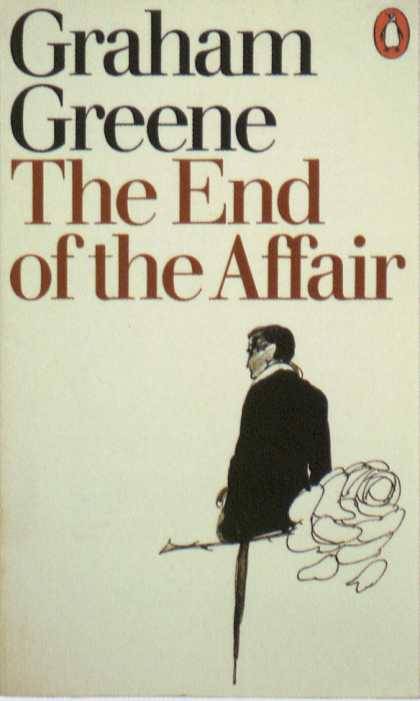
The End of the Affair by Graham Greene


The love affair between Maurice Bendrix and Sarah, flourishing in the turbulent times of the London Blitz, ends when she suddenly and without explanation breaks it off. After a chance meeting rekindles his love and jealousy two years later, Bendrix hires a private detective to follow Sarah, and slowly his love for her turns into an obsession.

The End of the Affair by Graham Greene is one of those books that has been recommended to me millions of times. 'It'll be one of the best books you'll ever read,' people kept saying.

In so many ways, it looked to be the perfect book for me. A bit of romance, the background of the Blitz in 1940s London and a split narrative. Unfortunately, I didn't fall quite in love with it.


I think I have to admit here, though, that for various reasons this tiny book took me three weeks to read and I really can't blame that on Graham. I also had all the expectations set up by said annoying people above. And I will try and blame them. Perhaps they only loved it because it's 200 pages and so it was one of the only books everyone managed to finish... Ok, becoming a little bitchy now. That aside, I guess it came down to just not loving the characters entirely. In the first few chapters Maurice just seemed to be a right drip who had fallen for a someone who really wasn't very nice. So why would I care whether or not they got together?


Saying that, this book initiated one of those lovely situations when the book club makes me think a bit harder. It got me past my frustration with taking so long to read it and made me realise how intricate this novel was, despite it being short. It asked all the big questions about love, religion, war... and I loved that. This is something Greene addressed in his literary criticism, where he condemned the characters of modernists like Virginia Woolf and EM Forster
 for "wander[ing] about like cardboard symbols through a world that is paper-thin" as the writers lacked any religious sense.

There is, therefore, something in this book for everyone. For me, I may not have been swept up by the characters as other might have been, but I enjoyed seeing how groups of people come together, affect one another, misunderstand each other and all, ultimately, face these big questions and ideas.


There are some weird random threads that run parallel to the main narrative, but they probably all provide some extra nugget, even if I haven't quite worked out what, why or how just yet. With that in mind, I think this book would have been a perfect novel to study. Plenty to look out for and all those wonderful themes and imagery that examiners jump up in the air and do a little happy dance about.


All in all, the book got
7/10 from the book club and 6.5/10
from me.

Monday, 25 February 2013

BBC to make War and Peace


Worryingly, the title of this post took some time. I really thought that somehow I must be able to make some form of witty headline with this so that, at least occasionally, I can be seen to be as intelligent and hilarious as I truly am. I'm afraid, though, today is not that day as this is the best I could do. Let's move on.

Anyway so we've recently ascertained that Nicholas Hoult is to star in the Hollywood version of Sebastian Faulkes' Birdsong (see post
here), a part only recently taken on by fellow Brit, Eddie Redmayne, for the BBC. Now it's hard to feel sorry for Eddie because he's had a pretty fantastic couple of years with successes like My Week with Marilyn, playing King Richard II in Richard III at the Donmar Warehouse in London's West End and, more recently, singing his heart out in the BAFTA and Golden-Globe-winning Les Miserables. But. Saying all this. It seemed a little cruel that only a year after his performance in Birdsong is aired, Hollywood decide they can do better.

But it's ok, people - it's O.K. I know you were almost worried there. Eddie Redmayne is rumoured to be part of what surely promises to be a BBC masterpiece, an adaptation of Tolstoy's epic
War and Peace. Perhaps a little ambitiously, Andrew Davies (the mind behind previous BBC book-to-film triumphs Bleak House and Middlemarch) is retelling the story in just six 1-hour episodes. Bear in mind that last time the BBC tackled this beast of a book with Anthony Hopkins in the lead role, they made 20 episodes...

The novel, first published in 1869, centres on five aristocratic families in Russia and looks at the impact of the Napoleonic era and the French invasion.

Friday, 15 February 2013

Nicholas Hoult to star in Birdsong


What? Huh? Wait. Have we not just had an adaptation of
Birdsong for the screen? Yes, yes we have. But as we all know, nothing is ever finished with until Hollywood have had their go. Sometimes twice.

Think 
The Girl with the Dragon TattooJane Eyre, Great Expectations, The Great British Bake Off... One thing all these films have in common though? Except perhaps the latter... top male leads. Daniel 'Phwoar' Craig, Michael 'Wunderbar' Fassbender, Jeremy 'English Rose' Irvine... I'm sure Irvine would love being called an English Rose... *shrugs*

ANYWAY, the BBC had already done a pretty good job with casting for
 Birdsong last year with the irresistible Eddie Redmayne. Therefore it was always going to be tough for Hollywood to take it up a notch in my opinion. But, I have to say, if the rumours are true, Nicholas Hoult is a pretty good choice. Now he may not be the conventional Etonian gorgeousness that is Mr. Redmayne, but everyone loves a bit of Nicholas Hoult don't they? Even with blonde hair in A Single Man. Actually, that brings me on to a good point. Nicholas Hoult is not only rags to riches, Skins to Hollywood, rising British star... he also does a pretty good job of adapting characters from page to screen. From Nick Hornby's About a Boy to A Single Man by Christopher Isherwood to, more recently, Isaac Marion's Warm Bodies, he's done quite a range.

Now I still have reservations about whether or not
Birdsong will ever make an entirely successful transformation from page to screen because I've always slightly wondered if there's something missing from Sebastian Faulks novel. That's not to say I didn't enjoy it (you can read my review here) but Hollywood is going to need to bring something a little different. Perhaps Nicholas Hoult will do that? We shall have to see.

See my thoughts on the BBC adaptation here.

Wednesday, 16 January 2013

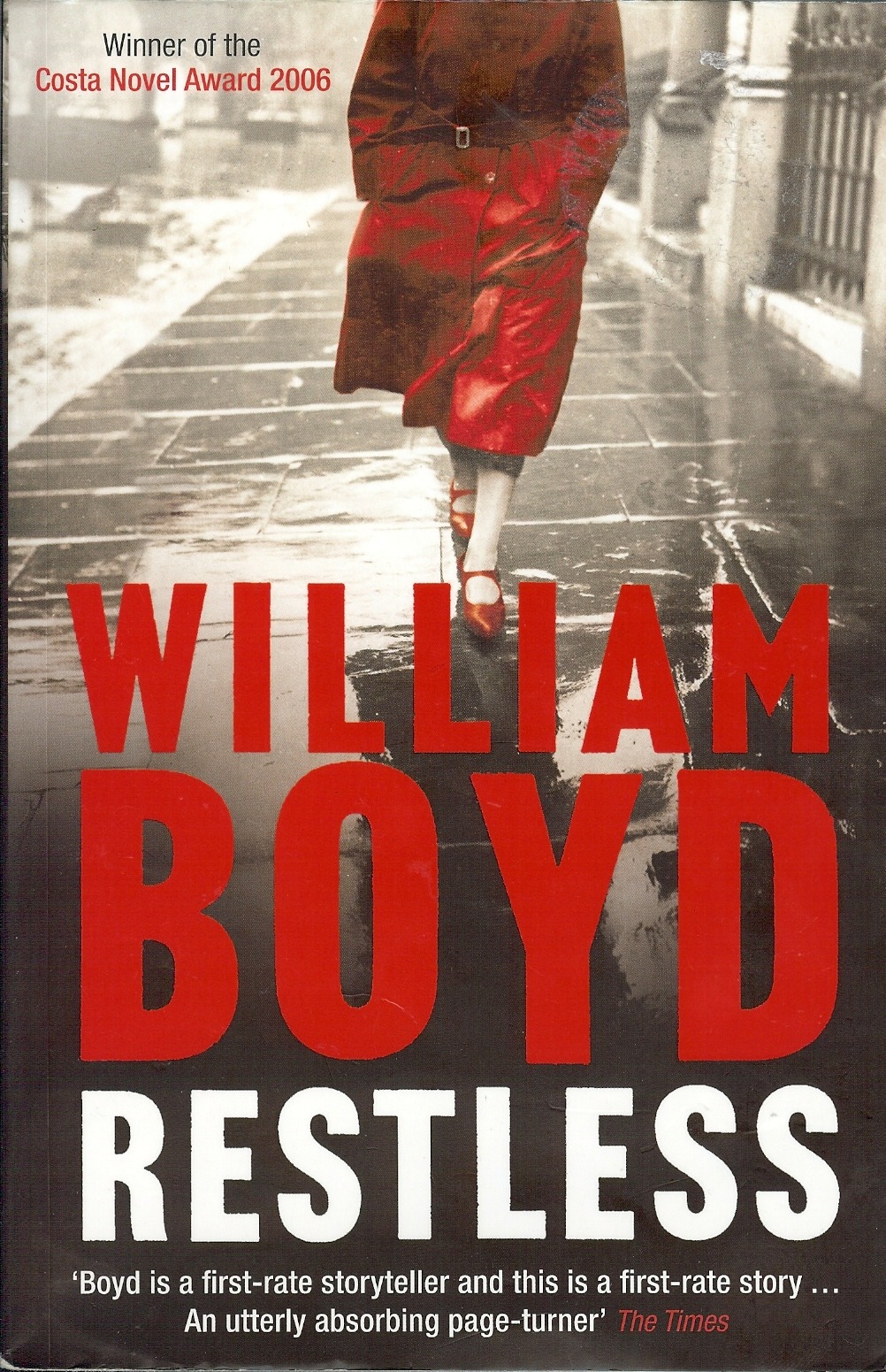
Restless


Blurb: It is 1939. Eva Delectorskaya is a beautiful 28-year-old Russian emigree living in Paris. As war breaks out she is recruited for the British Secret Service by Lucas Romer, a mysterious Englishman, and under his tutelage she learns to become the perfect spy, to mask her emotions and trust no one, including those she loves most. Since the war, Eva has carefully rebuilt her life as a typically English wife and mother. But once a spy, always a spy. Now she must complete one final assignment, and this time Eva can't do it alone: she needs her daughter's help.


In 2010, Channel 4 broadcast William Boyd's
Any Human Heart in a four part series starring Jim Broadbent, Kim Catrall, Matthew McFadyen, Hayley Atwell and Gillian Anderson. It was extremely well-received, winning a BAFTA and sending the original 2002 novel soaring up the bestseller charts once again. Completely unaware at the time that it was an adaptation, I got completely carried away with watching it that I denied myself what so many people have told me since was 'one of the best ever books' they've read. One of the most annoying things in life is when someone goes 'oh, but you haven't read the book?'. Conversation is struck dead and you have to retreat into that clearly deeply uncultured world in which you live. Why do we do that to each other? It's almost as bad as saying 'you really didn't know that?'. Cruel.

Anyway, I wasn't going to make that mistake again so as soon as it was announced that Hayley Atwell would star in a new William Boyd adaptation for the BBC over Christmas, my then complete and utter apathy for work and ten idle fingers lead me to quickly add
Restless to my Christmas wish list. A couple of months later here I am having read it and about to tell you allll about it.

I've got to say, I was a bit disappointed at the beginning. The writing seemed to me a little average for someone so highly praised and I wasn't feeling particularly excited by the plot (which was odd considering 1939 female spy sounds just up my street). The narrative alternates between 1939 and the 1970s when the protagonist is employing her daughter in one final mission. The problem is that you know that Eva is going to survive at least until the 1970s so any threat she comes to feels inevitably less potent.


By the time I got into the bulk of the novel, though, I was involved. My train journeys seemed suddenly quicker as I kept reading, wanting to see who was going to betray who and when and why. I liked the way Boyd alternates between the reality of spying during the war and the reflective moments where you can start to see where Eva's story fits in the big picture.


I would say that I wasn't a big fan of Eva's daughter for the most part. I can't put my finger on why, just a bit annoying, but she felt believable and so it didn't really matter. My favourite character has got to be Romer. He was the only one, to me, who had any real mystery around him and this novel, ultimately, is supposed to be a mystery! I wasn't entirely convinced by his relationship with Eva and would have perhaps liked to see him come out a little bit smarter than perhaps he does at the end. That's not to say Boyd doesn't do this with Romer, I just think perhaps I'd have liked him to push it a little further.


Overall, though, I enjoyed this book. It was a classic Costa winner - easy to read, unpretentious and a solid plot.


6.5/10

Sunday, 13 January 2013

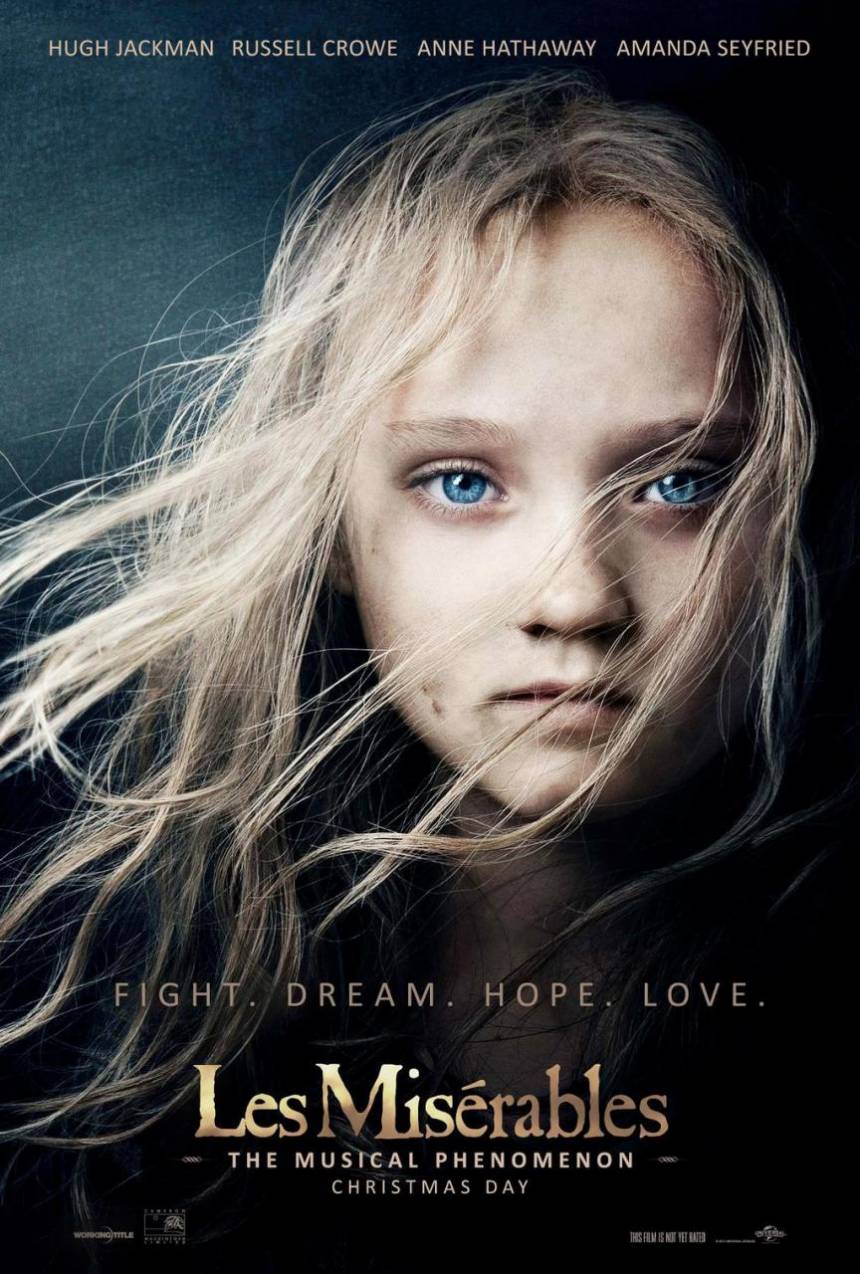
Les Miserables


In 19th-century France, Jean Valjean, who for decades has been hunted by the ruthless policeman Javert after he breaks parole, agrees to care for factory worker Fantine's daughter, Cosette. The fateful decision changes their lives forever.


I've been wanting to see Les Miserables for almost a year, which gives us an idea of how long the hype surrounding this Oscar nominated adaptation has been going on. Almost a year ago to date, I was thinking of what books I wanted to read in 2012 and that I needed at least one classic in there. I'm always shamefully apathetic with classics - they just normally take so long to read that, no matter how good they are, I become bored. In anticipation of the film, though, I wanted to try Victor Hugo's original novel. Holy mother... it's a frickin' doorstop of a book. Thus, not unsurprisingly, I have not read the book. I have, though, just seen the film and completely loved it.

Whenever I go and see a musical, be it on screen or on stage, somehow I always seem to forget that they are going to do a hell of a lot of singing... so much so that Amanda Seyfried, one of the headline names, does not have to test her English accent skills even once as every single line she says is sung. The director, Tom Hooper, approached the singing, as you have probably heard by now, in an interesting way. He didn't cast the best singers in Hollywood for this film and he didn't stick them in a recording booth for days on end to perfect each track. They just sang there and then as they were acting in an effort to get across the reality of their characters' situations and I think it really works.

I completely understand that, as a result of Hooper's approach, some people are distracted from time to time as the singing in places is a little shaky, but I see the result as showing singing to be the ultimate form of expressing emotion. Unfortunately, I am completely awful at it. I cried my way through Anne Hathaway's surely Oscar-winning performance of I Dreamed a Dream, but I'm not entirely sure whether I was crying more about Fantine's desperate situation or the fact that, despite many hours screeching along to Glee's version of the classic song, I still cannot reach those high notes.

As a story, I am sure that massive chunks have been cut out since the original novel. Impossible not to. I could complain, but there's something nice about the fact that we don't have to go back 2 more times before we see the ending...*cough* the Hobbit... You really go along with Jean Valjean the entire way through his journey - you wouldn't want that disrupted. I also am a sucker for any story related to the French Revolution (as you may have noticed in my review of A Place of Greater Safety...)

Controversially, none of the four main cast members are British despite it being a British film. Don't get me wrong, Jackman, Hathaway, Crowe... they're all phenomenal in this movie, but I feel, as a Brit, I need to praise the stand-out British performances - Eddie Redmayne's voice didn't falter once and he nailed his heart-wrenching solo, Samantha Barks is a true star that I hope comes back to the big screen again, the pairing of Helena Bonham Carter and Sacha Baron Cohen is hilariously spectacular, little Gavroche is a scene-stealer and it was great to see members of the West End cast, including Barks, transform their characters for film. Plus, it was lovely to see France come to life on my doorstep as the Royal Naval College in Greenwich was transformed into Revolutionary Paris.

There were tiny aspects that didn't work for me - some of the lyrics, the slightly rushed feeling from time to time, the occasional strained note and perhaps unfairly I could have done with a little more dialogue - but overall, I really enjoyed this film. And it made me cry at all the right times and for all the right reasons... I have been known to cry at all the
wrong times in other films...

Thursday, 10 January 2013

Virginia Woolf at Tavistock Square


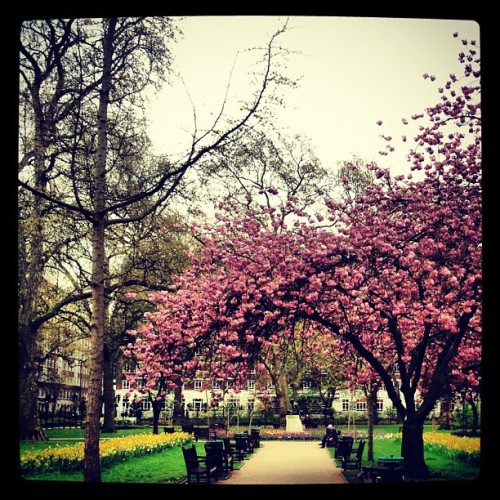
Yesterday in 1924, Virginia and Leonard Woolf bought the third floor flat at 52 Tavistock Square. Tavistock Square is located in Bloomsbury, a notoriously literary district of London (an area where I conveniently work...) that gave its name to the highly influential and well-regarded Bloomsbury Set of which the Woolfs were members. The square is a stone's throw from the British museum.

Virginia Woolf's relationship with Bloomsbury began in 1902 when she and her
 her three siblings moved there following their father's death. It was not until 1924, though, that Tavistock Square became home. 64 years since Virginia Woolf's death, the square has gained a more somber reputation as the location where the Number 30 bus was destroyed by one of the explosions on 7th July 2005. This was not, however, the first time that war visited number 52. In October 1940 the Woolf's home fell victim to a direct hit from a German bomb:
So to Tavistock Square. With a sigh of relief saw a heap of ruins. Three houses, I sh. say gone. Basement all rubble. Only relics an old basket chair (bought in Fitzroy Sqre days) & Penmans board To Let. Otherwise bricks & wood splinters. One glass door in the next door house hanging. I cd just see a piece of my studio wall standing: otherwise rubble where I wrote so many books. Woolf, Virginia, 'Sunday 20th October 1940', Patrick Rosenbaum, Stanford, The Bloomsbury Group: A Collection of Memoirs and Commentary, (University of Toronto Press, 1995), p. 62
The site where Number 52 Tavistock Square stood now forms part of the Tavistock Hotel but Woolf has not been forgotten; a statue of her stands today in the gardens of Tavistock Square.

Tuesday, 8 January 2013

A Place of Greater Safety


Georges-Jacques Danton: zealous, energetic and debt-ridden. Maximilien Robespierre: small, diligent and terrified of violence. And Camille Desmoulins: a genius of rhetoric, charming and handsome, yet also erratic and untrustworthy. As these young men, key figures of the French Revolution, taste the addictive delights of power, the darker side of the period’s political ideals is unleashed – and all must face the horror that follows.

I felt it was time for a new book review. I find Christmas, though, is not ideal reading time for me and so I've picked one I read a while back and one of my favourites: 
A Place of Greater Safety by Hilary Mantel.

It's fair to say, this is an historical novel of epic proportions. Yes, it tackles the monstrous subject of the French Revolution in literary HD, but it is also
very long. The first hundred pages of character exposition, although necessary rather than indulgent, have yourself looking at your watch wondering if you'll be able to read a hundredth of this novel before tea time ( *cough* 3pm sharp...I can't help it that my life revolves around food).

The novel is meticulously researched though and, with help from Mantel’s name guide, most characters are explained and easily followed. The more minor personalities, the Seamus Finnigans and Dean Thomases if you will, can though sometimes become a little lost in the bustle of the rest of the plot. Consequently, scenes that were particularly dramatic or well-known, such as Marat's murder in the bath (it really doesn't spoil that much), ended up being more caricatured than sentimental.

Saying that, Mantel’s female characters are strong. Witty, opinionated and far from submissive, Mantel’s women give Katniss a run for her money and protect us all from nine-hundred pages of the traditional phallocentric drivel present in so many other historical novels. This in partnership with great writing (I actually prefer the writing in this than
Wolf Hall...) makes this vast brick of a novel and all Mantel's meticulous research accessible to the average, slightly apathetic reader - aka me. And she does it without writing all the characters into an orgy a la Philippa Greggory, not that orgies don't have their place in historical fiction... 

Mantel throws you into the action of the revolution, she doesn't position the reader too far away. Importantly, though, she didn't try to impinge a particular viewpoint on me - I like that. All in all, I'm quite happy for this book to sit alongside earlier more famous interpretations by Dumas and Dickens,
 as a more modern, pool-side alternative. And you really do need to read this at the poolside.. it needs a chunk of undisturbed time. It's really not a commuter read ladies unless you want massive man shoulders from lugging it about for months on end...

This novel gets
9/10

Wednesday, 12 December 2012

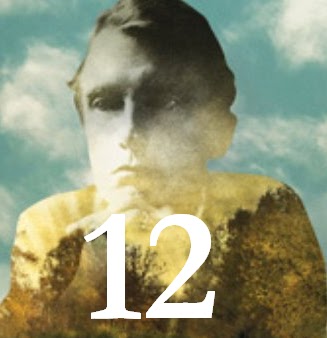
Day 12: The Dark Earth and the Light Sky


"Or must I be content with discontent
As larks and swallows are perhaps with wings?"
The Glory, Edward Thomas

Deep in the Hampshire countryside Edward Thomas scrapes a living; disaffected husband, exhausted father and tormented writer. Then in 1913 he meets American poet Robert Frost and everything changes. As their friendship blossoms Edward writes, emerging from his cocoon of self-doubt into one of the most influential poets of the twentieth century.

On the verge of success he makes the drastic decision to enlist, confounding his friends and family. The Dark Earth and the Light Sky delves into the life of this enigmatic and complex character in an era of change and destruction.

Last night I went along to the Almeida Theatre in Islington to see Nick Dear's The Dark Earth and the Light Sky. When I looked up the description of the play I wasn't entirely sure what to expect. On the one side I thought it might simply be a dramatic biopic, capturing chronologically the short life of Edward Thomas, and showing the ways in which Robert Frost inspired his writing. Then my experience kicked in and thought that so many playwrights can't seem to resist doing something 'clever' or 'artistic' that will in their view in someway get across some kind of deeper meaning.

Ok, so you've probably gathered that I'm not a particularly sophisticated theatre goer, although that doesn't mean I'm not enthusiastic about it. I love the ice cream... the programmes... the merchandise... (damn, knew I should have got that Viva Forever mug...). No, seriously, I love the theatre and even better when you come out and you feel that tiny bit more intelligent... (ok, maybe not with Viva Forever).

I enjoyed this play although I don't feel it was either a biopic nor an overly complex artistic portrayal of Thomas' life. It was very simple, which I appreciated; small cast, clear plot and clever staging. I'm also intrigued by Thomas as a war poet who didn't actually write a poem explicitly about war!

Nick Dear is no stranger to staging literary giants (Frankenstein, Byron, Persuasion, Iris...the list goes on) so it was always going to be good, wasn't it? Plus, I'm a sucker for war stories, I'm half Welsh and an English Lit graduate, and I always love a good biopic.

It's always important to say the acting was spot, although I wouldn't say I particularly liked any of the characters... but they are real people, so it's not like you can just make one of them really romantic or the other really funny if they weren't... Saying that, the humour was great in this. What is ultimately a very sad story was heightened by the carefully placed humour that, as I always say, the Brits do particularly well I think.

My only disappointments really were, firstly, for me, it could have ended at several points in the final half hour. Secondly, I just feel that something was slightly missing... which is harsh to say when I can't put my finger on what. I know it wasn't a history lesson but I don't feel I learnt all that much and I don't feel I invested in a character.

Overall, though, it was a really enjoyable evening and I would recommend going to see it, even if it's just a good excuse to go to a small theatre and witness a great cast take on a literary great that was almost forgotten. 


Thursday, 25 October 2012

The Song of Achilles

Greece in the age of heroes. Patroclus, an awkward young prince, has been exiled to the court of King Peleus and his perfect son Achilles. Despite their differences, Achilles befriends the shamed prince, and as they grown into young men skilled in the arts of war and medicine, their bond blossoms into something deeper - despite the displeasure of Achilles' mother Thetis, a cruel sea goddess. But when word comes that Helen of Sparta has been kidnapped, Achilles must go to war in distant Troy and fulfill his destiny. Torn between love and fear for his friend, Patroclus goes with him, little knowing that the years that follow will test everything they hold dear.

The Orange prize lost its sponsor this year but I’m pleased to say it doesn’t seem to have lost its ability to pick a good book. Winner of this year's prize, Madeline Miller’s
The Song of Achilles (or the 'dong' of Achilles as I wrote originally... not actually altogether inappropriate...), is perhaps not everyone’s cup of tea, though. From the blurb someone might see the Trojan War, angry hairy men who believe in fantastical Greek gods and the soldierly duty of a young mythological prince rather dull. I, however, see this as an exciting historical epic (with gods and stuff) but, first and foremost, as a love story. A love story with hunky men that have sexy battle scars and togas and feathered helmets. Mildly aware that I am demeaning a classic, although sometimes controversial, story that is centuries, millennia old…

The embarrassing part is that despite floaty goddesses and angry war gods sending disease and *gasps* no wind for an army’s sails, I had somehow persuaded myself (quite easily it seems) that this was an historical novel… I was like ahh cool, love to read about what really happened with the Greeks taking on the Trojans with arrows and giant wooden horses. I think I got confused when I had to explain to myself how in the recounting of a famous event some of the characters could have been real and some… namely a pretty central half god/half human character…  must be fictional… I fear this blog may have turned into some kind of tribute to my simple mind. Perhaps someone else could chip in here, you know, say I’m actually not that stupid? I’m not. Honest.

Anyway… the novel. It’s beautifully written. Sure it has some metaphors in there that make it beautiful, but for me the real pleasure is in the way the writing flows. It’s just so easy to read. Easy almost to the point that I wondered if I’d picked up the wrong title. I’m not quite sure why I was expecting a challenge but it wasn’t so I was pleasantly surprised.


The relationship between the iconic Achilles and Patroclus is carefully built and culminates in a truly touching final scene that did make me well up. I like to blame that on the too-many glasses of Aperol Spritz that evening but I think Miller needs the credit there.


There's plenty of sex in here too if you're missing your dose of Fifty Shades...


The only blip for me was a short period in the middle. I can’t quite put my finger on what was lacking but there is a sort of transitional point in the narrative that just dragged a little bit. The concluding chapters though more than made up for it with plenty of action and 'oh what have you done' moments. For those well-acquainted with the myth, don't be put off - it's a great story and one that you can understand why, from this book, has stood the test of time. 


This book gets
7/10. I originally gave it an 8 but after some thought I wondered if perhaps I was raving about it so much because the end affected me so much. Had I been asked to rate it at half way through, maybe I'd have given it a lower rating. As a result, I've gone down the middle but I do recommend this book. Particularly if you like soldiers and mythology and good old forbidden love.

Friday, 14 September 2012

The Stranger's Child

Blurb: In the late summer of 1913, George Sawle brings his Cambridge friend Cecil Valance, a charismatic young poet, to visit his family home. Filled with intimacies and confusions, the weekend will link the families for ever, having the most lasting impact on George’s sixteen-year-old sister Daphne.

As the decades pass, Daphne and those around her endure startling changes in fortune and circumstance, reputations rise and fall, secrets are revealed and hidden and the events of that long-ago summer become part of a legendary story, told and interpreted in different ways by successive generations. 


Powerful, absorbing and richly comic, The Stranger’s Child is a masterly exploration of English culture, taste and attitudes over a century of change.


I've only read one Alan Hollinghurst and that was his Booker-winning The Line of Beauty (my review for which you can read here). Nestled comfortably in an uncharacteristically warm and sunny Lake District, I fell completely in love with it. As a result, when it was announced that, after seven years, he had written a new book I got all excited. Then I saw the size of The Stranger's Child and thought this slab of cake is going to need time. It wasn't going to be a commuter read, a slightly distracted daily nibble, this was going to be enjoyed, devoured even, and so I decided to wait.


The book was actually published last year (and longlisted for the Man Booker 2011) but my small hands don't much like me insisting that they support a weighty hardback on the train, and so I awaited the paperback. And what a lovely looking paperback it is, don't you think? You've really got to feel it to be honest, all silky and smooth and green and stuff. Call me weird, whatever.


My apologies, I am yet to talk about the story itself. It's one of those generational novels, the kind that spans a chunky amount of time. Love those. Cecil makes his first impression on the Sawles at their home in 1913 and it well and truly sticks. Courting anything that moved, Cecil and his charisma captured the attention of everyone who met him that weekend, be it the naive Daphne, the impressionable George, their suspicious mother.. the list goes on.


Split into five parts, the novel jumps in time at each break. The effect on me was that I had all these questions I wanted answered. What happened to such and such? How did Mr. Blah feel about that? Did Mrs. Whatsherface find out about that? HOW CAN YOU END THAT PART WITHOUT TELLING ME THESE THINGS? and at that point I calmed myself, and started to clap (metaphorically...). Well done Alan (first name terms with the author it seems). You've got me. You have successfully elicited in me exactly what you wanted. Curiosity. The entire novel is an investigation, explicitly so. Most of the answers we either know or find out before the detective (Hollinghurst calls in a couple of new characters to fulfill that role for us), which makes us feel all smart but, more cleverly, makes us understand the source of interest. We completely get why everyone wants to know more about the Valances and the Sawles - because we did too. It's also a playful novel in that way, and very funny.


I sense Hollinghurst puts himself into his books. His sense of humour, certainly. And his experiences of Oxford I am sure inform his writing of the upper classes. His sexuality is in there too. Hollinghurst isn't, I don't think, dropping in gay characters here and there and everywhere because he can, though. He's not trying to make us all go 'OOOOO. HE'S GAY.' In fact I think probably the opposite. But the homosexual themes so frequently surface that I am certain he is making a point. About how things change over time, be it people, reputation, understanding, values and the treatment of homosexuality too.


That may well be my longest review... I apologise. It's a long book. I'm a rambler. Anyway, do go out and read it. I'd lend you mine but it broke... I don't talk about that. It saddens me to think of my fingers desperately clinging to pages 231 and 232 as the sheet desperately tried to escape on a blustery top deck of a ferry...


8.5/10

Saturday, 21 July 2012

The First Forty-Nine Stories by Ernest Hemingway


A slight diversion from Vienna today, because it is Ernest Hemingway's birthday - he would have been 113. To celebrate, I thought I would do a Hemingway-themed post. For my A Level English coursework I studied Hemingway's short stories and absolutely loved them. Having read The Paris Wife I thought I ought to go back to at least some of them and now I feel I have that little more insight into Hemingway's mind and it shines through his stories. Themes of war, giving birth, adultery, new places, new faces all come out in these First Forty-Nine Stories. I've provided links to some of the stories below so you can have a read. They really are very short... Indian Camp, Up in Michigan and Hills Like White Elephants are particularly so.

Hemingway has an amazing way of establishing tone and atmosphere and in throughout these stories, there's a definite eerie feel. For instance, 
The Snows of Kilimanjaro, first published in 1936 by Esquire, tells of a man named Harry on safari in Africa who is horribly awaiting death after a wound becomes severely infected. The Short Happy Life of Francis Macomber, based also on safari, is similarly disturbing. Hemingway manipulates the reader by mixing up the chronology so that during the later events, you aren't always armed with the preceding context, whereas earlier moments are sometimes affected by the reader already knowing what will happen in the future.

One of my favourite stories is Indian Camp, first published in 1924 in the Transatlatic Review. This was one of the first stories to feature his famous recurring character, Nick Adams, who is thought to be semi-autobiographical. Nick is just a kid in this story when he travels with his father, a doctor, to the aid of a Native American woman giving birth. Adams describes the event as horrific and gives some idea of the fear that Hemingway must have had for his own impending fatherhood. What I love about this story is the description of the setting as '
They walked up from the beach through a meadow that was soaking wet with dew, following the young Indian who carried a lantern.'

Up in Michigan
brings Hemingway's writing back home to Horton's Bay, Michigan, close to where he grew up. This story is, again, controversial in topic and beautifully written, instantly transporting you to a specific place, emotion and situation. Hemingway always provides just enough information; he doesn't destroy your own imagination. This story in particular really asks you to bring your own thoughts, beliefs and morals to the forefront and decide what really happens. Read it here.

There are a lot of stories in this compilation (49 to be precise, funny that...) but the last one I'm going to talk about is a story where Hemingway asks even more of his reader. I don't mean it's hard to read, so don't get put off! What I mean is that when it came to talking about Hills Like White Elephants in class, it became clear that we all had different ideas as to what had just happened. This is all part of the enjoyment of reading, so lease don't Google it before you read it! It's very short and you can read it here
.

Wednesday, 18 July 2012

Literary Vienna

My sister turned 18 this year and I really struggled to think of a present I could get her to mark the occasion. Something told me that an inflatable spiderman or a Harry Potter mask wouldn't quite spell 'special day'... She had been going on, though, about how she wanted to travel and so the obvious thing was to take her away somewhere. Having just finished Edmund de Waal's The Hare with Amber Eyes, I thought Vienna sounded quite interesting, so booked 4 days away for the 2 of us, staying at the Hotel Rathauspark.

Vienna is, first and foremost, a beautiful city filled with history, art, music and a hell of a lot of delicious cake... Being a book blog, though, I'm naturally going to focus on the literary side of things. Vienna has been at the centre of its fair share of books, most recently William Boyd's latest novel,
Waiting for Sunrise - another one for the reading list...

There's so much to see in Vienna - you can barely stroll five minutes without running into a beautiful church topped with now-turquoise roofs and gleaming white walls, a flowering garden, a towering monument or a bursting fountain. Vienna is very proud of its composers, as you would imagine with the likes of Mozart and Strauss to its name, but writers have their place too. Goethe and Schiller, for example, both have very impressive statues on the city's famous 
Ringstraße. So impressive that my sister really couldn't resist imitating the former... Excuse the blurred photo, must be the snorting laughter...

Sigmund Freud may not be known for his weighty novels, but he is arguably Vienna's most famous writer in modern history and so it's no surprise that one of the city's many parks is named after him.
Palais Ephrussi
Not far away from Sigmund Freud Park, on Universitätsring, I spotted the Palais Ephrussi, one of the central locations in The Hare With Amber Eyes. Having read the book, the stunning building reminded me of the terrifying presence of Fascism and Anti-Semitism in Vienna in the lead up and during the Second World War. Of course Vienna was at the centre of World War One as well, as part of the Austro-Hungarian Empire whose Arch Duke Franz Ferdinand's assassination triggered the start of the war.
Hof-Bibliothek

The Hofburg Palace, once home to many emperors including the Habsburgs, now houses the city's Imperial Library (Hof-Bibliothek- the largest in Austria, housing almost seven and a half million items.


Anyway, I thought that instead of filling this post to bursting point I would do a few different posts staggered throughout the next week.


See my review of The Hare with Amber Eyes here

Saturday, 19 May 2012

Book Club: The Hare With Amber Eyes


Blurb: 264 Japanese wood and ivory carvings, none of them larger than a matchbox: Edmund de Waal was entranced when he first encountered the collection in his great-uncle Iggie's Tokyo appartment. When he later inherited the 'netsuke', they unlocked a far more dramatic story than he could ever have imagined.

From a burgeoning empire in Odessa to fin de siecle Paris, from occupied Vienna to post-war Tokyo, Edmund de Waal traces the netsuke's journey through generations of his remarkable family against the backdrop of a tumultuous century.


Boy, I've been waiting weeks to do a review of this but, as it's a book club book, I always want to wait to hear what everyone else thought - otherwise what would be the point?? 


In short, absolutely loved this book. Almost everyone liked it by the end but agreed that it took some getting into. For me I can give a book about 50 pages but any longer than that and the book is ruined for me, even if it picks up later on. This was a case of getting past the first chapter, I'd say. Some of my friends felt it took a bit longer than that... one saying 200 pages... and one not getting into it full stop. I can totally see why that happened, but for me it was a different story.


At first, all I knew about 
The Hare with Amber Eyes by Edmund de Waal was that it was a family memoir written by some potter... it didn't jump off the shelf to me, I admit. Luckily, though, it was much more than that. It is a family memoir, yes, but it's also a moving social history that takes you all over the world: Austria, France, England, America, Japan and Ukraine.

The world has a rich modern history but it's rare that we read so much of it together in one place. This book jumps between some of my favourite topics, including impressionist art in Paris, schmoozing with novelists like Proust and artists such as Degas and Renoir, to the tumultuous events of World War 2 and the treatment of Austrian Jewish communities.


De Waal really gets personal with his ancestors so that you feel you are just starting to fill in the gaps between the history books and the horrible, personal reality. The netsuke form the main thread of the story but they are not dull, as you might think. They are an important link that makes you keep reading otherwise you might think the book isn't going anywhere. How else would you determine what and who to write about when you have so much to choose from?


This book made me want to read more non-fiction, and that is rare. It also made me cry, another thing that is rare with books! It's a definite must and has a great twist that will make you smile and well-up at the same time!


Book club gave it
 7/10.

It's a
 9/10 from me.

Monday, 9 April 2012

The Amateur Marriage

From the back of the book: Michael and Pauline seemed like the perfect couple – young, good looking, made for each other. The moment she walked into his mother’s grocery store in Baltimore, he was smitten, and in the heat of World War II ferour, they marry in haste. From the sound of the cash register in the old grocery to the counterculture jargon of the sixties, from the miniskirts to the multi-layers of later years, Anne Tyler captures the nuances of everyday life with telling precision and sly humour.

It’s been a while but it seems I’ve found a new author. Don’t you love it when that happens? The best parallel I can make is Richard Yates who, as you know all to well, is one of my favourite writers.
The Amateur Marriage by Anne Tyler explores the same unsatisfying reality of everyday life of Yates’ novels and the amazing knack that we have of ignoring underlying frustrations and unhappiness in favour of family cohesion and, we think, ‘happiness’. I have been told that Anne Tyler’s subjects and plots are not quite so narrow as Yates but her writing still reads with the same fluidity and, with the risk of sounding corny, beauty.

The novel really gets under your skin. I found myself welling up multiple times at seemingly insubstantial events and constantly seeking for a character to blame every time something ‘went wrong’. By the end, I came to the realisation that everyone and no one is to blame and how strikingly the novel is a reflection of life, whether the individual events are relevant or not.

I’ve made the whole book sound incredibly serious and yes, there are profound narrative threads running through it, but it’s a more enjoyable read than that – and there’s definite humour, as in every family. The blurb puts it best: “Anne Tyler captures the nuances of everyday life with telling precision and sly humour”. You can simply read it for its writing, for its characters and be as subjective or objective as you like. There is something and someone in this book for everyone.

9/10