My Bookshelf

Showing posts with label Classics. Show all posts

Monday, 8 September 2014

To Kill a Mockingbird at Regent's Park Open Air Theatre


There is something about the classic coming-of-age story, the bildungsroman, that we just cannot get enough of. Whether it's Charlotte Bronte's brooding Jane Eyre, CS Lewis's magical tales of Narnia, or Suzanne Collins' modern dystopian answer to the genre with The Hunger Games trilogy, the concept is something we can all relate to on one level or another. Whatever age, wherever we live, whatever class we're born into - we can all remember a moment, series of events or time in our lives when childhood seemed to slip from our grip and the murky, less black-and-white (excuse the pun...) adulthood showed itself.

For a friend of mine, Harper Lee's
To Kill a Mockingbird is her absolute favourite example and I can completely see why. For those who don't know, the novel is a touching, loosely biographical tale that follows Scout and her brother Jem as a series of events unfold in their hometown in Alabama during the Great Depression. A young black man is accused of raping a young white woman and their father is the defence lawyer and Scout is suddenly thrown into the town's bitter brawl.

It has since won the Pulitzer Prize and been added to the curriculum in schools all over the world but what do you do when you want to adapt a book that well-read, that well-loved?

The answer, for me, was at the Regent's Park Open Air Theatre this summer and luckily for anyone who missed it - it's going on tour!

Sat in the audience wrapped up in my blanket and hoodie on the sunny but chilly September Sunday evening with my hot chocolate, I won't lie that I was a bit taken aback when a middle-aged woman in a mac and scarf stood up on her chair in the row in front and started speaking to the audience in a distinctly Northern accent, not Deep South America by any stretch.

'Oh god,' I whispered, 'they're going to try and mix it up and set the story in a council estate in Manchester aren't they?' Luckily, I spoke too soon. A few minutes in and the stage comes alive with children and trees and invisible picket fences, the village all cleverly brought to life with some simple props, a few pieces of chalk and a man floating in and out of scenes strumming an atmospheric soundtrack by
Phil King (which, I might add, I bought on CD and is now playing in my car - recommended).

The cast is brilliant, the staging spectacular, and all in all it was the perfect way to spend a late summer evening. My snooty anxiety that 'you can't successfully adapt a truly good book' was put to shame and instead, I've gone away and curled myself up with the novel itself. Success story (pun intended this time) I think you'll agree, and all tied up very nicely with an on-site barbecue dinner and subsequent hot chocolate.

Thursday, 24 July 2014

A Single Man by Christopher Isherwood

In this brilliantly perceptive novel, a middle-aged professor living in California is alienated from his students by differences in age and nationality, and from the rest of society by his homosexuality. Isherwood explores the depths of the human soul and its ability to triumph over loneliness, alienation and loss.

'He strikes a note of great intimacy with the reader as if with a close personal friend, and a sense of total honesty is sought. This style - witty, observant, nostalgic, exact - was Isherwood's great contribution to modern literature' Financial Times

'Very sad and yet at times wildly funny' Daily Telegraph

I picked up A Single Man again a few weeks ago. I love this novel but to describe why is so difficult. Not because I can’t put my finger on it, but because my reasons are so boringly clichéd.

It’s just beautifully written and brilliantly immersive; you really feel you ‘get’ George. You can place him, you can place his neighbours and his academic colleagues. You know who he is, what he’d do next – you can paint a very good picture in just the 170 pages that make up this book.

It of course helps when painting said picture (I didn’t actually paint… just to be clear…) that you’ve seen the film. Which I have. Three times. Also, extremely good. I mean Colin Firth, Julianne Moore, Matthew Goode and Nicholas Hoult are never going to disappoint but director Tom Ford brings his relentlessly cool style to the table that gives it that extra summitsummit. I suppose you could maaybbeee say that Ford’s direction fills the void of Isherwood’s writing in the film.

While making the story visually striking, I also think Ford gets across George’s moments of detachment that Isherwood creates so beautifully in his novel. Ishwerwood’s decision to describe everything from George’s perspective helps illustrate how George, for the most part, is removed from his community. He is secretive and aloof – a deliberate decision, I think, to protect himself, which he enjoys but all the while he unconsciously yearns to be included, be social, be loved. Probably a bit of that in us all…

In short, though, he’s a softie who is wonderfully screwed up. As a child from the Harry Potter generation, I was brought up with Snape, Lupin, Dumbledore, Harry himself, and so feel I am now always destined to fall for screwed up male characters (hopefully just in books…).

Being so short, there is absolutely no excuse not to read this. Even if you hate it. Which I hope you don't… and if you do, watch the film. I give you permission.

8.5/10

Tuesday, 15 April 2014

The Godwits Fly - Robin Hyde


Robin Hyde's wistful and engaging novel, first published in 1938, has now become a New Zealand classic. Strongly autobiographical, it vividly conveys the intensely felt worlds of the adolescent - love, poetry and England - and the enthralling but sometimes painful experience of growing up female; and its picture of family life in early-twentieth-century Wellington, in all its physical details, emotional tensions, muddle and variety, lingers in the mind.

When I was at university, one of my favourite modules was one I did on Australian and New Zealand fiction. Having at that point never visited either country, those books were really my first introduction.


The Godwits Fly by Robin Hyde has become credited as an example of classic New Zealand fiction, which is odd given Robin Hyde isn't strictly speaking a Kiwi... but considering she was born in Cape Town in 1906, but living in Wellington before the year was out, I think we can overlook that. With me being the authority on these kind of things, naturally.

A godwit, by the way, is a migratory bird, not for use as an derogatory term for someone pretty hopeless, apparently that's a halfwit - who knew? Anyway, as you might have worked out by now, the title of the book is a metaphor for the nomadic nature of the antipodeans; the origins of the pakeha (the Maori term meaning white people, foreigners) are far away in Europe. So in The Godwits Fly, which is largely autobiographical, Robin Hyde tries to get across the sense of 'lostness', which was only exacerbated by being a teenager...
Later she thought, most of us here are human godwits; our north is mostly England. Our youth, our best, our intelligent, brave and beautiful, must make the long migration, under a compulsion they hardly understand; or else be dissatisfied all their lives long. They are the godwits. The light bones of the mother knew it before the chick was hatched from the eggshell.


Against the backdrop of the Boer War and World War One, Hyde fills the book with small details from the books being read, to the food being eaten, to the fears being felt. I wonder if this book has become a 'classic' because of the way it captures and teaches the history and culture of New Zealand at a time when the whole world was looking to Europe, sending the message 'we fought in those wars too'. By saying that last bit I don't mean that that is the book's central message, but it's important to be reminded of it nevertheless.

Having read this novel, it was not surprising to me when I found out that Hyde was, first and foremost, a poet because the book is so lyrical and beautifully drawn. It's far from being a flat historical account, this is a touching story.

Looking back, I think I was unfairly bored reading parts of the book. Maybe it's a literal geographical thing - how could I get fully involved with a set of characters living somewhere I've never been on the other side of the world? I wonder if I went back and read it, (which I know I won't but I like to entertain these ideas sometimes...) having now been to New Zealand, if I could access the book on a deeper level.

6/10

Tuesday, 28 January 2014

Can great novels change your life?


For decades older generations have been despairing at the passivity of the television generation, absorbing poisonous morals and unhealthy opinions from spending hours in front of Dawson's Creek. Well now researchers from Emory University in Atlanta, Georgia have published a study in the journal, Brain Connectivity, that claims some books may be so affecting that they actually change the way our brains work.

Author and neuroscientist, Gregory Berns, who heads up the study has said, “Stories shape our lives and in some cases help define a person... We want to understand how stories get into your brain, and what they do to it.”

21 Emory undergraduate guinea pigs were asked to read Pompeii by bestselling novelist, Robert Harris. Over a nine-day period, the undergraduates read 9 thirty-page segments of the novel. After each set of 30 pages the undergraduates were tested on the material to make sure they'd read it fully and then given an MRI scan.

What they found, perhaps less surprisingly, was that the left temporal cortex of each of their brains seemed to show "heightened connectivity". This part of the brain is associated with "receptivity for language" but also the part that links thoughts to actions.

While this area of the brain was likely to be triggered during reading, what was interesting was that the brains continued to be stimulated in this way days afterwards.

Professor Berns acknowledges that there is not yet a conclusive answer to this question - can great novels change your life... but he says 'we're detecting [these stimulations] over a few days for a randomly assigned novel suggests that favourite novels could certainly have a bigger and longer-lasting effect on the biology of your brain."

All I can say is that explains a few things... making things happen. Things I couldn't explain when I was angry, or scared... although I never did get my letter. Still waiting.

P.s. My apologies if you've lost me and think I've suddenly gone completely mental. You're obviously just not cool enough.

Wednesday, 15 January 2014

The Hobbit: The Desolation of Smaug


The Hobbit trilogy; a filmic masterpiece or an exercise in making the longest films ever out of a very average sized book? As much as I'd like to believe and feel the former, I am desperately struggling to get past the latter unfortunately.

I think if I were a film maker *makes mental note for whenever Stylist magazine ask me my Plan B career* I would struggle to not want to make my mark. I heard last week that Scorcese has allegedly managed to make it into the record books with The Wolf of Wall Street by making a movie that has the highest usage of the F-word in any other movie other than a film about the F-word itself... over 500 utterances apparently. If Peter Jackson's adaptation of the Tolkein classic is indeed an indulgent attempt to make it into the record books with the greatest amount of screen-time per page of a single novel, then I have to say he's doing a pretty good job. I'm not going to go out there and say it's the best film I saw last year. It's far from it: it's too long and it's not got enough content to stop me from looking at my watch... but it could be SO much worse.

Maybe not the words Peter Jackson wants to hear from the likes of Empire or Total Film, but I'm pretty sure he won't give a hobbit's foot what I think so I'll make the most of my insignificance.

I definitely preferred this film to the first in the trilogy. The plot still feels stretched but overall it felt more 'whole' somehow, like it stood by itself better than the first. The ending was less abrupt too, a nice cameo from Orlando Bloom, a bit of dwarf flirting that was absent from part 1, LOVED the melting gold and there was a little bit more pretty in the form of Bard the Bowman for which I was thankful. Talking of casting, if there were ever a film that better solidified the fact that Benedict Cumberbatch will become the next Anthony Hopkins or Michael Gambon of brilliant British voiceovers, then I don't know what will. Cumberbatch as Smaug has got to be a highlight.

Overall, I'd wait for it on DVD if it weren't for the stunning scenery that continues to scene steal throughout.

Sunday, 15 December 2013

The RSC's Richard II


Richard is King. A monarch ordained by God to lead his people. But he is also a man of very human weakness. A man whose vanity threatens to divide the great houses of England and drag his people into a dynastic civil war that will last 100 years.

I do love Shakespeare, there's some weird loyalty thing still lurking around from my A-Level days or maybe even earlier. I also feel I've worked hard to get to the stage where I can actually appreciate him. Years and years of not understanding a single thing and now when I understand a whole scene without Spark or York Notes to help me, I still feel shamefully gleeful and normally end up whispering to the person next to me 'I toootally just understood that' to which I normally receive a polite smile of the 'there, there' variety.

So last week I was, very luckily, invited to see Richard II at The Barbican. I'd never read or scene the play before, which normally means I end up doing a quick wiki search beforehand to check the rough plot. This time.. I forgot.


Thankfully, though, the RSC are really very good at putting on Shakespeare, who'd have thought it?? No X Factor props or mad dancers, just stripped back as it should be with a few clever set-pieces and lighting to transform the stage from scene to scene. As a result, it's really easy to follow the plot as the play in itself is quite simple.


David Tennant lived up to his great reputation in the title role. On the surface I thought the role was pretty simple, a King seemingly powerful but in reality a bit of a damp squib, but the different levels on which Richard has to connect with the audience is perhaps a little more extensive than I originally gave him credit. Act IV Scene I when Richard is summoned to personally abdicate the crown requires quite a dramatic contrast of humour, nostalgia, naivety, embarrassment, theatricality, sorrow and also fear, and Tennant completely nailed them all. He may not be quite as pretty as Jude Law and the play may not be as famous or as dramatic as Henry V, but David Tennant can sure act and has a considerably better head of hair in this as you can see. Luscious. (sorry Jude, I do still love you)

So in short, before I start rambling off on pretentious tangents, if you were thinking of going to see the RSC's Richard II, and can get yourself some tickets, definitely go. This is the first play in the RSC's new series of Shakespeare's Histories directed by Gregory Doran.

Saturday, 23 November 2013

Book Club: Diary of a Nobody

Mr Pooter is an office clerk and upright family man in a dull 1880s suburb. His diary is a wonderful portrait of the class system and the inherent snobbishness of the suburban middle classes. It sends up contemporary crazes for Aestheticism, spiritualism and bicycling, as well as the fashion for publishing diaries by anybody and everybody.

The Diary of a Nobody by George & Weedon Grossmith is just that... a diary of a nobody. Mr Pooter, as per the blurb and title is an ordinary middle-class, white male - there's nothing particularly special about him and nothing out of the ordinary really happens.


As a result, I can't really decide what my final thought is on this book. I can't say there was an amazing twist or a unusual character or even exquisite writing because its whole purpose was to be anything but extraordinary. For this reason, the characters aren't particularly likeable; they are all realistically flawed and some are on the cusp of caricatures that Grossmith puppets, largely to poke fun at the middle classes.


What I really liked about the novel was the humour, exposing the ridiculous in the banalities of everyday life and the eccentricity and honesty of our own internal dialogues. I couldn't help but laugh every time Pooter relayed an occasion when he delivered a truly exceptional joke, especially when it's clear from his diary that no one around him found it that funny... story of my life.


The satirical aspects did keep me reading but did it do quite enough to make this an exceptional reading experience? Not really, but being original serialised in 1892, it's not surprising I didn't relate entirely. Saying that, there are, surprisingly, still some relevant social observations in this novel for the modern reader.


As an exploration of the 'ordinary man', this novel reminded me quite a bit of Dickens' Sketches by Boz, helped I'm sure by the similar line drawings that illustrate Pooter's diary throughout. Also,The Diary of a Nobody, like a number of Dickens' works, was first published as a serial in Punch magazine. I couldn't say that this was quite as intricate as anything of Dickens' but, despite being a little dry (as is inevitable when focussing a whole book on the 'diary of a nobody'...) it should probably be read.


I give it a 5/10

Wednesday, 20 November 2013

Victor Hugo and Vianden


One of the reasons I've been so pathetic with my blog this November, other than just being extremely important and busy obviously, is that I have been off inter-railing. Translated that basically means taking a lot of trains. In Europe. And essentially spending a whole lot less time reading and a whole lot more time cycling like a moron around poor unsuspecting European cities, eating an embarrassing amount of stroopwafel, filming a Euro-pop music video (don't ask) and consuming a considerable number of beverages.

Right, back to the books. I did read. Hoorah! Excuse me while I congratulate myself... Anyway, what I read and when is not what I'm going to ramble on about this time - that will come later. I have decided instead to ramble on for a couple of paragraphs about a very big literary name and a very small town in a very small country.


What on earth do people do in Luxembourg? It's the question that appeared on everyone's faces when I told them that was one of our stops and it's definitely what I was asking when we strolled around Luxembourg City one Tuesday evening and didn't see a single person for 25 minutes... The answer, it seems, is to get out of the city and get stuck in to the countryside. Luxembourg really is beautiful with its rolling hills, quirky Gothic villages and extensive vineyards and one of the places it is most proud of is Vianden, a small town (with city status it is keen to add) in the North East of the country. It almost seems as if the town itself grows out of the surrounding hills, now turning a beautiful orange and red with autumn, and at the top of this spiraling town, looking down on its citizens from up high is Vianden Castle, a striking, Gothic, Hogwartsy (yes that is an adjective) mansion, stealing the show.


Despite its obvious beauty, charming streets and haunting castle, Vianden could have remained almost entirely unknown were it not for some help from the literary might that was Victor Hugo. The French author best known for his epic Les Miserables stayed in Vianden on several occasions between the years 1862 and 1871 and there is now a museum showcasing some of his works as well as an impressive Rodin sculpture, as you can see in the photo above. Looking up at Vianden castle from the river on a sunny autumn day, it's not hard to see why such a place might inspire artists such as Hugo. During his stays he wrote
 prose, poetry and drew sketches to capture the town, its atmosphere, its people, bringing it out of the shadows and introducing it to the rest of Europe. Arguably a better legacy than the 1000+ word brick he wrote... I only talk condescendingly because it is my nemesis, staring down on me much like Vianden Castle from my book shelf still unread - the only difference being that I did actually conquer the Castle.. the book is still very much ahead of me.


P.s. I genuinely took these photos myself. That is not a request for compliments (although they will be both gratefully and gracefully received), but merely to show that this town really as beautiful as they say it is. Go see it next time, you know, you find yourself in Luxembourg...

Monday, 11 November 2013

The Bone People by Keri Hulme

Blurb: In a tower on the New Zealand sea lives Kerewin Holmes, part Maori, part European, an artist estranged from her art, a woman in exile from her family. One night her solitude is disrupted by a visitor—a speechless, mercurial boy named Simon, who tries to steal from her and then repays her with his most precious possession. As Kerewin succumbs to Simon's feral charm, she also falls under the spell of his Maori foster father Joe, who rescued the boy from a shipwreck and now treats him with an unsettling mixture of tenderness and brutality. Out of this unorthodox trinity Keri Hulme has created what is at once a mystery, a love story, and an ambitious exploration of the zone where Maori and European New Zealand meet, clash, and sometimes merge. Winner of both a Booker Prize and Pegasus Prize for Literature, The Bone People is a work of unfettered wordplay and mesmerizing emotional complexity.

My bezzie moved to New Zealand this year and for my birthday present she aptly bought me this, The Bone People by Keri Hulme. Hulme was the last New Zealander to win the Man Booker Prize before Eleanor Catton won the esteemed prize this year with her novel, The Luminaries.


I really loved this book. Not necessarily for its literal story or its specific characters, although both were extremely good, but for the tone it set and how I felt reading it, particularly the first half. New Zealand has an extraordinary landscape and has remained, for many, a mystery as Australia normally seems to win the tourists for some reason. This landscape and sense of the unknown comes across in abundance in this novel. With the risk of sounding like the biggest ponce, I'd go as far as saying you could almost feel the waves crashing on the sand - the novel's cover arguably helping me construct this image...


There are three main characters in this novel, all completely different and all adding something to the novel. Kerewin's eccentricity could perhaps have the potential to make her seem caricatured and unbelievable (which fits in with the book itself, which does, in places, touch upon the magically realist...) But despite and because of these slightly odd moments, Hulme has crafted Kerewin (and her world) wonderfully; her grace, her insecurities, her unique mind and her inner-conflicts all come across to create a very full, 'real' person that you can't help feel affection for.


If I had anything negative to say, it would be that I could have done without the author's introduction. As brilliant a writer as she is, she's definitely indulgent. The novel is long, with not much plot - and I liked that - but she's clearly a woman who is difficult to edit. Her preamble felt a little aggressive and a little self-consciously eccentric, which easily winds me up. Saying that, I don't know the woman but I do know her book, and I really loved it.

Saturday, 28 September 2013

A Doll's House


A Doll's House is a three-act play by Norwegian playwright Henrik Ibsen and looks into the life of a seemingly typical housewife who becomes disillusioned and dissatisfied with her marriage. The play in its current incarnation has received extraordinary reviews from the British press with Hatty Morahan's turn as Ibsen's protagonist, Nora Helmer, has been hailed as a 'once-in-a-lifetime performance'.

I've seen Morahan on stage and television a number of times and she is a fantastic serious actress but for me she often brings a comedic element to each production, and I can never tell if it's intentional... there's just something about her that makes people smile. In this case, and perhaps it was a conscious decision of the director, the subtle comedy worked perfectly. I don't know about anyone else but after years of studying Arthur Miller, Euguene O'Neil and Tennessee Williams, I've got used to a whole lot of bleak and very little laughter when it comes to drama, which is a shame because comedy, when used well, works brilliantly to both provide relief and/or heighten tension.

Although I've read and seen Ibsen before, I've never known much about
A Doll's House and I have to say I loved it. Brilliantly performed, yes, but politically fascinating. I don't want to give away what happens even a little bit but, as everyone has been saying, it's amazing that this play, given its feminist sensibilities, was written in 1879. Simply having a female protagonist must have been controversial and A Doll's House isn't the last time Ibsen does this. Unsurprisingly the play's controversial subject and ending attracted a lot of criticism and outrage with Ibsen being forced to première the play in Germany with an alternative ending due to pressure from his agent and leading actress.

Interestingly, though, Ibsen was adamant that this was not a consciously feminist play, saying in his s
peech at the Festival of the Norwegian Women's Rights League in 1898 that he"must disclaim the honour of having consciously worked for the women's rights movement," as he wrote the play as "the description of humanity [...] without any conscious thought of making propaganda."

On to more important matters, the award for Best Overlooked Performance goes to... the baby. Perfected the cute podgy look, didn't look at all perturbed or utter so muc
h as a whimper - triumph.

Sunday, 22 September 2013

Carey Mulligan and Matthias Schoenaerts to star in Hardy film


It's no secret now that my knowledge of the really classic classics, as opposed to, well, The Great Gatsby... I suppose by that I mean classics that are super old and, often, super long and dense... is pretty poor. That said, it won't come as a surprise that I have never read a Thomas Hardy novel. Some of his poems, sure, and I'm always partial to a BBC drama here and there, but I've never completed one of his novels. I think perhaps I was scarred by everyone who studied him at GCSE: "Just sheep. Sheep and more sheep," was pretty much the gist.

That said, I was pretty excited to see that Thomas Vinterberg is doing a new adaptation of
Far From the Madding Crowd with Carey Mulligan and Matthias Schoenaerts (if you haven't seen Rust and Bone, just do it. He is beautiful. Marion Cotillard is beautiful. The film is just, well, beautiful). The film will also star Michael Sheen, because it seems most films do and he is pretty good..., and Tom Sturridge, who I have to say I was pretty impressed by in On the Road last year. David Nicholls is on board to write the script, who as it happens also adapted the BBC's 2008 adaptation of Hardy's Tess of the D'Urbevilles with Gemma Arterton, and 2012's Great Expectations.

Far From the Madding Crowd
, for anyone who doesn't know, follows Bathsheba Everdean who arrives in the village of Weatherbury and manages to capture the heart of three men. There is love but, as with any Hardy novel, there are also consequences.

Apparently this will be the fourth adaptation of the classic for the screen, the most famous starring Julie Christie in 1967, and more recently the novel inspired the comic-strip (and subsequent film),
Tamara Drewe.

Right, guess I probably should read it now. We'll see...

Saturday, 21 September 2013

Book Club: Alone in Berlin

I'm sorry to have taken some time out on the blog front lately but, after 10 weeks and a little bullying from some people..., I am back! First stop? Book review I think.

Inspired by a true story, Hans Fallada's Alone in Berlin is the gripping tale of an ordinary man's determination to defy the tyranny of Nazi rule. This Penguin Classics edition contains an afterword by Geoff Wilkes, as well as facsimiles of the original Gestapo file which inspired the novel.

Berlin, 1940, and the city is filled with fear. At the house on 55 Jablonski Strasse, its various occupants try to live under Nazi rule in their different ways: the bullying Hitler loyalists the Persickes, the retired judge Fromm and the unassuming couple Otto and Anna Quangel. Then the Quangels receive the news that their beloved son has been killed fighting in France. 


Shocked out of their quiet existence, they begin a silent campaign of defiance, and a deadly game of cat and mouse develops between the Quangels and the ambitious Gestapo inspector Escherich. When petty criminals Kluge and Borkhausen also become involved, deception, betrayal and murder ensue, tightening the noose around the Quangels' necks ...


When it was first decided that the next Book Club read would be
Alone in Berlin by Hans Fallada, I'd had it in my head that this was a contemporary historical novel. I remember seeing posters for it on the tube back in 2009 when it was published and thinking it looked my kind of read. Turns out it was re-released in English in 2009 but it was actually written yonks ago in 1947. This knowledge completely blew my mind and completely changed my entire approach to the book - in front of me now lay a secret, controversial, brave almost-diary of wartime Berlin.

As I've bored you with a number of times, some of my favourite books are what I would call 'mosaic literature' (see, not just Derrida that can make up words to suit his argument...) where you get several snapshots into different lives and worlds. Some of those worlds may overlap, some may not, but you end up with an epic picture of society and the different outlooks/reactions to a particular time or event. This book definitely subscribes to my new genre but of course that doesn't mean it was successful. Only it 100% was successful. Easily one of the best books I've read this year so far, if not the best.


Fallada achieves so much in this novel. But for me his biggest achievement is the way the fear that permeates the entire book feels so immediate, in all its guises. With all the destructiveness and loneliness caused by fear and all our retrospective knowledge of this time in history, it would be easy to read the entire novel and feel completely depressed. Surprisingly, though, it is this 'fear' and people's ability to fight against it, learn from it, is somehow uplifting. That's not to say this is a comedy. Please don't accuse me of saying that... I've made a similar mistake before... I recommended 
The Boy in the Striped Pyjamas and subsequently had a balling woman in front of me, outraged that I would describe it as a children's book...

Anyway, another achievement for Fallada is that his characters are so wonderfully drawn; they aren't black and white, good or bad - they are all completely human and are all subject to the same flaws, same fears as any one else. As a result, Fallada has done one of those rare things by creating a network of characters, none of which do you particularly love, but who are all so strong that you can't help but be drawn in by them. Even the most irritating, weak or depraved characters like serial-adulterer and gambler Enno Kluge or members of the Gestapo stir something.


For me, though, it's not just the story itself and Fallada's writing that makes this book a modern classic, as Penguin has credited it. It is the whole background: the historical backdrop, obviously; the fact the novel is based based on a true case (and I'd recommend not Wikipedia-ing the story until you've read the novel...); but also Fallada himself, as a man, as a writer. His personal story is both disturbing and fascinating and gives you an idea of just where this story has come out of.


I could keep going on about this book, it's good points and bad - there are just so many things (characters, events, the writing, the ending... the list goes on) that I could talk about but I shall leave this review here and just say, go read it.


Book club gave it an 8/10 - think it might be a record! I give it a 9/10.

Friday, 12 July 2013

Book meets Bikini

So you know how I love to squeeze literary relevance into my blog via some of the least book-related posts ever? Well this one came to me fully formed... didn't need any effort on my part whatsoever to fit under the 'literary' umbrella, except perhaps by labelling this post 'Adaptation'...

Anyway, this weekend is promising to be another scorcher. Bet you've always wanted a bikini to match your summer read... Matchbook can sort you out with just that. This is just.. ingenious. Love it. Question is, can you guess the book for the bikini? Take a look at these and then look online at http://matchbook.nu/ to see how you did.


Thursday, 11 July 2013

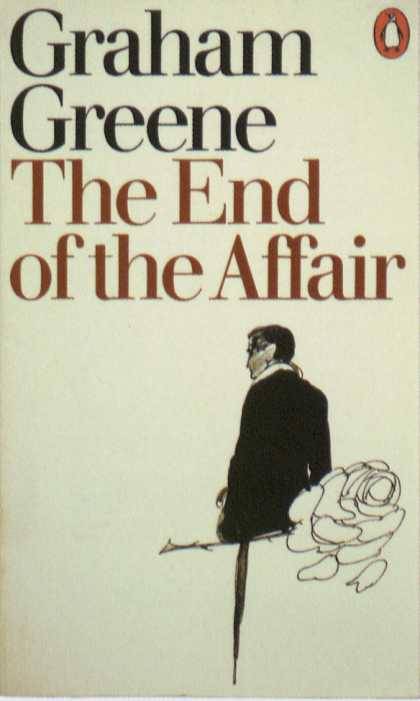
The End of the Affair by Graham Greene


The love affair between Maurice Bendrix and Sarah, flourishing in the turbulent times of the London Blitz, ends when she suddenly and without explanation breaks it off. After a chance meeting rekindles his love and jealousy two years later, Bendrix hires a private detective to follow Sarah, and slowly his love for her turns into an obsession.

The End of the Affair by Graham Greene is one of those books that has been recommended to me millions of times. 'It'll be one of the best books you'll ever read,' people kept saying.

In so many ways, it looked to be the perfect book for me. A bit of romance, the background of the Blitz in 1940s London and a split narrative. Unfortunately, I didn't fall quite in love with it.


I think I have to admit here, though, that for various reasons this tiny book took me three weeks to read and I really can't blame that on Graham. I also had all the expectations set up by said annoying people above. And I will try and blame them. Perhaps they only loved it because it's 200 pages and so it was one of the only books everyone managed to finish... Ok, becoming a little bitchy now. That aside, I guess it came down to just not loving the characters entirely. In the first few chapters Maurice just seemed to be a right drip who had fallen for a someone who really wasn't very nice. So why would I care whether or not they got together?


Saying that, this book initiated one of those lovely situations when the book club makes me think a bit harder. It got me past my frustration with taking so long to read it and made me realise how intricate this novel was, despite it being short. It asked all the big questions about love, religion, war... and I loved that. This is something Greene addressed in his literary criticism, where he condemned the characters of modernists like Virginia Woolf and EM Forster
 for "wander[ing] about like cardboard symbols through a world that is paper-thin" as the writers lacked any religious sense.

There is, therefore, something in this book for everyone. For me, I may not have been swept up by the characters as other might have been, but I enjoyed seeing how groups of people come together, affect one another, misunderstand each other and all, ultimately, face these big questions and ideas.


There are some weird random threads that run parallel to the main narrative, but they probably all provide some extra nugget, even if I haven't quite worked out what, why or how just yet. With that in mind, I think this book would have been a perfect novel to study. Plenty to look out for and all those wonderful themes and imagery that examiners jump up in the air and do a little happy dance about.


All in all, the book got
7/10 from the book club and 6.5/10
from me.

Tuesday, 18 June 2013

Jane Austen in Bath


I spent last weekend out West and after seriously pulling some muscles in the Cheddar Gorge, ended up in Bath. For any of you that don't know, Bath was established as a spa (with the latin name Aquae Sulis) by the Romans, just twenty years after they arrived in Britain. It is now a beautiful city, built largely in golden Bath stone during the Georgian era and, despite having somehow managing to lose the massive source of natural hot water, is now a popular tourist destination with its famous Roman baths at its centre.

What does Bath have to do with books, though? I was starting to ask myself the same question as, for some reason, I was thinking Bath would be full of quirky little second hand bookshops and yet on arrival I could barely count two or three. Saying that, Bath does have something up its sleeve, though, as it was once the home of literary giant, Jane Austen. When I say literary giant, that makes it look like Jane herself were enormous. I wish this was the case, that the bigger the literary name, the bigger the author. Unfortunately not. Anyway, she lived in a number of different houses in the city and there is now a museum at Gay Street, just a few doors down from number 25, where Jane Austen lived herself.

It's not surprising, then, that Bath appeared in Austen's novels. In Persuasion, "lodgings in Gay Street" meet Sir Walter Elliot's "satisfaction" when the Admiral and Mrs Croft reveal they will be staying there. The website for the Jane Austen Centre also provides this quote from Northanger Abbey:
They arrived in Bath. Catherine was all eager delight; her eyes were here, there, everywhere, as they approached its fine and striking environs, and afterwards drove through those streets which conducted them to the hotel. She was come to be happy, and she felt happy already. They were soon settled in comfortable lodgings in Pultney Street.

 
The Jane Austen Centre
40 Gay Street
Queen Square
Bath
BA1 2NT

Other Posts:

Tuesday, 28 May 2013

Stylist's Top 100 Books of the 1920s


With all the Gatsby mania following the release of the film, 1920s classics are now starting to reappear in the bestseller charts. Stylist magazine have jumped on this band wagon and kindly provided a very helpful list of inter-war novels for us to choose from. Click on the image above to see. Are all your favourites there? How many have you read? Anything missing?

Some relevant posts:

Baz Luhrmann's The Great Gatsby

The Great Gatsby by F Scott Fitzgerald

Tuesday, 21 May 2013

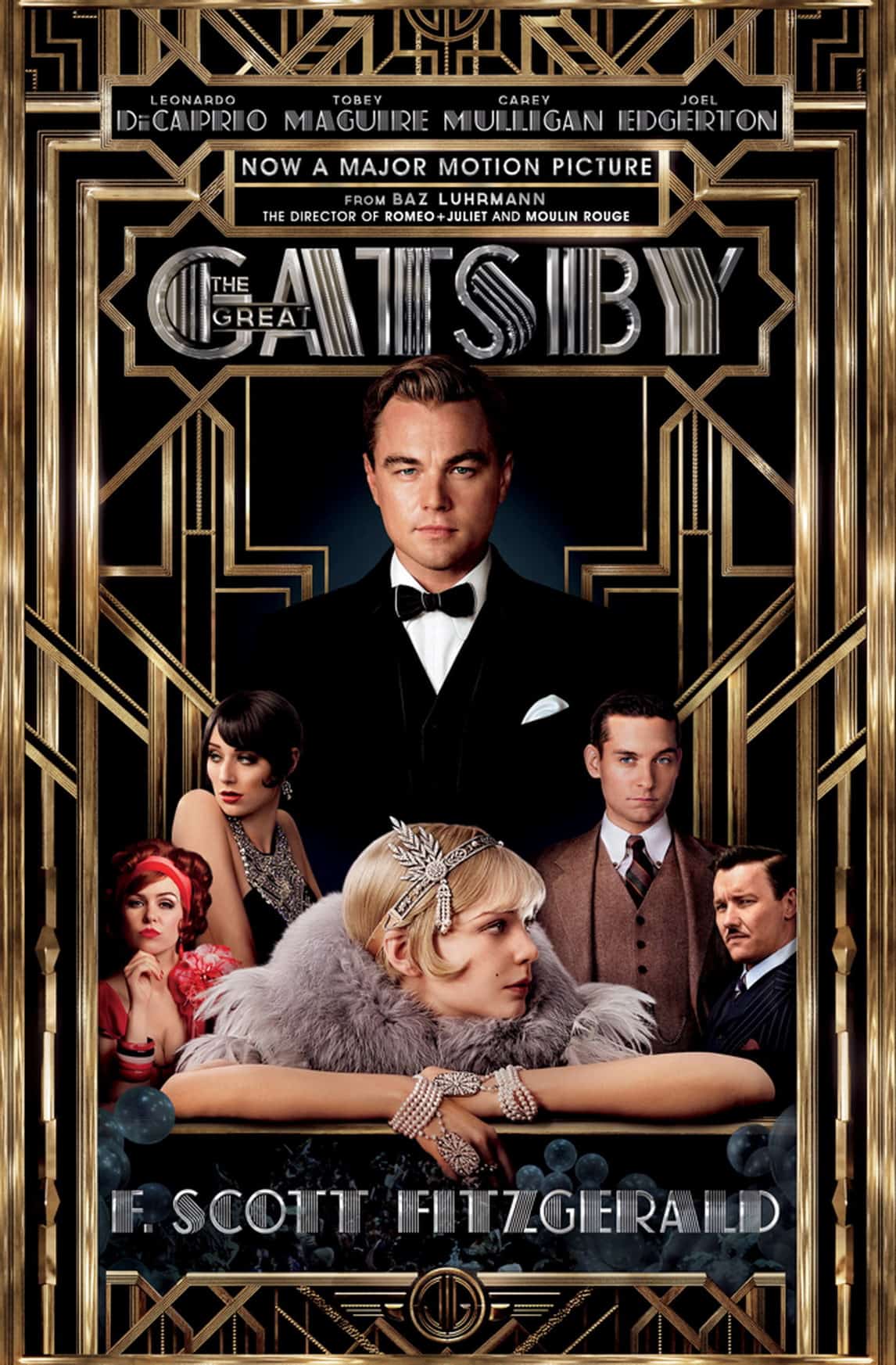
Baz Luhrmann's The Great Gatsby


The wait is finally over - Baz Luhrmann's Gatsby has finally graced our screens to be met with, shall we say, mixed reviews... The main criticisms seem to be 1) it is overly glitzy, with too much focus on the roaring twenties parties. 2) Not enough of the novel's darkness and 3) not enough 'emotion' and sadness.

I can't say I'm surprised. Take a much-loved book written nearly 100 years ago and then make a film in 3D with Leonardo Di Caprio... you're
never going to please the critics. That said, I'm a big Gatsby fan, and I loved this film. The glitz and the glamour was there, sure, they had to be. All I wanted to do was go out on a wild New York night out, drink myself silly and negotiate my way home without falling into the lake... arguably that wasn't really the reaction they wanted but it really does look so fun.

As for the novel's darkness, from just the trailer I could see Luhrmann had injected a whole lot more darkness than any of the film's predecessors. It was the darkness that I was excited for and I didn't feel disappointed.

The emotion was there, too. All helped by fantastic performances from both Leo. The casting in general, I have to say, was spot on. Tobey Maguire was definitely my Nick Carraway, Tom Buchanan was so brilliantly evil, Isla Fisher was just, well, unrecognisable and wonderful as Myrtle and Carey Mulligan was so perfect for Daisy, it's hard to see how she could have been so difficult to cast! The only person I felt did not match the image in my head, was Leonardo Di Caprio himself. Luckily Leo, for me, can't do any wrong and this was no exception. And for once his baby face was a complete asset! You could completely believe Gatsby's wide-eyed hopefulness and childlike fascinations/obsessions.

Everything was then polished off and brought to life by the genius jazz/hip hop fusion soundtrack, which has arguably received far more attention than the film itself and saw Jay Z receive an Executive Producer credit. Florence and the Machine, Lana Del Ray, The XX, will.i.am, Jack White, Beyonce and Jay Z himself plus more... and loads of original songs. Impressive doesn't quite cover it.


What really had to win me round, though, was the 3D malark. Bleh, I really can't be dealing with it - gives you headaches all for the sake of not very much. This, however, I have to say, worked. It didn't distract me and it really added to Baz Luhrmann's theatrical vision for this iconic story.


Highlight? Gatsby's cream jumper. If anyone can find this exact item of clothing, get in touch... there is no reward greater than my appreciation...


If you don't like Baz Luhrmann, don't see it. If you read The Great Gatsby yesterday, again probably don't see it (no use going to see a film being able to pick out every single discrepancy), if you hated Moulin Rouge, don't see it. If none of these apply, GO SEE IT. It's a real feast.

Relevant posts:

Friday, 19 April 2013

Rabbit, Run


It's 1959 and Harry 'Rabbit' Angstrom, one time high school sports superstar, is going nowhere. At twenty-six he is trapped in a second-rate existence - stuck with a fragile, alcoholic wife, a house full of overflowing ashtrays and discarded glasses, a young son and a futile job.

With no way to fix things, he resolves to flee from his family and his home in Pennsylvania, beginning a thousand-mile journey that he hopes will free him from his mediocre life. Because, as he knows only too well, 'after you've been first-rate at something, no matter what, it kind of takes the kick out of being second-rate'.


One of the best ways to get me to read a book is to say "it's just like Richard Yates". Problem is that this method is not the best way for me to enjoy said book.
I guess in my head, through a combination of the blurb, cover and the above comparison, I imagined a cross between Revolutionary Road and One Tree Hill... but I just didn't enjoy it as much. 

I know Rabbit, Run is a classic and I know John Updike is a talented guy, but somehow it didn't quite hit the spot for me.  
It's odd because, on the surface, it has everything I would normally like - failed American Dream theme, touching domestic drama, relationships, good boy gone bad... Perhaps in the end there were just a few too many references to prostitutes and blokey nights out, which were all pretty grim, and an absence of any really likable characters (more specifically any messed-up yet hot-as-hell basketball players trying to make the State championship...).

Can't deny that the book is well-written though, and Updike is more than successful at creating atmosphere, tension, split-allegiances etc and I couldn't help but feel something at the novel's climax. The characters all feel very real, as do the predicaments they find themselves in, and I definitely 'got' the world he was going for. Unfortunately, I just didn't love the book.


It gets
5/10 from me. It's a shame as I was really excited to get stuck into a series (there are four sequels).

Wednesday, 17 April 2013

Daisy Buchanan does Vogue

Is there such thing as era envy?! If so, the twenties have got to be pretty high of anyone's envy list, if indeed anyone were to make such a list... Well, maybe not the whoooole of the twenties, none of the no money, no booze, no fun stuff, but the flappery decadent party part at least... Vogue's May edition has clearly had the same thought and is, conveniently for Baz Luhrmann, suffering some serious era envy in channeling Gatsby glamour this month.

Daisy Buchanan would surely have been a contender for Vogue - a poster-girl for the 20s flapper lifestyle if ever I saw read one - and now she finally has her chance as Carey Mulligan takes centre stage. Anyway, I will stop rabbiting on and let Mario Testino's shoot do the talking... I'm not jealous. At all. Nup.

carey mulligan vogue


carey mulligan vogue


carey mulligan vogue

Shakespeare's Birthday Whirligig

Shakespeare Whirligig

We know when he was baptised and we know when he died but no one knows exactly when Shakespeare was born. That said, we could hardly have let Shakespeare get away with no birthday... everyone needs a birthday... so we just swap them round and party on his deathday instead. Got to love our resourcefulness... even if it is, perhaps, a little morbid. But, with that logic, Tuesday 23rd April this year supposedly marks his 449th birthday and he's still looking pretty good, it has to be said. Sexy earring I think you will agree...

Anyway, to party in style, The Globe Theatre on London's Southbank is throwing some Birthday celebrations. Between noon and 5pm, it's family fun with all of Shakespeare's marvelous worlds coming to life with witches and fairies and spirits floating around. There are to
hourly performances of Shakespeare's most famous supernatural scenes, children's masterclasses in Shakespearean magic (age 6+) as well as the chance to perform on-stage. 

Don't worry adults, no need to steal other people's children in order to celebrate. From 7pm 
there will be performances from Barry and Stuart running still with the same magical theme from the afternoon. There will be comedy from Piff the Magic Dragon and Chris Cox and this is all topped off with the fantastic sounding ‘Birthday Whirligig’ which will feature music from Johnny Flynn who himself acted in the West-end productions of ‘Twelfth Night’ and ‘Richard III’ last year, and The Magic Numbers.

Surely unmissable?


Shakespeare's GlobeShakespeare's Globe21 New Globe Walk
Bankside
London
SE1 9DT
www.shakespearesglobe.com