My Bookshelf

Showing posts with label Historical. Show all posts

Tuesday, 15 April 2014

The Godwits Fly - Robin Hyde


Robin Hyde's wistful and engaging novel, first published in 1938, has now become a New Zealand classic. Strongly autobiographical, it vividly conveys the intensely felt worlds of the adolescent - love, poetry and England - and the enthralling but sometimes painful experience of growing up female; and its picture of family life in early-twentieth-century Wellington, in all its physical details, emotional tensions, muddle and variety, lingers in the mind.

When I was at university, one of my favourite modules was one I did on Australian and New Zealand fiction. Having at that point never visited either country, those books were really my first introduction.


The Godwits Fly by Robin Hyde has become credited as an example of classic New Zealand fiction, which is odd given Robin Hyde isn't strictly speaking a Kiwi... but considering she was born in Cape Town in 1906, but living in Wellington before the year was out, I think we can overlook that. With me being the authority on these kind of things, naturally.

A godwit, by the way, is a migratory bird, not for use as an derogatory term for someone pretty hopeless, apparently that's a halfwit - who knew? Anyway, as you might have worked out by now, the title of the book is a metaphor for the nomadic nature of the antipodeans; the origins of the pakeha (the Maori term meaning white people, foreigners) are far away in Europe. So in The Godwits Fly, which is largely autobiographical, Robin Hyde tries to get across the sense of 'lostness', which was only exacerbated by being a teenager...
Later she thought, most of us here are human godwits; our north is mostly England. Our youth, our best, our intelligent, brave and beautiful, must make the long migration, under a compulsion they hardly understand; or else be dissatisfied all their lives long. They are the godwits. The light bones of the mother knew it before the chick was hatched from the eggshell.


Against the backdrop of the Boer War and World War One, Hyde fills the book with small details from the books being read, to the food being eaten, to the fears being felt. I wonder if this book has become a 'classic' because of the way it captures and teaches the history and culture of New Zealand at a time when the whole world was looking to Europe, sending the message 'we fought in those wars too'. By saying that last bit I don't mean that that is the book's central message, but it's important to be reminded of it nevertheless.

Having read this novel, it was not surprising to me when I found out that Hyde was, first and foremost, a poet because the book is so lyrical and beautifully drawn. It's far from being a flat historical account, this is a touching story.

Looking back, I think I was unfairly bored reading parts of the book. Maybe it's a literal geographical thing - how could I get fully involved with a set of characters living somewhere I've never been on the other side of the world? I wonder if I went back and read it, (which I know I won't but I like to entertain these ideas sometimes...) having now been to New Zealand, if I could access the book on a deeper level.

6/10

Monday, 3 March 2014

A Town Like Alice - Nevil Shute

Jean Paget is just twenty years old and working in Malaya when the Japanese invasion begins. When she is captured she joins a group of other European women and children whom the Japanese force to march for miles through the jungle - an experience that leads to the deaths of many. Due to her courageous spirit and ability to speak Malay, Jean takes on the role of leader of the sorry gaggle of prisoners and many end up owing their lives to her indomitable spirit. While on the march, the group run into some Australian prisoners, one of whom, Joe Harman, helps them steal some food, and is horrifically punished by the Japanese as a result. After the war, Jean tracks Joe down in Australia and together they begin to dream of surmounting the past and transforming his one-horse outback town into a thriving community like Alice Springs...

Starting in London, then on to the invasion of Malaysia by the Japanese in World War 2 before moving to Alice Springs and then the east coast of Australia - t
here didn't seem like a more appropriate follow-on from The Glass Palace than A Town Like Alice by Nevil Shute.


My edition of the novel actually included a touching introduction from Eric Lomax, the writer of The Railway Man that I read at the end of last year. Having read Lomax's memoir, then The Glass Palace and now this, I feel I'm just starting to really grasp what it was like in South East Asia during and after the war. This is particularly interesting to me as my grandparents lived in Malaysia for decades and my mum was born out there.


If you're a woman and need to feel empowered, you have to read this book. This basically paints a world where one woman shows everyone else how it's done. She's a little annoying in places, and that probably makes me anti-feminist in some definition or other, but ultimately Jean Paget is pretty awesome. I can't imagine what it must have felt like reading this novel if you were Eric Lomax, reading the descriptions of the all too familiar insane heat, the death and disease, the starvation.


Shute's novel definitely paints a convincing scene but its ambition is of course not that of The Railway Man, or even The Glass Palace. To read, the book felt dated but in a good way, like I was reading one of my grandad's books or something - a nice alternative to the more modern reads I normally find myself with. There is a strong romantic thread in this book, which I appreciated - you definitely root for all the characters - but, for me, this is where the dated element of the book didn't quite work. It was all a little too trad for my liking, which is saying something as Jean Pagets life is far from traditional - for now, let alone then! But yeah, I guess it must have been the influence of The Glass Palace, but I
 surprised myself by wanting a little less romance, and a little more of the history, culture and time. For some reason it just started to feel a bit two-dimensional. I hate saying that as this is a good book, it is. And a great choice for my trip considering the route I took. I just think it's a case of a modern reader being used to a certain amount, or more a certain kind of drama that this book just didn't provide I'm afraid.

Overall, though, this gets a 5/10 - by 5, I mean 5, not 1. I have a tendency to lump any rating from 1 to 5 together as 'not very good', but I enjoyed it on an average level, so it gets a half score. It's a great insight into a particular time, not just in Asia and Australia either, but of the world and the way it got so much smaller after the Second World War, and then better technology and transport, 
brought so many people together.

Thursday, 27 February 2014

The Glass Palace by Amitav Ghosh

Set in Burma during the British invasion of 1885, this masterly novel by Amitav Ghosh tells the story of Rajkumar, a poor boy lifted on the tides of political and social chaos, who goes on to create an empire in the Burmese teak forest. When soldiers force the royal family out of the Glass Palace and into exile, Rajkumar befriends Dolly, a young woman in the court of the Burmese Queen, whose love will shape his life. He cannot forget her, and years later, as a rich man, he goes in search of her. The struggles that have made Burma, India, and Malaya the places they are today are illuminated in this wonderful novel.

The Glass Palace by Amitav Ghosh is probably the best book I could have read at this point in my trip. The novel spans over a century of socio-political history and travels all over South East Asia, from Calcutta to Mandalay, from Rangoon to Malaya.

It's an ambitious project for Ghosh, taking him 5 years writing and researching  all the tiniest details but it's paid off massively. What a feat of writing. Everything comes alive in this novel - who knew I could learn so much, and be genuinely made interested in, teak and rubber plantations?? I often find that Asian writers have a particular, more floral style that I'm not always used to and struggle with but Ghosh doesn't do that. He writes clearly and fluidly, while weaving in the vital historical and cultural detail with subtlety, rather than showing off his wealth of knowledge. 

This book has a story to tell certainly, but in comparison to Burmese Days, I don't think Ghosh's primary intention is to make a political/cultural statement. He does address difficult issues explicitly, but does so admirably fairly and without, I think, losing the facts. Subjects include the treatment of the Indian communities in Malaya and Burma, their relationship with the British army and Gandhi's crusade, the violence inflicted on Asia by the British and the Japanese during World War 2, class climbing, and more domestic issues such as marriage, grief and infidelity across the nineteenth and twentieth centuries.

For anyone travelling in South East Asia, this is a must read, but you should read it anyway.


8.5/10

Thursday, 20 February 2014

The Campaign to Save Orwell's "Burmese Days" House


As I've already explained, Orwell wasn't exactly a champion of colonial Burma, but the novel is absolutely everywhere. I mean, there aren't that many books set in Burma / Myanmar, let alone include the country's name in the title. Every time you walk into a market or the grounds of a temple, there's always a woman with a basket selling you jewellery, thanaka for your face, and copies of Burmese Days.

The thing is that, regardless of the message, Burmese Days is an incredibly important book, and brilliantly written of course. And when a place becomes immortalised in writing, we become even further reluctant to destroy memory of it - whether that's taking the book out of print or, in the case of Burmese Days, knocking down the house that provided the inspiration for the novel.


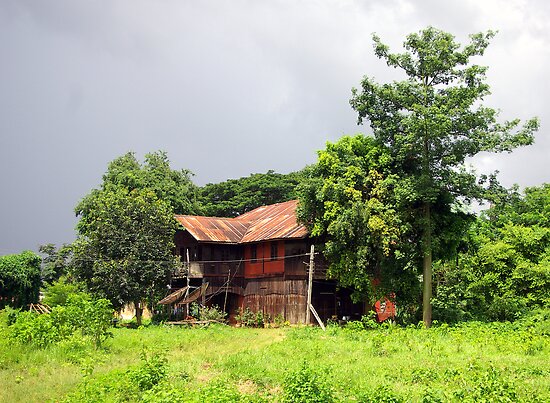
Set amongst trees in the small Sagaing town of Katha, 150 miles north of Mandalay, the rust-red wooden house looks like it's almost falling down itself to be honest, but having read the book, you can as good as see the sweat-soaked colonial soldiers reclining out front. 


Now that the country is open, tourists finally feel its okay to visit once again, and the Myanmar people know that after years of the country being out of the news, the images Westerners in particular have of their country is through the likes of George Orwell and so destroying these modern tourist sites is not going to help their influx of travelers, and the consequent rejuvenation of the Myanmar economy. Of course it's not all about money, there's culture and history at stake here too. Popular culture, literary and colonial history, be it positive or negative.


I recently read an article in the
Independent newspaper that quoted artist and campaigner Nyo Ko Naing, who told the AFP (Agence France-Presse), "I am trying to do what I can to restore all the buildings in the book and to attract attention to the country and the town." As a fan of literature in all its forms, I can only support that.


Tuesday, 4 February 2014

Wolf Hall at RSC Stratford


When it was announced that Hilary Mantel's Booker-winning Wolf Hall and Bring Up the Bodies were going to be adapted into a stage production by the Royal Shakespeare Company, there was never a doubt in my mind that it would be brilliantly done. Mantel's intelligent and vivid re-imagining of Thomas Cromwell and Henry VIII's Tudor court was made for the stage.

The only thing was that the books were
so long, weren't they? and I'm not sure we could call them the lightest reads either... so the plays were bound to be hideously long and a little 'heavy'. I wasn't convinced the more political side would translate that well - potentially a little dry... When I went to see Wolf Hall in Shakespeare's birth-town of Stratford last week, though, I'm pleased to say that I was completely and utterly wrong.

What I should have remembered was when I heard Hilary Mantel reading from
Bring Up the Bodies at the Southbank Centre a couple of years ago. She brought out all the humour in her writing that I had embarrassingly missed somehow when reading it myself. It was clear from the moment the play started that Mantel was written all over the screenplay. Her heavy involvement in the production has resulted in a play that was both clever and accessible, and really very funny from start to finish. Be it Cromwell's crafty wit or his Shakespearean clown-like servant Joseph, the whole Swan Theatre regularly erupted into laughter. One of them so much that they seemed to be quietly dying of a coughing fit in the third row... 

On the subject of the audience, it was a little, umm, predictable shall we say. I'm pretty sure I brought the average age down by about 40 years for starters. Admittedly it was a matinee in the middle of the week in Stratford but I do hope when the plays move to London later in the year that
everyone goes to see it.

The only criticism I had, and to be honest it's more of a question mark than a criticism, was that I felt there could have been a bit more of Cromwell's brutality. Even though one of the main ambitions of Mantel's trilogy is to change our perspective on Cromwell a little bit and imagine him from a different perspective, there is no doubt that Cromwell could be a cruel bully sometimes, whether his actions were understandable or not. I felt that this was slightly underplayed, not absent, but perhaps too subtle in places. Perhaps
Bring Up the Bodies grows this side of his character a bit more. And maybe make him a bit uglier... Ben Miles is very nice on the eye - pretty sure Crommers was not...

Anyway, it's really really good. So go see it. Do it. Go. And if you're really keen and, you know, rich - book
Wolf Hall and Bring Up the Bodies back to back! I wish I had. Historical inaccuracies aside, there really are worse things than a double-bill of Ben Miles...

Other related posts:

Wednesday, 16 October 2013

Eleanor Catton wins Man Booker Prize


So last year Hilary Mantel set a number of Man Booker Prize records and 2013 has seen two more records broken as 28 year-old Eleanor Catton becomes both the youngest winner of the Man Booker Prize and her book the longest, at 872 pages (I think we can safely say that challenges my 400 page rule...).

Eleanor Catton is the second New Zealander to win the prize. Keri Hulme won in 1985 with her novel,
The Bone People - another case of book sat on my shelf that I haven't yet got round to reading.


Catton apparently started writing The Luminaries three years ago and 872 pages later we have a Victorian murder-mystery set during the gold rush:

It is 1866, and Walter Moody has come to make his fortune upon the New Zealand goldfields. On arrival, he stumbles across a tense gathering of twelve local men, who have met in secret to discuss a series of unsolved crimes. A wealthy man has vanished, a whore has tried to end her life, and an enormous fortune has been discovered in the home of a luckless drunk. Moody is soon drawn into the mystery: a network of fates and fortunes that is as complex and exquisitely patterned as the night sky. The Luminaries is an extraordinary piece of fiction. It is full of narrative, linguistic and psychological pleasures, and has a fiendishly clever and original structuring device. Written in pitch-perfect historical register, richly evoking a mid-19th century world of shipping and banking and goldrush boom and bust, it is also a ghost story, and a gripping mystery. It is a thrilling achievement for someone still in her mid-20s, and will confirm for critics and readers that Catton is one of the brightest stars in the international writing firmament.

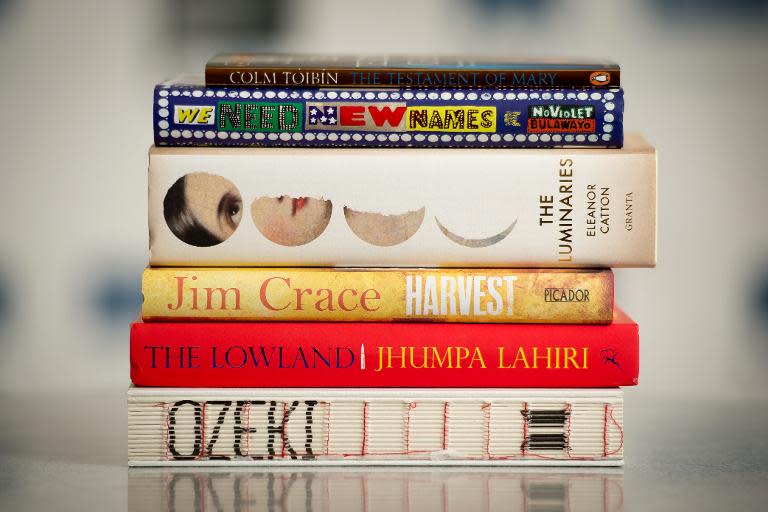
Catton was up against, as always, a stellar line-up of novels and writers: A Tale for the Time Being by Ruth Ozeki, Harvest by Jim Crace, The Lowland by Jhumpa Lahiri, The Testament of Mary by Colm Toibin and We Need New Names by Noviolet Bulawayo. 
Although The Luminaries was not the favourite to win (Harvest by Jim Crane was considered the more likely candidate), critics seem to be pleased - that's got to be a first?

2013 marks the end of an era when it comes to the Man Booker Prize. Up until now the prize has been open to Commonwealth countries and Ireland only. Next year they're letting the Americans in... who knows if the Cattons and Mantels can stand up to the likes of Jonathan Franzen and Donna Tartr... we'll see. We'll also see if I ever get round to reading
The Luminaries... I do hope so.

Tuesday, 15 October 2013

Sweet Tooth by Ian McEwan


The year is 1972. The Cold War is far from over. Britain is being torn apart by industrial unrest and terrorism. Serena Frome, in her final year at Cambridge, is being groomed for MI5.

Serena is sent on a secret mission - Operation Sweet Tooth - which brings her into the world of Tom Haley, a promising young writer. First she loves his stories, then she begins to love the man. Can she maintain the fiction of her undercover life? And who is inventing whom? To answer these questions, Serena must abandon the first rule of espionage - trust no one.

Sweet Tooth is the latest novel from Booker-winner Ian McEwan. All the things we love about McEwan are in this book - strong character voice, a couple of clever twists and turns to keep things moving, an intellectual narrative and beautiful writing. I have to say, though, that something was missing for me. Unhelpfully I don't quite know what.

It's one of those books where there was nothing to stop me finishing it and when I came to the end I could say, 'yes, I enjoyed that' but did I love it? Not really. Perhaps if there had been a bit of a longer build up and less long on the Tom Haley thread? But then if that had happened, would that have prevented me from caring about what happened to Serena?

What I did really enjoy about this book was the intellectual side. McEwan's characters are very intelligent and so the conversations they share reflect that. If I were honest with myself, I'd probably struggle to keep up with them in some cases and I'm 99% sure I wouldn't be a good recruit for the secret services but I did like taking a back seat and watching Serena climb the academic ladder, learn all she could from Tony and I took a little pleasure in seeing her confound Tom Haley with intricate mathematical problems. And even though I'm sure McEwan took similar pleasure when it came to constructing his ending, I have to allow him that - I didn't quite see it coming (and that's not something I ever like to admit... hence the addition of the word 'quite' in that sentence...).

I couldn't help but compare this novel to
Restless by William Boyd - a very different war but nevertheless an exploration of the British secret service against a fascinating backdrop of international secrets with a ballsy woman at the helm and both, of course, written by some of the country's most talented and successful writers. The other similarity, though, was the disappointment factor although, if I had to pick, I would say Sweet Tooth pipped Restless to the post as, to me, Serena appealed that little bit more than Ruth.

This book gets a 7/10 from me
.

Thursday, 26 September 2013

Tigers in Red Weather by Liza Klaussmann

Liza Klaussmann's Tigers in Red Weather tells the story of Nick and her cousin Helena who have grown up together, sharing long hot summers at Tiger House. With husbands and children of their own, they keep returning. But against a background of parties, cocktails, moonlight and jazz, how long can perfection last? There is always the summer that changes everything.

Tigers in Red Weather is a delicious novel, a book that simmers with tension, threat and an intoxicating cocktail of money, sex, heat, boredom and beauty. Gracefully drawn and utterly intriguing, it's the perfect summer blockbuster.


This was the book I was most excited to get reading this summer. It's a good example of some fantastic marketing - fantastic cover, title, a blurb that makes you feel the heat of summer... even when it's snowing in April... and all those wonderfully addictive cliches dropped in - jazz, cocktail parties, materialism, 'the summer that changed everything' etc - that I fall for every time.


Unfortunately, I found the whole book a bit disappointing. I'm not going to say it was bad because it really wasn't. Ostensibly it has some great themes - coming-of-age, crime, forbidden love (and lust) and a little voyeurism thrown in for good measure - but the execution, for me at least, lacked sophistication.


On the character side of things, I found the problem was that I couldn't find anyone to side with. Everyone was flawed, which is fine as otherwise it'd be unrealistic, but none of them were 'nice' people (the 'nice' police will have to excuse that one) and I too often found myself irritated by them.


One thing that Liza Klaussmann did succeed with, though, and the area where I felt the book was faithful to the blurb, was that I really did feel hot reading it. Not in a Fifty Shades kind of way, more that Klaussmann really got across that intense summer heat and the atmosphere that creates. In that way, the world very much came alive for me; I could imagine the huge house, the scorching tennis courts, the sweat dripping, the never-cold water.


Overall, though, it was a disappointing read for me. Probably not fair to have read it straight after
Alone in Berlin though... not sure much could compete with that.

It gets a
5/10 from me, I'm afraid.

Saturday, 21 September 2013

Book Club: Alone in Berlin

I'm sorry to have taken some time out on the blog front lately but, after 10 weeks and a little bullying from some people..., I am back! First stop? Book review I think.

Inspired by a true story, Hans Fallada's Alone in Berlin is the gripping tale of an ordinary man's determination to defy the tyranny of Nazi rule. This Penguin Classics edition contains an afterword by Geoff Wilkes, as well as facsimiles of the original Gestapo file which inspired the novel.

Berlin, 1940, and the city is filled with fear. At the house on 55 Jablonski Strasse, its various occupants try to live under Nazi rule in their different ways: the bullying Hitler loyalists the Persickes, the retired judge Fromm and the unassuming couple Otto and Anna Quangel. Then the Quangels receive the news that their beloved son has been killed fighting in France. 


Shocked out of their quiet existence, they begin a silent campaign of defiance, and a deadly game of cat and mouse develops between the Quangels and the ambitious Gestapo inspector Escherich. When petty criminals Kluge and Borkhausen also become involved, deception, betrayal and murder ensue, tightening the noose around the Quangels' necks ...


When it was first decided that the next Book Club read would be
Alone in Berlin by Hans Fallada, I'd had it in my head that this was a contemporary historical novel. I remember seeing posters for it on the tube back in 2009 when it was published and thinking it looked my kind of read. Turns out it was re-released in English in 2009 but it was actually written yonks ago in 1947. This knowledge completely blew my mind and completely changed my entire approach to the book - in front of me now lay a secret, controversial, brave almost-diary of wartime Berlin.

As I've bored you with a number of times, some of my favourite books are what I would call 'mosaic literature' (see, not just Derrida that can make up words to suit his argument...) where you get several snapshots into different lives and worlds. Some of those worlds may overlap, some may not, but you end up with an epic picture of society and the different outlooks/reactions to a particular time or event. This book definitely subscribes to my new genre but of course that doesn't mean it was successful. Only it 100% was successful. Easily one of the best books I've read this year so far, if not the best.


Fallada achieves so much in this novel. But for me his biggest achievement is the way the fear that permeates the entire book feels so immediate, in all its guises. With all the destructiveness and loneliness caused by fear and all our retrospective knowledge of this time in history, it would be easy to read the entire novel and feel completely depressed. Surprisingly, though, it is this 'fear' and people's ability to fight against it, learn from it, is somehow uplifting. That's not to say this is a comedy. Please don't accuse me of saying that... I've made a similar mistake before... I recommended 
The Boy in the Striped Pyjamas and subsequently had a balling woman in front of me, outraged that I would describe it as a children's book...

Anyway, another achievement for Fallada is that his characters are so wonderfully drawn; they aren't black and white, good or bad - they are all completely human and are all subject to the same flaws, same fears as any one else. As a result, Fallada has done one of those rare things by creating a network of characters, none of which do you particularly love, but who are all so strong that you can't help but be drawn in by them. Even the most irritating, weak or depraved characters like serial-adulterer and gambler Enno Kluge or members of the Gestapo stir something.


For me, though, it's not just the story itself and Fallada's writing that makes this book a modern classic, as Penguin has credited it. It is the whole background: the historical backdrop, obviously; the fact the novel is based based on a true case (and I'd recommend not Wikipedia-ing the story until you've read the novel...); but also Fallada himself, as a man, as a writer. His personal story is both disturbing and fascinating and gives you an idea of just where this story has come out of.


I could keep going on about this book, it's good points and bad - there are just so many things (characters, events, the writing, the ending... the list goes on) that I could talk about but I shall leave this review here and just say, go read it.


Book club gave it an 8/10 - think it might be a record! I give it a 9/10.

Tuesday, 9 April 2013

Twelve Bar Blues


Spanning three continents and two centuries, Twelve Bar Blues is an epic tale of fate, family, friendship and jazz. At its heart is Lick Holden, a young jazz musician, who sets New Orleans on fire with his cornet at the beginning of the last century. But Lick's passion is to find his lost step-sister and that's a journey that leads him to a place he can call 'home'. Meanwhile, at the other end of the century, we find Sylvia, an English prostitute, and Jim, a young drifter. They're in search of Sylvia's past, lost somewhere in the mists of the Louisiana bayou.

Last Christmas I asked my mum for the kind of book that spans quite a stretch of time, multiple generations. I appreciate that may seem an odd request but I just soak that stuff up... House of the Spirits, The Stranger's Child etc. Anyway, mum bought me this: Twelve Bar Blues by Patrick Neate.


Moving past the bizarre drawings on the front, I quickly got into the narrative of early twentieth century New Orleans. At first I was a little unsure about how successful Neate would be, being a white man, when it follows the lives of, almost entirely, black characters. As soon as you start reading, though, you forget about it entirely. It therefore doesn't surprise me at all that this book has had its praises sung by readers and critics alike; Neate must be doing something right. 


I completely fell for the world of 1920s New Orleans - its jazzy, dangerous, smoky 'ness'. By no means is New Orleans paradise with would-be Glee cast members and glitzy cocktails but Neate gives the city a vivacity and its characters a realness and ambition that is, oddly, enviable.


The tension created by constant threats simmering beneath the surface keeps everything moving but so does the music and the touching relationships that you can't help but root for, however unorthodox or controversial.


I definitely recommend this book, particularly if you're like to travel to lots of different places and times as you read.. Three continents, three different eras and several generations later and I'm satisfied that my mum fulfilled my Christmas wish!

8.5/10

Sunday, 24 March 2013

Ightham Mote


It is April next week, and it is snowing in London. No, not just a little bit of sleet, actually settled snow. I'm not impressed. Anyway, yesterday, no little bit of snow and minus degrees were going to stop me from driving off into the Kent countryside for a bit of fresh air and, most importantly, a pub lunch.

We went off to see Ightham Mote, a manor house built nearly seven hundred years ago. Over the years it has seen a few changes but retains its original beauty and charm. Wonky beams, dark wooden staircases, Tudor decoration, a beautiful courtyard and huge fire places to welcome you in mean it wasn't exactly a surprise for me to find that the house had inspired a few novels in its time.
A Rose for the Crown, an historical novel set in the late 15th century heavily features this stunning moated manor and Anya Seton's Green Darkness centres around the legend of a walled-up female skeleton at Ightham Mote, a rumour that lingers in the Ightham air today.

The Mote part of the house's name doesn't actually refer to the moat, which I think I can be forgived for assuming. It actually just identifies the house as a meeting place, perhaps a welcome retreat from the busy city.

Thursday, 28 February 2013

Little Exiles

Jon Heather, proud to be nearly nine, knows that Christmas is a time for family. But one evening in December 1948, no longer able to cope, his mother leaves him by a door, above which the legend reads Chapeltown Boys’ Home of the Children’s Crusade. Several weeks later, still certain his mother will come back, Jon finds himself on a boat set for Australia. Promised paradise, Jon soon realizes the reality of the vast Australian outback is very different; its burnished desert becoming the backdrop for a strict regime of hard work and discipline.

So begins an odyssey that will last a lifetime, as Jon Heather and his group of unlikely friends battle to make their way back home.


Two exciting things today. One - I have tickets to see Beyonce in concert in May (I may have jumped up and down a few times... eeee!). Two - it is publication day for Mr. Robert Dinsdale and his third novel,
Little Exiles, and I'm going to review it. Well, I was going to review it. Then someone said to me 'Ooo, you're brave' reviewing a friend's book. Thank. you. very. much. Now I feel considerably un-brave and still not quite sure whether this review is going to go ahead.

The fact this post is continuing, though, can give the author a little relief (because he is, naturally, waiting with bated breath to hear what I've got to say... I find most people are) as there was no way I would review this book if it was crap. I am not about to have that conversation.


A few years ago I read about the then Prime Minister Gordon Brown offering a formal apology on behalf of government to the tens of thousands of British children who were shipped, forcibly, to Australia (and some also to Canada) between the 1920s and 1967. Almost all of these children came from deprived backgrounds - many already in social care - and were taken to the other side of the world, unbeknownst to their parents (some of whom would try to collect their children to find they had gone), under the premise that Australia offered them a brighter future. Some of the children were even falsely told their parents were dead so that they would cut all ties with England.


Little Exiles brings to life this terrible ordeal through the eyes of Jon Heather and his friends. As a reader you witness the abuse, terror and brutality these children endured and of the unpaid labour they were forced to do but this novel also goes further and exposes the lasting effect of these experiences on the families involved. It is a coming-of-age story of the most traumatic kind but it is also a touching tale of friendship and hope. Hope you can forgive the corny... but you know I love a novel that spans a few decades so you can watch the characters transform.


While this is an adult read with plenty of complexity, the writing flows beautifully and the narrative somehow creates a tone of naivety that I really enjoyed - if that makes sense... I don't mean, though, that there isn't anger, tension, fear; I think this is one of the most frightening stories - made all the more so by being founded in something scarily real. I think if you enjoyed The Book Thief by Markus Zusak you would like this and everyone enjoyed The Book Thief.


Ps. If you didn't, we are not friends.


You can also see the author talk about his book here.

Monday, 25 February 2013

BBC to make War and Peace


Worryingly, the title of this post took some time. I really thought that somehow I must be able to make some form of witty headline with this so that, at least occasionally, I can be seen to be as intelligent and hilarious as I truly am. I'm afraid, though, today is not that day as this is the best I could do. Let's move on.

Anyway so we've recently ascertained that Nicholas Hoult is to star in the Hollywood version of Sebastian Faulkes' Birdsong (see post
here), a part only recently taken on by fellow Brit, Eddie Redmayne, for the BBC. Now it's hard to feel sorry for Eddie because he's had a pretty fantastic couple of years with successes like My Week with Marilyn, playing King Richard II in Richard III at the Donmar Warehouse in London's West End and, more recently, singing his heart out in the BAFTA and Golden-Globe-winning Les Miserables. But. Saying all this. It seemed a little cruel that only a year after his performance in Birdsong is aired, Hollywood decide they can do better.

But it's ok, people - it's O.K. I know you were almost worried there. Eddie Redmayne is rumoured to be part of what surely promises to be a BBC masterpiece, an adaptation of Tolstoy's epic
War and Peace. Perhaps a little ambitiously, Andrew Davies (the mind behind previous BBC book-to-film triumphs Bleak House and Middlemarch) is retelling the story in just six 1-hour episodes. Bear in mind that last time the BBC tackled this beast of a book with Anthony Hopkins in the lead role, they made 20 episodes...

The novel, first published in 1869, centres on five aristocratic families in Russia and looks at the impact of the Napoleonic era and the French invasion.

Friday, 15 February 2013

Nicholas Hoult to star in Birdsong


What? Huh? Wait. Have we not just had an adaptation of
Birdsong for the screen? Yes, yes we have. But as we all know, nothing is ever finished with until Hollywood have had their go. Sometimes twice.

Think 
The Girl with the Dragon TattooJane Eyre, Great Expectations, The Great British Bake Off... One thing all these films have in common though? Except perhaps the latter... top male leads. Daniel 'Phwoar' Craig, Michael 'Wunderbar' Fassbender, Jeremy 'English Rose' Irvine... I'm sure Irvine would love being called an English Rose... *shrugs*

ANYWAY, the BBC had already done a pretty good job with casting for
 Birdsong last year with the irresistible Eddie Redmayne. Therefore it was always going to be tough for Hollywood to take it up a notch in my opinion. But, I have to say, if the rumours are true, Nicholas Hoult is a pretty good choice. Now he may not be the conventional Etonian gorgeousness that is Mr. Redmayne, but everyone loves a bit of Nicholas Hoult don't they? Even with blonde hair in A Single Man. Actually, that brings me on to a good point. Nicholas Hoult is not only rags to riches, Skins to Hollywood, rising British star... he also does a pretty good job of adapting characters from page to screen. From Nick Hornby's About a Boy to A Single Man by Christopher Isherwood to, more recently, Isaac Marion's Warm Bodies, he's done quite a range.

Now I still have reservations about whether or not
Birdsong will ever make an entirely successful transformation from page to screen because I've always slightly wondered if there's something missing from Sebastian Faulks novel. That's not to say I didn't enjoy it (you can read my review here) but Hollywood is going to need to bring something a little different. Perhaps Nicholas Hoult will do that? We shall have to see.

See my thoughts on the BBC adaptation here.

Wednesday, 30 January 2013

RSC to stage Wolf Hall


"From the moment I started writing Wolf Hall the characters were fighting to be off the page." ~ Hilary Mantel

I think I may have more posts about Hilary Mantel than any other author... except maybe my fav, Ginny Woolf... but Mantel really is continuing to take the literary world by storm. Not only has it today been announced that she has become the first person to win both the Costa AND the Booker in the same year. The other news? Her Booker-winning Tudor trilogy is to be transformed for the stage by the Royal Shakespeare Company.

The books, which will be performed in two parts, will take to the stage as part of the RSC's 2013 Winter season at The Swan Theatre in Stratford-upon-Avon. Londoners don't worry, though, it looks likely that the plays, if successful, will most likely come to London eventually.

We have been promised some extra material that did not originally feature in the books. Seriously, how is that possible? The books are humungous! Is it just me or do you think that Hilary Mantel's head should be a lot bigger? Like Noddy or something so that all this info that she has researched can fit... what an intellectual force she is.

Mantel has been working closely with RSC artistic director, Gregory Duncan, so that the theatrical language of the time is captured successfully. See how she feels about her books making the leap to the stage in the video above.

Monday, 21 January 2013

What to read when it's snowing?


There are plenty of stereotypes about the Brits - I'm sure we don't know most of them - but one that I am particularly fond of is our complete and utter obsession with the weather. We can't have a conversation without mentioning it, we are the first to jump out into the parks and onto the beaches as soon as it gets over 15 degrees, we deny profusely that it rains all year round (particularly when it's raining) and by God do we love talking about snow.Well, as it's been snowing quite a lot more than we are normally used to in London, I thought we needed a suitably snowy post. Here are three books that we should all get off the shelves when everything goes white and all we can do is snuggle down and read:

The Classic:
Dracula by Bram Stoker

"We are in Transylvania, and Transylvania is not England. Our ways are not your ways, and there shall be to you many strange things. Nay, from what you have told me of your experiences already, you know something of what strange things there may be."

Collected inside this book are diary entries, letters and newspaper clippings that piece together the depraved story of the ultimate predator. A young lawyer on an assignment finds himself imprisoned in a Transylvanian castle by his mysterious host. Back at home his fiancée and friends are menaced by a malevolent force which seems intent on imposing suffering and destruction. Can the devil really have arrived on England's shores? And what is it that he hungers for so desperately?

I'm a big fan of this book. It's a bit long but it really is all it's cracked up to be. For me, it is one of the few old fashioned scary books that is actually pretty scary. Oh, and it's absolutely
swelling with innuendo...


The Costa:

The Tenderness of Wolves by Stef Penny
“Clearly the secret of happiness...is a variation on the general principle of banging your head against a wall, and then stopping.” 
1867, Canada: as winter tightens its grip on the isolated settlement of Dove River, a man is brutally murdered and a 17-year old boy disappears. Tracks leaving the dead man's cabin head north towards the forest and the tundra beyond. In the wake of such violence, people are drawn to the township - journalists, Hudson's Bay Company men, trappers, traders - but do they want to solve the crime or exploit it? One-by-one the assembled searchers set out from Dove River, pursuing the tracks across a desolate landscape home only to wild animals, madmen and fugitives, variously seeking a murderer, a son, two sisters missing for 17 years, a Native American culture, and a fortune in stolen furs before the snows settle and cover the tracks of the past for good.

I absolutely loved this book. So much so that there is already a review of it on this blog! It's a real quiet, un-wordy book, which is sometimes just what you need - especially when it's snowing. It's also set in a very wintery landscape in northern Ontario. Read my review here.


The Children's Book:

Northern Lights by Philip Pullman
"You are so young, Lyra, too young to understand this, but I shall tell you anyway and you'll understand it later: men pass in front of our eyes like butterflies, creatures of a brief season. We love them; they are brave, proud, beautiful, clever; and they die almost at once. They die so soon that our hearts are continually racked with pain."
Lyra Belacqua and her animal daemon live half-wild and carefree among scholars of Jordan College, Oxford. The destiny that awaits her will take her to the frozen lands of the Arctic, where witch-clans reign and ice-bears fight. Her extraordinary journey will have immeasurable consequnces far beyond her own world...

You can't get more snowy than the Arctic and that's exactly where you're taken in this absolute classic. I don't know anyone who has read this book and hasn't fallen completely in love with Lyra's world. It is simultaneously one of the most exciting, terrifying, emotionally testing and beautiful worlds you could come to in a book. I feel these kinds of worlds are reserved just for children but really we should all be reading them if we ever missed them as a child. Just to put a stop to all that squishiness, this trilogy is also flipping brutal. Perhaps that's why only kids should read it...

Sunday, 13 January 2013

Les Miserables


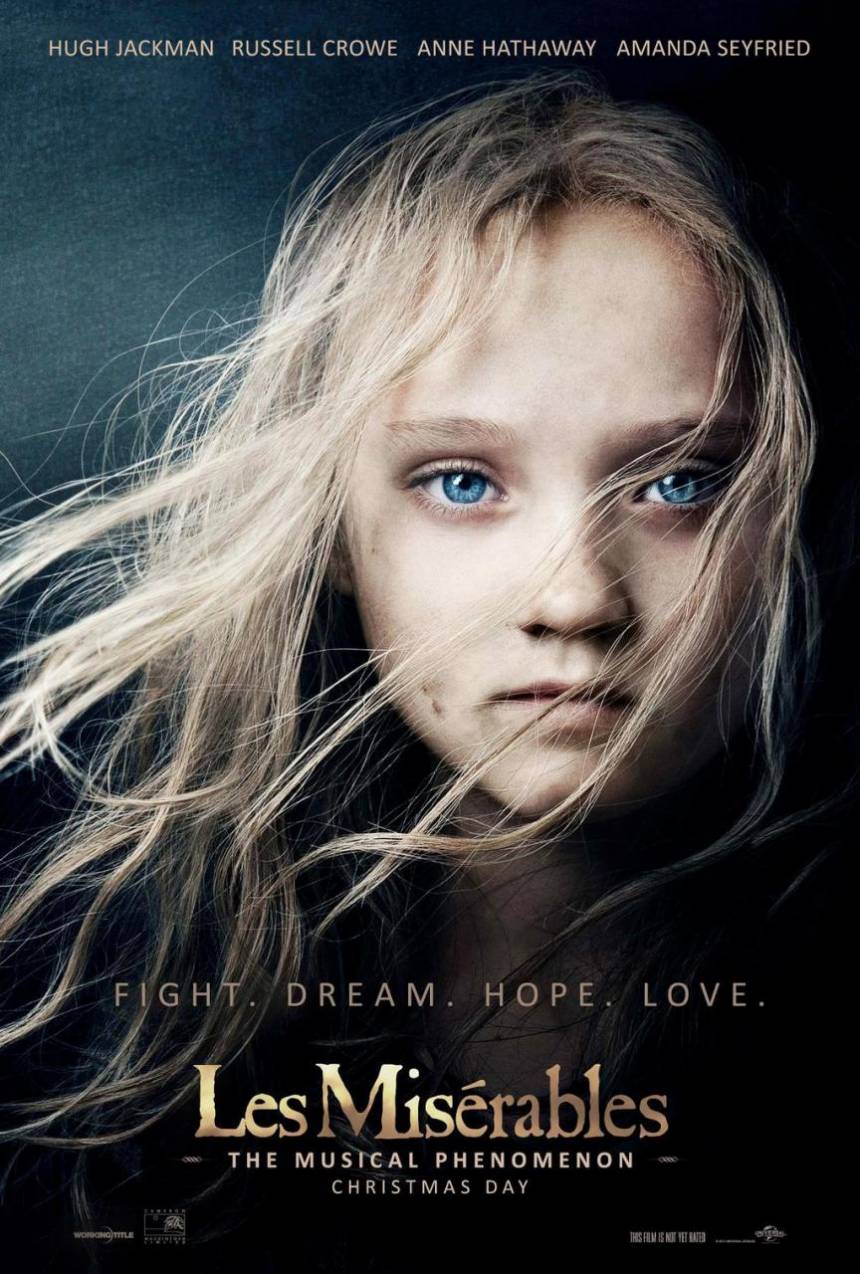
In 19th-century France, Jean Valjean, who for decades has been hunted by the ruthless policeman Javert after he breaks parole, agrees to care for factory worker Fantine's daughter, Cosette. The fateful decision changes their lives forever.


I've been wanting to see Les Miserables for almost a year, which gives us an idea of how long the hype surrounding this Oscar nominated adaptation has been going on. Almost a year ago to date, I was thinking of what books I wanted to read in 2012 and that I needed at least one classic in there. I'm always shamefully apathetic with classics - they just normally take so long to read that, no matter how good they are, I become bored. In anticipation of the film, though, I wanted to try Victor Hugo's original novel. Holy mother... it's a frickin' doorstop of a book. Thus, not unsurprisingly, I have not read the book. I have, though, just seen the film and completely loved it.

Whenever I go and see a musical, be it on screen or on stage, somehow I always seem to forget that they are going to do a hell of a lot of singing... so much so that Amanda Seyfried, one of the headline names, does not have to test her English accent skills even once as every single line she says is sung. The director, Tom Hooper, approached the singing, as you have probably heard by now, in an interesting way. He didn't cast the best singers in Hollywood for this film and he didn't stick them in a recording booth for days on end to perfect each track. They just sang there and then as they were acting in an effort to get across the reality of their characters' situations and I think it really works.

I completely understand that, as a result of Hooper's approach, some people are distracted from time to time as the singing in places is a little shaky, but I see the result as showing singing to be the ultimate form of expressing emotion. Unfortunately, I am completely awful at it. I cried my way through Anne Hathaway's surely Oscar-winning performance of I Dreamed a Dream, but I'm not entirely sure whether I was crying more about Fantine's desperate situation or the fact that, despite many hours screeching along to Glee's version of the classic song, I still cannot reach those high notes.

As a story, I am sure that massive chunks have been cut out since the original novel. Impossible not to. I could complain, but there's something nice about the fact that we don't have to go back 2 more times before we see the ending...*cough* the Hobbit... You really go along with Jean Valjean the entire way through his journey - you wouldn't want that disrupted. I also am a sucker for any story related to the French Revolution (as you may have noticed in my review of A Place of Greater Safety...)

Controversially, none of the four main cast members are British despite it being a British film. Don't get me wrong, Jackman, Hathaway, Crowe... they're all phenomenal in this movie, but I feel, as a Brit, I need to praise the stand-out British performances - Eddie Redmayne's voice didn't falter once and he nailed his heart-wrenching solo, Samantha Barks is a true star that I hope comes back to the big screen again, the pairing of Helena Bonham Carter and Sacha Baron Cohen is hilariously spectacular, little Gavroche is a scene-stealer and it was great to see members of the West End cast, including Barks, transform their characters for film. Plus, it was lovely to see France come to life on my doorstep as the Royal Naval College in Greenwich was transformed into Revolutionary Paris.

There were tiny aspects that didn't work for me - some of the lyrics, the slightly rushed feeling from time to time, the occasional strained note and perhaps unfairly I could have done with a little more dialogue - but overall, I really enjoyed this film. And it made me cry at all the right times and for all the right reasons... I have been known to cry at all the
wrong times in other films...

Tuesday, 8 January 2013

A Place of Greater Safety


Georges-Jacques Danton: zealous, energetic and debt-ridden. Maximilien Robespierre: small, diligent and terrified of violence. And Camille Desmoulins: a genius of rhetoric, charming and handsome, yet also erratic and untrustworthy. As these young men, key figures of the French Revolution, taste the addictive delights of power, the darker side of the period’s political ideals is unleashed – and all must face the horror that follows.

I felt it was time for a new book review. I find Christmas, though, is not ideal reading time for me and so I've picked one I read a while back and one of my favourites: 
A Place of Greater Safety by Hilary Mantel.

It's fair to say, this is an historical novel of epic proportions. Yes, it tackles the monstrous subject of the French Revolution in literary HD, but it is also
very long. The first hundred pages of character exposition, although necessary rather than indulgent, have yourself looking at your watch wondering if you'll be able to read a hundredth of this novel before tea time ( *cough* 3pm sharp...I can't help it that my life revolves around food).

The novel is meticulously researched though and, with help from Mantel’s name guide, most characters are explained and easily followed. The more minor personalities, the Seamus Finnigans and Dean Thomases if you will, can though sometimes become a little lost in the bustle of the rest of the plot. Consequently, scenes that were particularly dramatic or well-known, such as Marat's murder in the bath (it really doesn't spoil that much), ended up being more caricatured than sentimental.

Saying that, Mantel’s female characters are strong. Witty, opinionated and far from submissive, Mantel’s women give Katniss a run for her money and protect us all from nine-hundred pages of the traditional phallocentric drivel present in so many other historical novels. This in partnership with great writing (I actually prefer the writing in this than
Wolf Hall...) makes this vast brick of a novel and all Mantel's meticulous research accessible to the average, slightly apathetic reader - aka me. And she does it without writing all the characters into an orgy a la Philippa Greggory, not that orgies don't have their place in historical fiction... 

Mantel throws you into the action of the revolution, she doesn't position the reader too far away. Importantly, though, she didn't try to impinge a particular viewpoint on me - I like that. All in all, I'm quite happy for this book to sit alongside earlier more famous interpretations by Dumas and Dickens,
 as a more modern, pool-side alternative. And you really do need to read this at the poolside.. it needs a chunk of undisturbed time. It's really not a commuter read ladies unless you want massive man shoulders from lugging it about for months on end...

This novel gets
9/10

Wednesday, 12 December 2012

Day 12: The Dark Earth and the Light Sky


"Or must I be content with discontent
As larks and swallows are perhaps with wings?"
The Glory, Edward Thomas

Deep in the Hampshire countryside Edward Thomas scrapes a living; disaffected husband, exhausted father and tormented writer. Then in 1913 he meets American poet Robert Frost and everything changes. As their friendship blossoms Edward writes, emerging from his cocoon of self-doubt into one of the most influential poets of the twentieth century.

On the verge of success he makes the drastic decision to enlist, confounding his friends and family. The Dark Earth and the Light Sky delves into the life of this enigmatic and complex character in an era of change and destruction.

Last night I went along to the Almeida Theatre in Islington to see Nick Dear's The Dark Earth and the Light Sky. When I looked up the description of the play I wasn't entirely sure what to expect. On the one side I thought it might simply be a dramatic biopic, capturing chronologically the short life of Edward Thomas, and showing the ways in which Robert Frost inspired his writing. Then my experience kicked in and thought that so many playwrights can't seem to resist doing something 'clever' or 'artistic' that will in their view in someway get across some kind of deeper meaning.

Ok, so you've probably gathered that I'm not a particularly sophisticated theatre goer, although that doesn't mean I'm not enthusiastic about it. I love the ice cream... the programmes... the merchandise... (damn, knew I should have got that Viva Forever mug...). No, seriously, I love the theatre and even better when you come out and you feel that tiny bit more intelligent... (ok, maybe not with Viva Forever).

I enjoyed this play although I don't feel it was either a biopic nor an overly complex artistic portrayal of Thomas' life. It was very simple, which I appreciated; small cast, clear plot and clever staging. I'm also intrigued by Thomas as a war poet who didn't actually write a poem explicitly about war!

Nick Dear is no stranger to staging literary giants (Frankenstein, Byron, Persuasion, Iris...the list goes on) so it was always going to be good, wasn't it? Plus, I'm a sucker for war stories, I'm half Welsh and an English Lit graduate, and I always love a good biopic.

It's always important to say the acting was spot, although I wouldn't say I particularly liked any of the characters... but they are real people, so it's not like you can just make one of them really romantic or the other really funny if they weren't... Saying that, the humour was great in this. What is ultimately a very sad story was heightened by the carefully placed humour that, as I always say, the Brits do particularly well I think.

My only disappointments really were, firstly, for me, it could have ended at several points in the final half hour. Secondly, I just feel that something was slightly missing... which is harsh to say when I can't put my finger on what. I know it wasn't a history lesson but I don't feel I learnt all that much and I don't feel I invested in a character.

Overall, though, it was a really enjoyable evening and I would recommend going to see it, even if it's just a good excuse to go to a small theatre and witness a great cast take on a literary great that was almost forgotten. 


Monday, 10 December 2012

Day 10: Little Women do Christmas


One of my favourite films to watch at Christmas has got to be Little Women. Louisa May Alcott's original book captures Christmas over several years in her protagonists' lives and each one has a different tone. Books feature pretty heavily in the novel as well as Josephine 'Jo' March, the second eldest, is said to be in love with literature - both reading and writing.  I wanted to share this lovely passage from the novel that captures one particular Christmas and conveniently just happens to mention some books...
Jo was the first to wake in the gray dawn of Christmas morning. No stockings hung at the fireplace, and for a moment she felt as much disappointed as she did long ago, when her little sock fell down because it was so crammed with goodies. Then she remembered her mother's promise, and slipping her hand under her pillow, drew out a little crimson-covered book. She knew it very well, for it was that beautiful old story of the best life ever lived, and Jo felt that it was a true guide-book for any pilgrim going the long journey. She woke Meg with a "Merry Christmas", and bade her see what was under her pillow. A green-covered book appeared, with the same picture inside, and a few words written by their mother, which made their one present very precious in their eyes. Presently Beth and Amy rummage and find their little books also, one dove-colored, the other blue; and all sat looking at and talking about them,. while the East grew rosy with the coming day.